
Research and Verification Notes
- GLP-1 receptor agonists can lower systolic blood pressure by roughly 2.6–6.3 mmHg and diastolic pressure by 1.3–3.1 mmHg in clinical and real-world studies, while pulse rate may increase by 1–6 beats per minute.
- Structured home blood pressure monitoring has been proposed as a cost-effective way to detect early hypotensive trends in patients losing weight on GLP-1 therapy, especially those taking antihypertensive medications.
- Blood pressure monitor accuracy varies; the U.S. Blood Pressure Validated Device Listing (validatebp.org) independently reviews clinical accuracy, and validated upper-arm cuff monitors typically cost around $40–$65.
- Continuous glucose monitor (CGM) accuracy is commonly expressed as MARD (mean absolute relative difference); many current systems perform in the roughly 9–12% range in research settings, though real-world performance can differ.
- Smart scale body-composition accuracy is not equivalent across brands; some devices report high correlation with DEXA for fat mass, but independent testing has found meaningful underestimation on certain models.
- The Amazon product links supplied for this article redirect to Amazon’s general sign-in or recommendation page and could not be verified as specific product listings at the time of writing. Prices, ratings, and exact model names should be confirmed on the live product page before publication.
- The RevOffers links point to two GLP-1 telehealth services: Live Vital (compounded semaglutide/tirzepatide and peptide protocols) and YourEra (compounded semaglutide from $89/month, tirzepatide from $129/month). These are prescription services, not monitoring devices; both state that compounded medications are not FDA-approved and that treatment is subject to clinician review.
Quick Verdict
For most GLP-1 users building a home monitoring setup, the priority order is:
- A validated upper-arm blood pressure monitor — because GLP-1 medications can meaningfully change blood pressure and pulse rate, and because wrist cuffs are generally less reliable for self-monitoring.
- A smart scale that reports body composition, not just weight — because preserving lean mass during GLP-1–driven weight loss matters for long-term metabolic health.
- A glucose monitoring option matched to your clinical need — a CGM if you want trend data or your clinician recommends it, or a fingerstick meter if you need periodic fasting or post-meal checks at lower cost.
What to verify before buying: clinical validation for blood pressure devices (validatebp.org listing), the measurement site and sensor wear time for glucose devices, and whether the scale’s body-composition estimates have any independent accuracy data. No home device replaces laboratory testing or clinical judgment.
Affiliate Disclosure
GLP1Cynergy.com may earn a commission if you purchase through links on this page, at no additional cost to you. Commission relationships do not determine which devices are included or how they are ranked; recommendations are based on the criteria described in this article. Always confirm current price, specifications, and return policy on the retailer’s site.
Table of Contents
Why GLP-1 Users Need Home Monitoring
GLP-1 medications are not passive treatments. They change appetite, gastric emptying, glucose dynamics, body weight, blood pressure, and heart rate. Some of those changes are therapeutic; others require watching.
Clinical trial and real-world data show that semaglutide and other GLP-1 receptor agonists can reduce systolic blood pressure by several millimeters of mercury and may modestly increase pulse rate. For people who already take blood pressure medication, faster or larger-than-expected reductions can contribute to dizziness or hypotensive episodes, particularly as weight comes down. A structured home blood pressure routine helps detect those trends early and gives a clinician useful data for medication adjustment.
On the glucose side, GLP-1 medications improve glycemic control, but individual responses vary by dose, diet, activity, and diabetes status. Continuous glucose monitoring and periodic fingerstick checks can show how meals and activity affect glucose, and can help identify excursions that a quarterly HbA1c test would miss.
For weight, the scale alone is an incomplete signal. GLP-1–associated weight loss includes both fat and lean tissue. Tracking body composition — even with the limitations of consumer bioimpedance — gives a more useful picture of whether muscle mass is being preserved.
Blood Pressure Monitors: What Matters for GLP-1 Users
Validation is the first filter
Not all home blood pressure monitors are clinically validated. The U.S. Blood Pressure Validated Device Listing (VDL) at validatebp.org independently reviews devices for accuracy against recognized standards. Buying a monitor that appears on that list is the single most reliable way to reduce measurement error.
Validated upper-arm cuff monitors are generally affordable. Consumer testing has found validated devices in the roughly $40–$65 range, while unvalidated models may sell for around $30. The difference in accuracy is worth the modest price premium.
Upper arm over wrist for most people
Guidance for home monitoring consistently favors an upper-arm cuff over a wrist cuff for reliability. A wrist device can be acceptable as an alternative when an upper-arm cuff genuinely cannot be used, but cuff fit, arm position, and movement are harder to control at the wrist.
Features worth paying for
- Memory or app-based storage: lets you review trends rather than reacting to a single reading.
- Irregular heartbeat detection: a useful flag, not a diagnosis.
- Multi-user profiles: relevant if a household member also monitors blood pressure.
- A correctly sized cuff: arm circumference matters; a cuff that is too small can read artificially high.
Practical measurement routine
For GLP-1 users — especially those on antihypertensive medication — a reasonable home routine is two consecutive readings, one minute apart, twice daily (morning and evening) for several days, then a maintenance schedule agreed with your clinician. Sit quietly for about five minutes with feet flat and the cuff at heart level before measuring. Track trends, not single outliers.
Device option
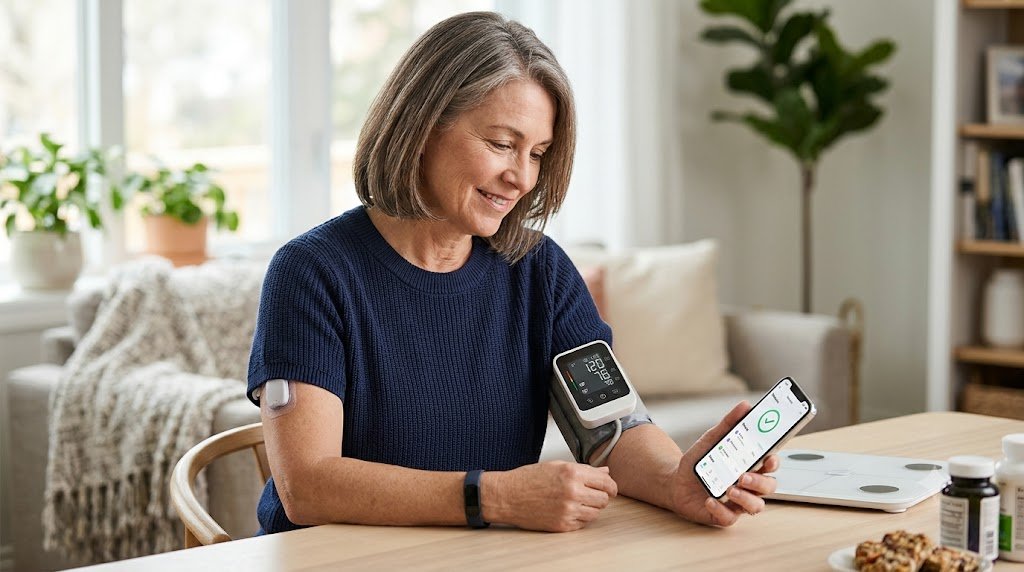
The supplied Amazon link for a blood pressure monitor should be verified on the live product page for VDL status, cuff size, and warranty before purchase.
Check current price and specifications on Amazon →
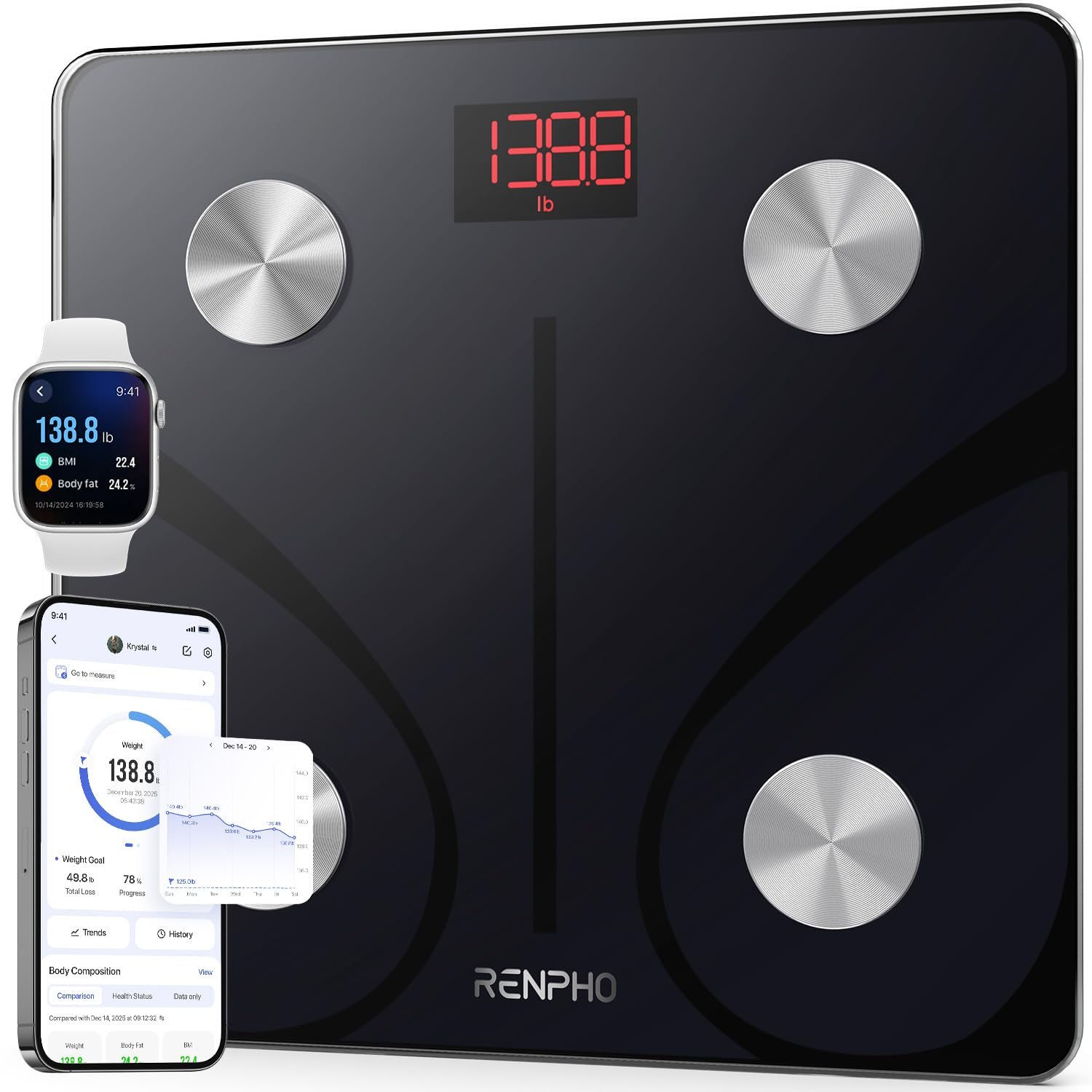
Image: Blood pressure monitor option. Confirm exact model, validation status, and cuff size on the retailer page.
Glucose Monitors: CGM vs. Fingerstick
What GLP-1 users should know before choosing
Glucose monitoring is not mandatory for every person on a GLP-1 medication for weight loss alone, but it becomes more relevant if you have type 2 diabetes, prediabetes, or want to understand how meals and activity affect your glucose. A clinician can help you decide whether continuous monitoring is appropriate or whether periodic fingerstick checks are sufficient.
Continuous glucose monitors (CGMs)
A CGM uses a small sensor worn on the body to estimate interstitial glucose every few minutes. Accuracy is commonly reported as MARD; many current systems perform in the roughly 9–12% range in research settings, although real-world accuracy can vary by sensor, day of wear, and glucose range.
Advantages: trend data, time-in-range metrics, alerts for high or low glucose, and the ability to see post-meal patterns.
Limitations: cost, sensor replacement, potential skin irritation, and the need to confirm low or high readings with a fingerstick in some situations. CGM readings lag behind blood glucose slightly, which matters during rapid changes.
Fingerstick glucose meters
A fingerstick meter uses a small blood sample and a test strip. It provides a point-in-time reading rather than a continuous trend.
Advantages: lower upfront cost, no sensor wear, and straightforward operation.
Limitations: each test requires a strip and a lance, so ongoing supply costs matter; it does not show overnight or between-meal trends unless you test frequently.
Device option
The supplied Amazon link for a glucose monitoring product should be checked for the specific device type (CGM vs. meter), sensor life, app compatibility, and the cost of ongoing supplies.
Check current price and details on Amazon →
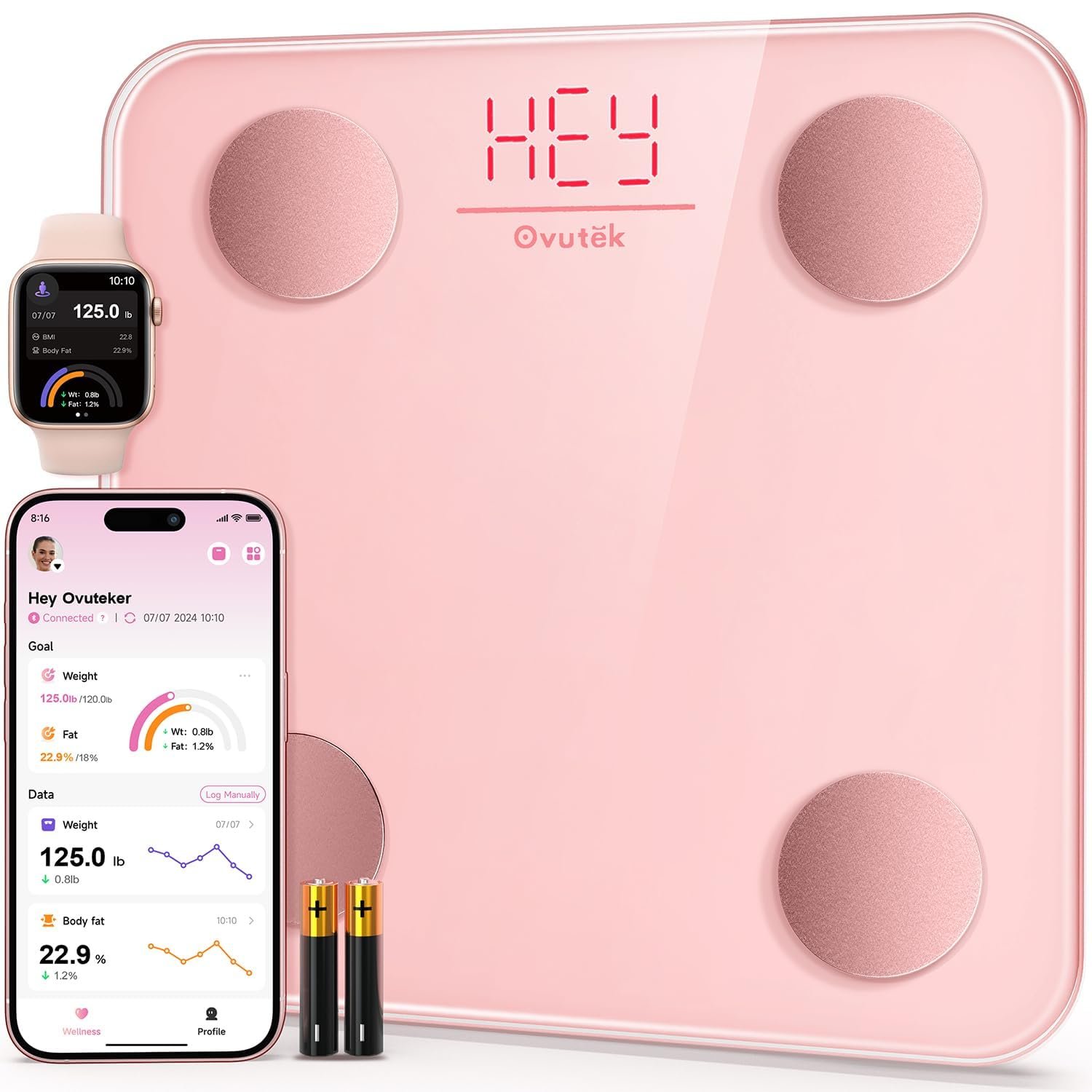
Image: Glucose monitoring option. Verify whether the product is a CGM or fingerstick meter and confirm the ongoing cost of sensors or strips.
Smart Scales and Weight Trackers
Why body composition matters on a GLP-1
Healthline’s clinical review notes that tracking body composition — not just total weight — helps show whether weight loss is coming from fat or lean tissue, and that preserving muscle supports metabolism and long-term weight maintenance. Smart scales use bioelectrical impedance analysis (BIA) to estimate body fat percentage, muscle mass, and other metrics, and sync data to an app so trends can be reviewed over time.
Accuracy caveats
Consumer smart-scale accuracy is variable. Some manufacturers report very high correlation with DEXA scans for fat mass — one Withings model cites an r=0.99 correlation in an internal study — but independent testing has found that certain BIA scales can substantially underestimate body fat compared with DEXA. Treat body-composition numbers as directional trends rather than clinical measurements, and use the same device under consistent conditions (same time of day, hydration status, and clothing) to reduce noise.
Features that matter for GLP-1 users
- Weight trend and body-composition trend in an app: the trend is more useful than any single reading.
- Multi-user recognition: useful for households.
- Wi-Fi or Bluetooth sync: reduces manual logging.
- Consistent measurement conditions: a scale that makes it easy to weigh at the same time each day improves data quality.
- Muscle-mass tracking: relevant because GLP-1–associated weight loss can include lean tissue.
Devices explicitly marketed for GLP-1 users, such as the Withings BodyFit (around $280), include segmental body-composition analysis and app-based trend tracking. They are not required for useful tracking, but they may offer more detailed trend data than a basic weight-only scale.
Device option
The supplied Amazon link for a smart scale should be verified for the metrics it actually reports (weight only vs. body composition), app compatibility, and user-profile capacity.
Check current price and features on Amazon → (confirm this link resolves to the intended scale product before publication)
Comparison Table
| Device category | What it measures | Key buying criteria | Typical price range (verify current) | Best for | Important limitation |
|---|---|---|---|---|---|
| Validated upper-arm blood pressure monitor | Systolic/diastolic pressure, pulse | VDL listing on validatebp.org; correct cuff size; memory/app storage | ~$40–$100 for validated models | GLP-1 users on antihypertensive medication, anyone with blood pressure concerns | Requires consistent technique; single readings can mislead |
| Continuous glucose monitor (CGM) | Interstitial glucose trends, time-in-range | MARD/accuracy data; sensor wear time; app and alerts | Varies by system and insurance; check current pricing | People with diabetes or prediabetes; users who want meal-level glucose insight | Cost; sensor replacement; lag vs. blood glucose; not a substitute for fingerstick in all situations |
| Fingerstick glucose meter | Point-in-time blood glucose | Strip cost; lancing comfort; memory | Low upfront cost; ongoing strip expense | Budget-conscious users who need periodic checks | No continuous trend; supply costs add up |
| Smart scale (body composition) | Weight, estimated body fat, muscle mass, other BIA metrics | App trend quality; multi-user support; independent accuracy data if available | Basic: ~$30–$80; advanced/GLP-1–marketed: ~$150–$300 | Tracking fat vs. lean mass trends during GLP-1 weight loss | BIA estimates are not clinical DEXA measurements; accuracy varies by brand and conditions |
Buying Criteria and Budget
1. Start with validation, not marketing claims
For blood pressure, “clinically validated” should mean a listing on validatebp.org or a published validation study against a recognized protocol. For glucose devices, look for published accuracy data and regulatory clearance. For scales, treat body-composition claims cautiously unless independent accuracy data are available.
2. Match the device to your clinical situation
If you take blood pressure medication and are starting a GLP-1, a validated home blood pressure monitor is the highest-yield purchase. If you have diabetes or prediabetes, glucose monitoring deserves more budget. If your primary goal is preserving muscle during weight loss, a body-composition scale is more useful than a weight-only scale.
3. Count the ongoing costs
Blood pressure monitors have no consumables beyond batteries. Fingerstick meters require test strips and lancets. CGMs require sensors. Smart scales have no consumables but may require an app account. The purchase price is only part of the total cost.
4. Consider data sharing
If you plan to share readings with a clinician, choose devices with app-based export or a clear trend view. A device that stores readings only on the unit is harder to use in a clinical conversation.
5. Do not buy a device to replace care
Home monitoring is for tracking and communication, not self-diagnosis or self-adjustment of medication. Any change to blood pressure medication, glucose-lowering medication, or GLP-1 dosing should be made with a licensed clinician.
: Telehealth and Prescription Support
Some GLP-1 users need access to a prescribing clinician and ongoing monitoring support, not just devices. The following services are prescription platforms, not device sellers. Both state that treatment is subject to clinician review and that compounded medications are not FDA-approved.
- Live Vital: clinician-reviewed weight management and peptide protocols, including compounded semaglutide and tirzepatide, with dose titration and monitoring. Pricing shown as “if prescribed” and varies by treatment.
- YourEra: compounded semaglutide from $89/month and compounded tirzepatide from $129/month after a 20% discount, month-to-month, with licensed US clinicians and ongoing monitoring features.
Compare Live Vital treatment options →
Check YourEra eligibility and pricing →
These are prescription services. Not all patients qualify. Compounded medications are not FDA-approved. Individual results vary.
Frequently Asked Questions
Do I really need a blood pressure monitor if I’m on a GLP-1?
Not everyone does, but it is particularly worth discussing with your clinician if you take blood pressure medication, have a history of low or high blood pressure, or experience dizziness as you lose weight. GLP-1 medications can lower blood pressure, and structured home monitoring has been proposed as a way to catch early hypotensive trends.
Is a wrist blood pressure cuff accurate enough?
For most people, an upper-arm cuff is preferred for home monitoring. Wrist cuffs can be used as an alternative when an upper-arm cuff cannot be used, but technique and positioning are more difficult to control.
What is a good MARD for a CGM?
Many current CGMs perform in the roughly 9–12% MARD range in research settings, but real-world accuracy varies by sensor, day of wear, and glucose range. Ask your clinician what accuracy is appropriate for your situation.
Are smart scale body-fat readings accurate?
They are estimates, not DEXA-equivalent measurements. Some devices report high correlation with DEXA for fat mass, but independent testing has found meaningful error on some models. Use trends from the same device rather than absolute numbers.
Can I use a smart scale if I only want to track weight?
Yes. A basic digital scale is sufficient if weight trend is your only goal. Body-composition metrics are a bonus, not a requirement.
How often should I measure at home?
For blood pressure, a short intensive period (e.g., twice daily for several days) followed by a maintenance schedule agreed with your clinician is reasonable. For weight, daily or near-daily measurement under consistent conditions improves trend quality. For glucose, frequency depends on your device and clinical advice.
Do I need a prescription to buy these devices?
No. Blood pressure monitors, glucose meters, CGMs (in many cases), and smart scales are available without a prescription. However, insurance coverage and CGM eligibility vary. Prescription GLP-1 treatment itself requires clinician review.
Final Verdict
There is no single “best” device set for every GLP-1 user. The right combination depends on your clinical history, budget, and what your clinician needs to see.
The most defensible starting point is a validated upper-arm blood pressure monitor, because blood pressure is the metric most likely to change in a clinically meaningful way during GLP-1 treatment and the one where device validation is easiest to confirm. Add a body-composition smart scale if preserving lean mass is a priority. Add glucose monitoring if you have diabetes or prediabetes, or if your clinician recommends it.
The main limitation is that consumer devices are screening and tracking tools, not diagnostic instruments. No home device can replace a clinician’s assessment, and no affiliate purchase guarantees a health outcome.
Before buying: confirm blood pressure validation status, check the exact model and return policy behind each product link, and discuss your monitoring plan with the clinician managing your GLP-1 treatment.
Medical Disclaimer
This article is for informational purposes only and does not constitute medical advice, diagnosis, or treatment. Home monitoring devices are not a substitute for professional medical care. Do not start, stop, or change any medication — including GLP-1 therapy or blood pressure medication — without guidance from a licensed healthcare professional. If you experience severe dizziness, fainting, chest pain, difficulty breathing, or signs of very low blood sugar, seek urgent medical attention.
References
- Healthline. “The Best Ways to Track Weight Loss on a GLP-1 Medication.” 2026.
- Veridian Healthcare. “Remote Patient Monitoring for Weight Management.” 2026.
- Cured Pharmacy. “GLP-1 Monitoring Tools for Home Use.” Reviewed April 2026, updated August 2026.
- U.S. Blood Pressure Validated Device Listing. validatebp.org.
- Kristensen et al. meta-analysis cited in GLP-1 blood pressure literature: mean systolic reduction ~2.6 mmHg and diastolic ~1.3 mmHg across GLP-1 RAs.
- Real-world semaglutide 2.4 mg cohort (SCOPE 12 months): mean systolic reduction −6.3 mmHg and diastolic −3.1 mmHg.
- FDA review documents noting pulse-rate increases of 1–6 beats per minute with semaglutide in phase 3 trials.
- Structured home blood pressure monitoring in patients on GLP-1 agonists: quality-improvement rationale for detecting hypotensive trends.
- CGM accuracy literature: MARD values in the ~9–12% range for several systems in research settings.
- Withings Body Scan / DEXA correlation data (internal study) and independent smart-scale accuracy caveats.
- Withings BodyFit pricing and GLP-1 positioning: ~$280, segmental body composition.
- MOBI GLP-1 Home Wellness Kit description: integrated scale, blood pressure monitor, pulse oximeter, thermometer, and app.