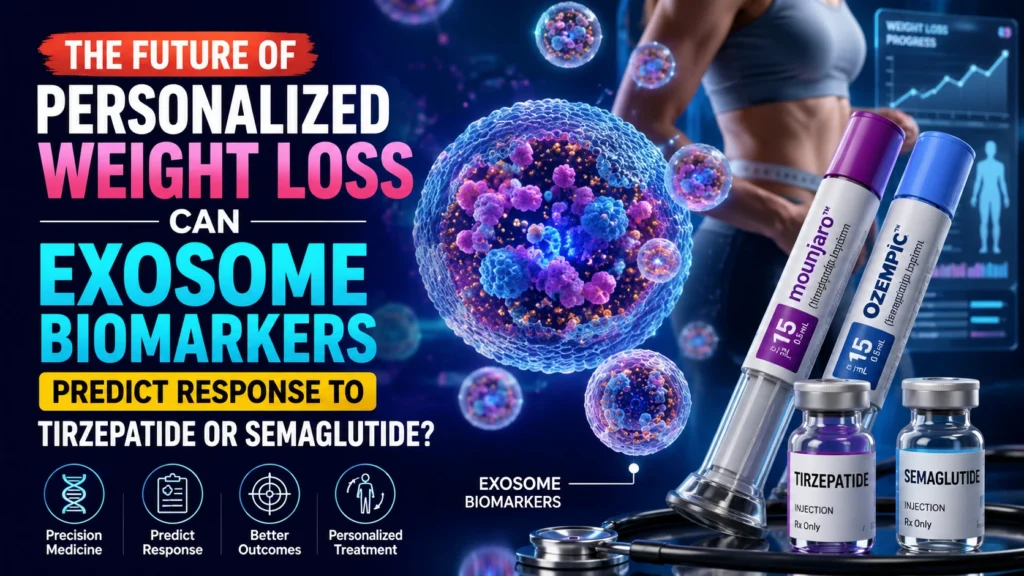
The arrival of GLP-1 receptor agonists like semaglutide and tirzepatide has reshaped the treatment of type 2 diabetes (T2DM) and obesity, offering significant glycemic control and weight loss. Yet, a major clinical challenge remains: response to these therapies is highly variable. While some patients achieve remarkable results, others see only modest benefits. This heterogeneity has driven the search for biomarkers that can predict who will respond best. Exosomes—tiny, information-carrying vesicles—have emerged as promising candidates in this search.
Unlike conventional blood tests that provide a snapshot of circulating molecules, exosomes are nanoscale messengers released by cells, carrying a cargo of proteins, lipids, and nucleic acids like microRNA (miRNA). Their stability in biological fluids and ability to reflect the physiological state of their parent cells make them attractive tools for liquid biopsies, offering dynamic insights into how a patient’s body is responding to treatment. This article explores the potential of exosome biomarkers to predict responses to semaglutide and tirzepatide, reviewing the current evidence and the specific biomarkers being investigated.
🚀 Ready to Take Control of Your Health Journey?
Don’t wait for science to catch up—start your transformation TODAY!
Thousands are already experiencing life-changing results with cutting-edge GLP-1 support. Whether you’re looking to manage weight or optimize metabolic health, the time to act is NOW.
👉 CLAIM YOUR EXCLUSIVE OFFER 👈The Promise of Exosomes in Precision Medicine for GLP-1 Therapy
The core of the question—can exosomes predict response?—is built on the idea that the variation in patient outcomes has a biological basis that can be detected through these extracellular vesicles. The research on exosomes and GLP-1 receptor agonists (GLP-1RAs) is still emerging, but it points toward a future where a simple blood test could guide treatment decisions.
1. MicroRNA Signatures: The Leading Candidates
The most compelling evidence for exosomal biomarkers in this context comes from studies on microRNAs (miRNAs). These small, non-coding RNA molecules regulate gene expression and are often packaged and transported within exosomes. A recent systematic review of GLP-1RA therapy highlighted several key miRNAs potentially linked to treatment response.
- Predicting Glycemic Control: In patients on metformin, higher baseline levels of circulating miR-378-3p or miR-126-3p were correlated with a more significant improvement in HbA1c after one year of GLP-1RA therapy. This suggests these miRNAs could serve as a pre-treatment screen to identify patients most likely to achieve superior blood glucose control.
- Predicting Weight Loss: For weight loss, a key goal of these therapies, higher baseline levels of miR-15a-5p were associated with greater than 5% weight loss. This is a potentially powerful predictor for an outcome that can be highly variable.
- Pharmacodynamic Markers: Beyond prediction, miRNAs may also reflect the mechanism of action. For example, silencing specific miRNAs like miR-204, miR-375, or miR-139-5p has been shown to enhance the insulin-stimulating effect of GLP-1RAs, indicating they might be targets for combination therapies or markers of treatment efficacy.
2. Preclinical Data and Other Exosome Types
Much of the foundational work on exosomes and GLP-1RAs comes from preclinical animal models. For instance, one study in a rat model found that liraglutide treatment resulted in a distinct bone marrow-derived exosomal miRNA profile, including the upregulation of miR-21-5p. While this was for an older GLP-1RA, it validates the principle that these drugs actively alter the exosomal landscape in the body, which can be monitored for their systemic effects.
Furthermore, the search is not limited to miRNAs. Some research is exploring how exosomes themselves can be used as drug delivery vehicles. Studies using bovine milk-derived small extracellular vesicles (sEVs) to encapsulate semaglutide and tirzepatide have shown that these “sEV-drug” formulations can effectively lower blood glucose in diabetic mice, opening a path toward more efficient oral delivery. The loading efficiency of these drugs into sEVs, while different (tirzepatide showed ~23% efficiency vs. semaglutide’s ~56%), did not prevent both from being therapeutically effective. This research demonstrates the versatile relationship between GLP-1RAs and exosomes, moving beyond simple biomarkers to potential therapeutic platforms.
A Comparative Glimpse: Biomarkers and the Semaglutide vs. Tirzepatide Question
While tirzepatide is a dual GIP/GLP-1 receptor agonist and semaglutide is a selective GLP-1RA, the exosome research is not yet granular enough to distinguish biomarkers that are unique to each drug. The research currently points to broader miRNA signatures associated with GLP-1RA therapy in general.
However, preclinical research has illuminated intriguing differences in their interaction with exosome drug delivery. A study on sEV encapsulation found that while tirzepatide had a lower loading efficiency (23%) than semaglutide (56.4%), sEV-tirzepatide demonstrated a more profound and long-lasting glucose-lowering effect in diabetic mice. This suggests that the type of drug may influence its interaction with exosomes, possibly leading to different biomarker profiles upon administration. The table below summarizes the types of exosome-related biomarkers currently being investigated.
| Biomarker Type | Source/Vehicle | Key Findings | Drug Association |
|---|---|---|---|
| MicroRNA (miRNA) | Circulating exosomes | Higher baseline miR-378-3p & miR-126-3p predicted improved glycemic control. Higher miR-15a-5p predicted >5% weight loss. | Semaglutide, Tirzepatide (general GLP-1RA) |
| MicroRNA (miRNA) | Bone-marrow derived exosomes (preclinical) | Liraglutide-induced upregulation of exosomal miR-21-5p for bone protection. | Liraglutide (GLP-1RA) |
| Drug-Loaded sEV | Milk-derived sEVs | sEV-tirzepatide showed a more profound and long-lasting glucose-lowering effect vs. sEV-semaglutide. | Semaglutide, Tirzepatide |
Challenges and Future Directions
It is important to be clear: while these findings are promising, the field is far from clinical adoption. The systematic review noted that no clinical studies have yet reported on exosomal miRNAs for GLP-1RA therapy; the evidence is derived from a single preclinical study. The vast majority of the data on circulating miRNAs come from non-exosomal sources, meaning they are free-floating in the blood, not packaged within vesicles. While easier to measure, these “naked” miRNAs are less stable and their origin is less certain.
The future lies in well-designed, large-scale human trials with longitudinal multi-omics approaches—analyzing genomics, proteomics, and metabolomics together—to validate these potential biomarkers. This data is necessary to distinguish between a biomarker that correlates with a good outcome and one that can predict it before treatment begins. Genomic databases and precision medicine initiatives are now being developed to link genetic and clinical data to GLP-1RA response, signaling a major step toward this goal.
💎 The Future of Metabolic Health Is HERE—Don’t Miss Out!
While researchers study exosomes, YOU can act NOW.
Join the revolution! Access premium-grade solutions trusted by health enthusiasts worldwide. Whether you’re aiming for sustainable weight loss or better metabolic markers, this is your golden opportunity.
🔥 GRAB YOUR SPOT — EXCLUSIVE DEAL INSIDE 🔥Conclusion
The ability to predict a patient’s response to tirzepatide or semaglutide would be a major leap forward in precision medicine for metabolic diseases. Exosomes hold significant promise in this role, with microRNAs like miR-378-3p, miR-126-3p, and miR-15a-5p emerging as the leading candidate biomarkers. However, the research is still in its infancy. While preclinical studies are abundant and compelling, confirming these findings in humans is the critical next step. The goal is to move beyond observation to a testable clinical tool, and the growing body of clinico-genomic research suggests that this future is within reach.