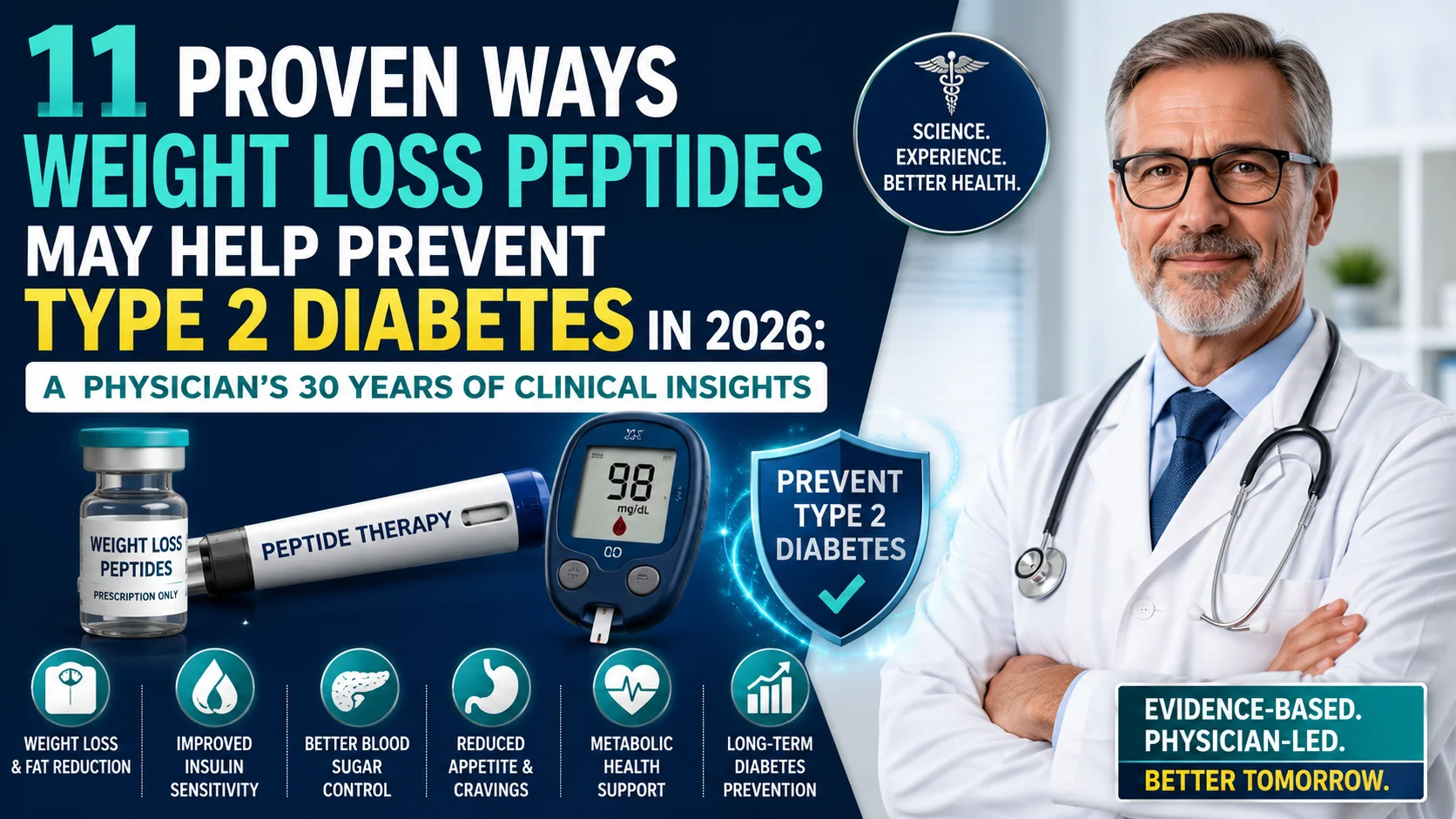

An evidence-based look at GLP-1 medications, prediabetes reversal, and what every patient needs to know
Type 2 diabetes is one of the fastest-growing health crises worldwide. In the United States alone, an estimated 84 million adults have prediabetes, and 85% of them have overweight or obesity. The good news? Type 2 diabetes can be delayed or even prevented. And increasingly, weight loss peptides—specifically GLP-1 receptor agonists like semaglutide and tirzepatide—are emerging as powerful tools in this fight.
But how do these medications actually work for diabetes prevention? Who should consider them? And what does the latest science say about their safety and effectiveness?
Let’s break down everything you need to know.
The Connection Between Weight and Diabetes Risk
Before we dive into peptides, it’s important to understand the fundamental link between weight and diabetes. Excess body weight—particularly visceral fat around the abdomen—drives insulin resistance, the hallmark of prediabetes and type 2 diabetes. When your cells become resistant to insulin, your pancreas works overtime to produce more insulin. Eventually, it can’t keep up, and blood sugar rises.
This is where weight loss becomes a game-changer.
How Much Weight Loss Reduces Diabetes Risk?
The numbers are striking:
- Losing just 5 to 7 percent of your starting weight may reduce your risk of developing type 2 diabetes. For someone weighing 200 pounds, that’s only 10 to 14 pounds.
- Every kilogram (2.2 pounds) of weight lost is associated with an estimated 16% reduction in the risk of developing type 2 diabetes.
- A weight reduction of at least 1% in one year was associated with a 16%–26% lower risk for the condition.
- Even 2.5% weight loss can improve glycemia in people with impaired glucose tolerance, with maximal impact at 10% weight loss.
- In the Korean Diabetes Prevention Study, achieving ≥1.6% weight loss reduced diabetes risk by 37–40%.
The evidence is clear: even modest weight loss significantly reduces diabetes risk. But for many people, achieving and maintaining that weight loss through diet and exercise alone is incredibly challenging. This is where weight loss peptides come in.
Can Weight Loss Peptides Really Prevent Type 2 Diabetes?
Yes—and the clinical trial data is remarkable.
Semaglutide (Wegovy/Ozempic)
In the landmark SELECT trial, which enrolled over 17,600 adults with overweight or obesity and pre-existing cardiovascular disease, semaglutide 2.4 mg demonstrated:
- A 20% reduction in major adverse cardiovascular events
- A 73% reduction in incident diabetes
Across the STEP 1, STEP 5, and SELECT trials, semaglutide 2.4 mg significantly increased regression to normoglycemia (up to 84%) and reduced the risk of progression to diabetes compared with placebo.
Tirzepatide (Mounjaro/Zepbound)
The SURMOUNT-1 trial followed 2,539 participants with obesity, of whom 1,032 also had prediabetes, over 176 weeks (more than 3 years). The results were extraordinary:
- At 176 weeks, mean weight loss was -12.3% with the 5-mg dose, -18.7% with the 10-mg dose, and -19.7% with the 15-mg dose, compared with -1.3% for placebo
- Only 1.3% of tirzepatide-treated participants developed type 2 diabetes, compared with 13.3% in the placebo group—a 93% risk reduction (hazard ratio 0.07)
- After 17 weeks off treatment, 2.4% of the tirzepatide group had developed diabetes versus 13.7% of the placebo group
Three years of treatment with tirzepatide resulted in substantial and sustained weight reduction and a markedly lower risk of progression to type 2 diabetes.
The Bottom Line
Both semaglutide and tirzepatide markedly increase regression to normoglycemia (returning blood sugar to normal levels) and reduce progression to diabetes in people with obesity and prediabetes.
Semaglutide vs. Tirzepatide—Which Is Better?
This is one of the most common questions, and the answer depends on your individual goals and how your body responds.
Head-to-Head Data
A post hoc analysis of the SURMOUNT-5 trial directly compared tirzepatide and semaglutide in 425 participants with obesity and prediabetes. At 72 weeks:
| Measure | Tirzepatide (MTD) | Semaglutide (MTD) |
|---|---|---|
| Mean HbA1c reduction | -0.60% | -0.48% |
| Reversion to normoglycemia | 89.9% | 76.2% |
| Mean body weight reduction | -21.5% | -14.5% |
Tirzepatide showed superior improvements in glycemia, insulin sensitivity, and body weight.
Key Differences
- Semaglutide is a selective GLP-1 receptor agonist. It has robust cardiovascular outcome data from the SELECT trial, showing a 20% reduction in MACE.
- Tirzepatide is a dual GIP/GLP-1 receptor agonist. It appears to produce greater weight loss and better glycemic outcomes. However, long-term cardiovascular outcome data (from the ongoing SURMOUNT-MMO trial) are still pending.
Which Should You Choose?
If maximal weight loss and glycemic improvement are your priorities, tirzepatide may be the stronger option. If you have established cardiovascular disease or significant cardiovascular risk factors, semaglutide has proven cardiovascular benefits. Your doctor can help determine which is right for you based on your medical history, risk factors, and treatment goals.
Can Prediabetes Be Reversed with Peptides?
Yes. In fact, this is one of the most exciting findings from recent research.
Prediabetes is defined by:
- HbA1c of 5.7%–6.4%
- Fasting plasma glucose of 100–125 mg/dL
- Or 2-hour plasma glucose of 140–199 mg/dL during an oral glucose tolerance test
The Evidence for Reversal
- In SURMOUNT-5, 89.9% of tirzepatide-treated participants with prediabetes reverted to normoglycemia (HbA1c < 5.7% and fasting glucose < 100 mg/dL), compared with 76.2% on semaglutide.
- Across multiple trials, semaglutide 2.4 mg increased regression to normoglycemia by up to 84%.
- A 2025 systematic review and meta-analysis concluded that semaglutide and liraglutide may reverse prediabetes to normoglycemia in patients with prediabetes and obesity.
Prediabetes is not a life sentence. With the right intervention—including GLP-1 medications when appropriate—many people can restore their blood sugar to normal levels and significantly reduce their risk of progressing to type 2 diabetes.
Do Peptides Improve Insulin Resistance?
Yes—and this is a key mechanism behind their diabetes-preventing effects.
Tirzepatide treatment has been shown to improve both β-cell function and insulin sensitivity, and these improvements are partly independent of weight reduction.
In the SURMOUNT-5 analysis, tirzepatide produced greater improvements in fasting insulin and HOMA2-IR (a measure of insulin sensitivity) compared with semaglutide.
This means these medications don’t just work by helping you lose weight—they also have direct effects on how your body processes glucose, making your cells more sensitive to insulin and improving your pancreas’s ability to produce insulin when needed.
Can Peptides Lower HbA1c?
Absolutely.
- In SURMOUNT-5, tirzepatide reduced HbA1c by -0.60% compared with -0.48% for semaglutide in people with prediabetes.
- In clinical trials for type 2 diabetes, weekly semaglutide injections led to a 1.9% reduction in HbA1c.
Even in people without diabetes, these medications can help optimize glucose metabolism and keep HbA1c in a healthy range.
Who Should Consider GLP-1 Medications for Prediabetes?
Based on current evidence and clinical guidelines, GLP-1 medications may be appropriate for:
- Adults with overweight or obesity (BMI ≥ 27 kg/m² or ≥ 30 kg/m²) who have prediabetes (HbA1c 5.7%–6.4%, fasting glucose 100–125 mg/dL, or impaired glucose tolerance)
- Individuals with prediabetes who have not achieved adequate glucose control through lifestyle modification alone
- People with obesity and additional cardiovascular risk factors who may benefit from the cardiovascular protective effects of these medications
- Women with a history of gestational diabetes, who have a ~50% risk of developing type 2 diabetes within 5 years after delivery
Who May NOT Be a Good Candidate
- People with normal blood sugar and no metabolic risk factors (these medications are primarily for those with obesity and/or metabolic dysfunction)
- Individuals with a personal or family history of medullary thyroid cancer or Multiple Endocrine Neoplasia syndrome type 2 (contraindications)
- People with severe gastrointestinal disease or pancreatitis history
- Pregnant or breastfeeding women
Always consult with a qualified healthcare provider to determine if GLP-1 therapy is appropriate for you.
Are GLP-1 Medications Safe for Long-Term Use?
This is a critical question, and the answer is nuanced.
What We Know
- In the SURMOUNT-1 trial, three years of treatment with tirzepatide showed no new safety signals.
- The most common adverse events were gastrointestinal (nausea, vomiting, diarrhea), which were mostly mild to moderate and occurred primarily during the dose-escalation period in the first 20 weeks.
- The SELECT trial followed over 17,600 participants for an extended period, establishing the long-term safety profile of semaglutide.
Potential Long-Term Considerations
While the data are reassuring, GLP-1 medications are relatively new for weight management and diabetes prevention. Long-term studies are ongoing. Some considerations:
- Pancreatitis: Rare but serious. Discuss your risk with your doctor.
- Gallbladder disease: Weight loss itself can increase gallstone risk.
- Heart rate: These medications may cause a slight increase in resting heart rate.
- Nutritional deficiencies: Significant weight loss can lead to nutrient deficiencies if not monitored.
The Bottom Line
For most people with obesity and prediabetes, the benefits of GLP-1 therapy—including diabetes prevention, cardiovascular risk reduction, and improved quality of life—appear to outweigh the risks. However, this is a decision that should be made in partnership with a healthcare provider who can monitor you appropriately.
What Are the Side Effects?
The most common side effects of GLP-1 medications are gastrointestinal:
- Nausea (most common, especially during dose escalation)
- Vomiting
- Diarrhea
- Constipation
- Abdominal pain
These side effects are typically mild to moderate and diminish over time as your body adjusts to the medication.
Less Common but Serious Side Effects
- Pancreatitis (inflammation of the pancreas)
- Gallbladder disease (including gallstones)
- Kidney injury (usually in the setting of severe dehydration from vomiting/diarrhea)
- Severe allergic reactions
- Increased heart rate
Tips to Minimize Side Effects
- Start at the lowest dose and titrate up slowly as prescribed
- Eat smaller, more frequent meals
- Avoid high-fat foods during dose escalation
- Stay hydrated
- Discuss anti-nausea medications with your doctor if needed
How Long Does Treatment Take?
Treatment duration depends on your goals and how your body responds:
- Initial dose escalation: Typically 4–8 weeks to reach the maintenance dose
- Weight loss: Most people see meaningful weight loss within 12–16 weeks, with maximal effects at 72 weeks (about 1.5 years) or longer
- Diabetes prevention: In the SURMOUNT-1 trial, the 3-year treatment period showed dramatic reductions in diabetes incidence
- Maintenance: For sustained benefits, most experts recommend long-term treatment. Obesity and prediabetes are chronic conditions, and stopping medication often leads to weight regain and loss of glycemic benefits
What Happens If You Stop Taking Peptides?
This is one of the most important considerations.
In the SURMOUNT-1 trial, after 17 weeks off treatment:
- 2.4% of tirzepatide-treated participants had developed diabetes, compared with 13.7% of the placebo group
While this shows that some protective effect persisted, it also demonstrates that weight regain and metabolic deterioration occur when treatment stops.
Weight loss maintenance is challenging and requires ongoing support. Many patients may need long-term or even lifelong treatment to maintain the benefits, similar to how blood pressure or cholesterol medications are used.
Can Weight Regain Increase Diabetes Risk Again?
Yes. Weight regain reverses many of the metabolic improvements achieved during treatment.
When weight is regained:
- Insulin sensitivity deteriorates
- HbA1c rises
- Diabetes risk increases
This is why ongoing treatment and support are essential for weight maintenance. If you stop taking a GLP-1 medication, it’s crucial to have a plan in place—including lifestyle interventions, dietary support, and possibly alternative medications—to help maintain your weight loss and metabolic improvements.
Are Peptides Better Than Metformin?
This depends on your specific situation.
Metformin
- Pros: Inexpensive, well-studied, safe long-term, available as generic
- Cons: Modest weight loss (typically 2–3 kg), may cause gastrointestinal side effects
- Evidence: The Diabetes Prevention Program showed metformin reduced diabetes risk by 31% in people with prediabetes
GLP-1 Medications (Semaglutide/Tirzepatide)
- Pros: Much greater weight loss (15–22%), superior glycemic improvement, cardiovascular benefits
- Cons: Much more expensive, require injection (though oral semaglutide is available), newer with less long-term data
- Evidence: Diabetes risk reduction of 73–93% in clinical trials—significantly more than metformin
Which Is Better?
For many people with obesity and prediabetes, GLP-1 medications are more effective at preventing diabetes. However, cost and insurance coverage are major barriers. Metformin remains a valuable, affordable option, and for some patients, combination therapy may be appropriate.
Can Peptides Help People Without Diabetes?
Yes—and this is increasingly recognized.
GLP-1 medications are approved for:
- Weight management in people with obesity (BMI ≥ 30) or overweight (BMI ≥ 27) with at least one weight-related comorbidity
- Cardiovascular risk reduction in people with overweight/obesity and established cardiovascular disease
Even in people without diabetes or prediabetes, these medications can provide significant health benefits, including:
- Substantial weight loss
- Improved cardiovascular risk factors (blood pressure, cholesterol)
- Reduced inflammation
- Improved quality of life
However, these medications are not for everyone. They should be used in people with clinically significant obesity or metabolic risk factors, not for cosmetic weight loss.
Which Lab Tests Are Needed Before Treatment?
Before starting GLP-1 therapy, your healthcare provider should order:
Essential Tests
- HbA1c – to assess your average blood sugar over 2–3 months
- Fasting plasma glucose – to check for prediabetes or diabetes
- Comprehensive metabolic panel – to assess kidney and liver function
- Lipid panel – to check cholesterol and triglycerides
Additional Tests Your Doctor May Order
- Fasting insulin – to assess insulin resistance
- Thyroid function tests – to rule out thyroid disease (contraindication for some GLP-1 medications)
- Vitamin levels (B12, vitamin D) – as baseline for monitoring
- Pregnancy test – for women of childbearing age
Monitoring During Treatment
- Regular HbA1c checks (every 3–6 months)
- Kidney function monitoring
- Weight and vital signs at each visit
- Screening for side effects at each visit
Are Online GLP-1 Clinics Safe?
This is a critical question—and the answer is: it depends.
What to Look For in a Telemedicine Provider
- ✅ Licensed physicians – You should be able to verify the credentials of the prescribing doctor
- ✅ Comprehensive medical evaluation – Including appropriate lab work before prescribing
- ✅ Ongoing monitoring – Regular follow-up to assess efficacy and side effects
- ✅ Transparent pricing – No hidden fees or bait-and-switch tactics
- ✅ Legitimate pharmacy partners – Medications should come from licensed, reputable pharmacies
Red Flags to Avoid
- ❌ No physician consultation – If you can get a prescription without speaking to a doctor
- ❌ No lab work required – Prescribing without baseline testing is irresponsible
- ❌ Guaranteed approval – Legitimate clinics screen patients for contraindications
- ❌ Extremely low prices – If it seems too good to be true, it probably is
- ❌ No follow-up care – Ongoing monitoring is essential for safety
Our Recommendations
We’ve partnered with trusted telemedicine providers that meet our rigorous standards for safety, transparency, and quality care:
Science-Backed Weight Loss Solutions
Physician-prescribed GLP-1 medications and metabolic health programs.
🌿 GLP-1 Weight Loss Program
Comprehensive medical weight loss with semaglutide and tirzepatide.
- Board-certified physicians
- FDA-approved medications
- Ongoing monitoring & support
🧬 Metabolic Health Program
Personalized optimization including peptides, hormones, and biomarkers.
- Physician-led care
- Comprehensive lab testing
- Custom treatment plans
Are Compounded GLP-1 Medications Effective?
This requires careful consideration.
What Are Compounded GLP-1 Medications?
Compounded medications are custom-made versions of FDA-approved drugs, typically produced by licensed compounding pharmacies. For GLP-1 medications, compounding usually involves creating custom doses or formulations of semaglutide or tirzepatide.
Potential Benefits
- Lower cost – Often significantly cheaper than brand-name medications
- Custom dosing – May allow for more personalized titration
- Alternative formulations – Some compounding pharmacies offer different delivery methods
Important Risks and Considerations
- Quality control concerns – Compounded medications are not FDA-approved and may have variable potency and purity
- Lack of large-scale safety data – The clinical trial data for semaglutide and tirzepatide come from the brand-name formulations
- Regulatory uncertainty – The FDA has issued warnings about compounded GLP-1 medications
Our Recommendation
If you’re considering compounded GLP-1 medications:
- Only use a licensed 503A or 503B compounding pharmacy with a good reputation
- Ensure your prescribing physician is involved in the process
- Ask about the source of the active ingredient
- Be cautious of prices that seem too good to be true
Always prioritize safety over cost when it comes to prescription medications.
Will Insurance Pay for Peptide Therapy?
This varies widely.
Insurance Coverage for GLP-1 Medications
- For type 2 diabetes: Most insurance plans cover GLP-1 medications (Ozempic, Mounjaro) with a diabetes diagnosis
- For weight management: Coverage for Wegovy and Zepbound is inconsistent. Some plans cover it, many do not. Prior authorization is often required.
- For prediabetes: Coverage is rare. Most insurance plans do not cover GLP-1 medications for prediabetes prevention.
What to Do
- Check your specific plan’s formulary – Call your insurance company or use their online tool
- Ask about prior authorization requirements – Your doctor may need to document medical necessity
- Explore manufacturer assistance programs – Both Novo Nordisk and Eli Lilly offer patient assistance programs
- Consider cash-pay options – Some telemedicine providers offer affordable cash-pay programs (see our partner offers above)
For Compounded Peptides
Compounded medications are almost never covered by insurance. They are typically cash-pay services.
Can Preventing Diabetes Today Reduce Future Health Complications?
Absolutely—and this is perhaps the most compelling reason to take action.
The Complications of Type 2 Diabetes
Uncontrolled diabetes can lead to:
- Cardiovascular disease – Heart attack, stroke, peripheral artery disease
- Kidney disease – Diabetic nephropathy, potentially leading to dialysis
- Eye disease – Diabetic retinopathy, potentially leading to blindness
- Nerve damage – Diabetic neuropathy, potentially leading to amputation
- Foot problems – Ulcers, infections, amputations
The Power of Prevention
The longer you have diabetes, the more likely you are to develop health problems, so delaying diabetes by even a few years will benefit your health.
- Every year without diabetes is a year of protection for your heart, kidneys, eyes, and nerves
- Preventing diabetes means avoiding the daily burden of blood sugar monitoring, medication management, and dietary restrictions
- Delaying diabetes by even 5–10 years can significantly reduce your lifetime risk of complications
Beyond Diabetes Prevention
The benefits of GLP-1 medications extend beyond diabetes prevention:
- Cardiovascular risk reduction – Semaglutide reduced MACE by 20% in the SELECT trial
- Blood pressure improvement – Semaglutide reduced systolic blood pressure by 3.82 mm Hg versus placebo
- Cholesterol improvement – Semaglutide improved total cholesterol and HDL cholesterol
Preventing diabetes today isn’t just about avoiding a diagnosis—it’s about protecting your future health.
Frequently Asked Questions
A: Yes. Clinical trial data shows semaglutide reduces incident diabetes by 73% and tirzepatide by 93% in people with obesity and prediabetes.
A: Adults with overweight or obesity (BMI ≥ 27 or ≥ 30) and prediabetes who haven’t achieved adequate glucose control through lifestyle changes alone. Also, those with additional cardiovascular risk factors.
A: Losing just 5–7% of your starting weight (10–14 pounds for a 200-pound person) can significantly reduce your risk. Even 1% weight loss is associated with a 16–26% lower risk.
A: Tirzepatide shows slightly superior results (93% risk reduction vs. 73% for semaglutide). However, semaglutide has proven cardiovascular benefits. The best choice depends on your individual health profile.
A: Tirzepatide produces greater weight loss (−21.5% vs. −14.5%) and better glycemic outcomes (89.9% vs. 76.2% reversion to normoglycemia). However, semaglutide has established cardiovascular benefits. Discuss with your doctor which is right for you.
A: Yes. In SURMOUNT-5, 89.9% of tirzepatide-treated participants with prediabetes reverted to normal blood sugar levels. Semaglutide achieved up to 84% reversion in other trials.
A: Yes, based on current evidence. Three-year data from SURMOUNT-1 showed no new safety signals. The most common side effects are gastrointestinal and typically mild to moderate.
A: Most common: nausea, vomiting, diarrhea, constipation. These are usually mild to moderate and occur during dose escalation. Rare but serious: pancreatitis, gallbladder disease.
A: Dose escalation: 4–8 weeks. Meaningful results: 12–16 weeks. Maximal effects: 72 weeks or longer. Maintenance: Typically long-term, as obesity and prediabetes are chronic conditions.
A: Weight regain and metabolic deterioration occur. After 17 weeks off treatment, diabetes incidence increased from 1.3% to 2.4% in the tirzepatide group. Ongoing treatment and support are usually needed.
A: Yes. Weight regain reverses insulin sensitivity improvements and increases diabetes risk. This is why long-term maintenance strategies are essential.
A: For people with obesity and prediabetes, GLP-1 medications are more effective (73–93% risk reduction vs. 31% for metformin). However, metformin is much less expensive and has a longer safety record.
A: Yes. GLP-1 medications are approved for weight management in people with obesity (BMI ≥ 30) or overweight (BMI ≥ 27) with weight-related conditions, and for cardiovascular risk reduction.
A: Essential: HbA1c, fasting glucose, comprehensive metabolic panel, lipid panel. Additional: Fasting insulin, thyroid function, vitamin levels, pregnancy test (if applicable).
A: It depends on the provider. Choose clinics with licensed physicians, comprehensive evaluations, lab work, ongoing monitoring, and legitimate pharmacy partners. Avoid clinics with no physician consultation, no lab work, or guaranteed approval.
A: They may be, but quality and potency can vary. Use only licensed 503A or 503B compounding pharmacies with a good reputation. Be aware that compounded medications are not FDA-approved and lack large-scale safety data.
A: For type 2 diabetes: Usually yes. For weight management: Inconsistent. For prediabetes: Rarely. Check your specific plan. Manufacturer assistance programs and cash-pay options are available.
A: Absolutely. Delaying diabetes by even a few years reduces your lifetime risk of heart disease, kidney disease, eye disease, nerve damage, and other complications. Every year without diabetes protects your long-term health.
A: While they don’t typically “cure” type 2 diabetes, GLP-1 agonists (like semaglutide and tirzepatide) can induce significant weight loss and improve glycemic control so effectively that many patients achieve diabetes remission (HbA1c < 6.5% without medication). However, stopping the medication often leads to recurrence, so ongoing therapy is usually required.
A: The most proven method is significant, sustained weight loss (ideally 10-15%+). This can be achieved through bariatric surgery, intensive lifestyle interventions, or potent GLP-1/GIP therapies. Reversal means normalizing blood sugar without medications.
A: Absolutely. In fact, semaglutide (Ozempic) and tirzepatide (Mounjaro) are FDA-approved specifically for the treatment of type 2 diabetes to lower HbA1c, in addition to their weight loss benefits.
A: Currently, tirzepatide shows the most robust HbA1c reduction (up to -2.0-2.5%) and weight loss, making it arguably the most potent. Semaglutide is also excellent and has more long-term cardiovascular outcomes data. The “best” depends on insurance, tolerability, and CV risk profile.
A: GLP-1s (semaglutide, liraglutide, dulaglutide) and dual GIP/GLP-1s (tirzepatide) are the leading peptide therapies. They enhance insulin secretion, suppress glucagon, slow gastric emptying, and reduce appetite.
A: GLP-1s are not FDA-approved for type 1 diabetes and can increase the risk of diabetic ketoacidosis (DKA) in type 1 patients if not carefully managed. They are generally not recommended except in highly controlled clinical settings.
A: Tirzepatide for maximum glycemic and weight efficacy; semaglutide for proven cardiovascular benefit. Both are top-tier choices depending on patient priorities.
A: “Natural” over-the-counter peptide supplements are largely unregulated and ineffective for weight loss. The only proven “peptides” are injectable prescription ones like semaglutide and tirzepatide. Some refer to GLP-1 produced naturally by the body, which is stimulated by food intake.
A: Tirzepatide (Zepbound/Mounjaro) consistently shows the greatest average weight loss (15-22% of body weight), followed closely by Semaglutide (Wegovy/Ozempic) (12-15%).
A: Tirzepatide has shown superior improvements in HOMA2-IR (insulin sensitivity) compared to semaglutide. Both significantly improve insulin resistance beyond just weight loss.
A: Primarily gastrointestinal: nausea, vomiting, diarrhea, constipation, and abdominal pain. Usually mild/moderate and dose-dependent. Serious risks include pancreatitis and gallbladder disease.
A: Retatrutide is a highly anticipated triple agonist (GIP/GLP-1/Glucagon) currently in Phase 3 trials. Early data shows unprecedented weight loss (up to 24% in phase 2). It is not yet FDA-approved, but is considered the next big breakthrough in obesity medicine.
Final Thoughts
The evidence is overwhelming: weight loss peptides like semaglutide and tirzepatide are game-changers for diabetes prevention and management. They don’t just help you lose weight—they improve insulin sensitivity, lower HbA1c, reduce cardiovascular risk, and can actually reverse prediabetes in the majority of patients.
But these medications are not magic pills. They require:
- Proper medical supervision
- Commitment to lifestyle changes
- Long-term adherence for sustained benefits
If you have prediabetes, obesity, or metabolic risk factors, talk to your doctor about whether GLP-1 therapy is right for you. And if you’re considering telemedicine options, choose providers that prioritize safety, transparency, and quality care.
Your future health is worth the investment.
Start Your GLP-1 Journey Today
Board-certified physicians. FDA-approved medications. Ongoing support.
🌿 GLP-1 Weight Loss Program
Comprehensive medical weight loss with semaglutide and tirzepatide.
- Board-certified physicians
- FDA-approved medications
- Ongoing monitoring & support
🧬 Metabolic Health Program
Personalized optimization including peptides, hormones, and biomarkers.
- Physician-led care
- Comprehensive lab testing
- Custom treatment plans
All brands have been vetted. Prices and offers are subject to change per the partner’s website.