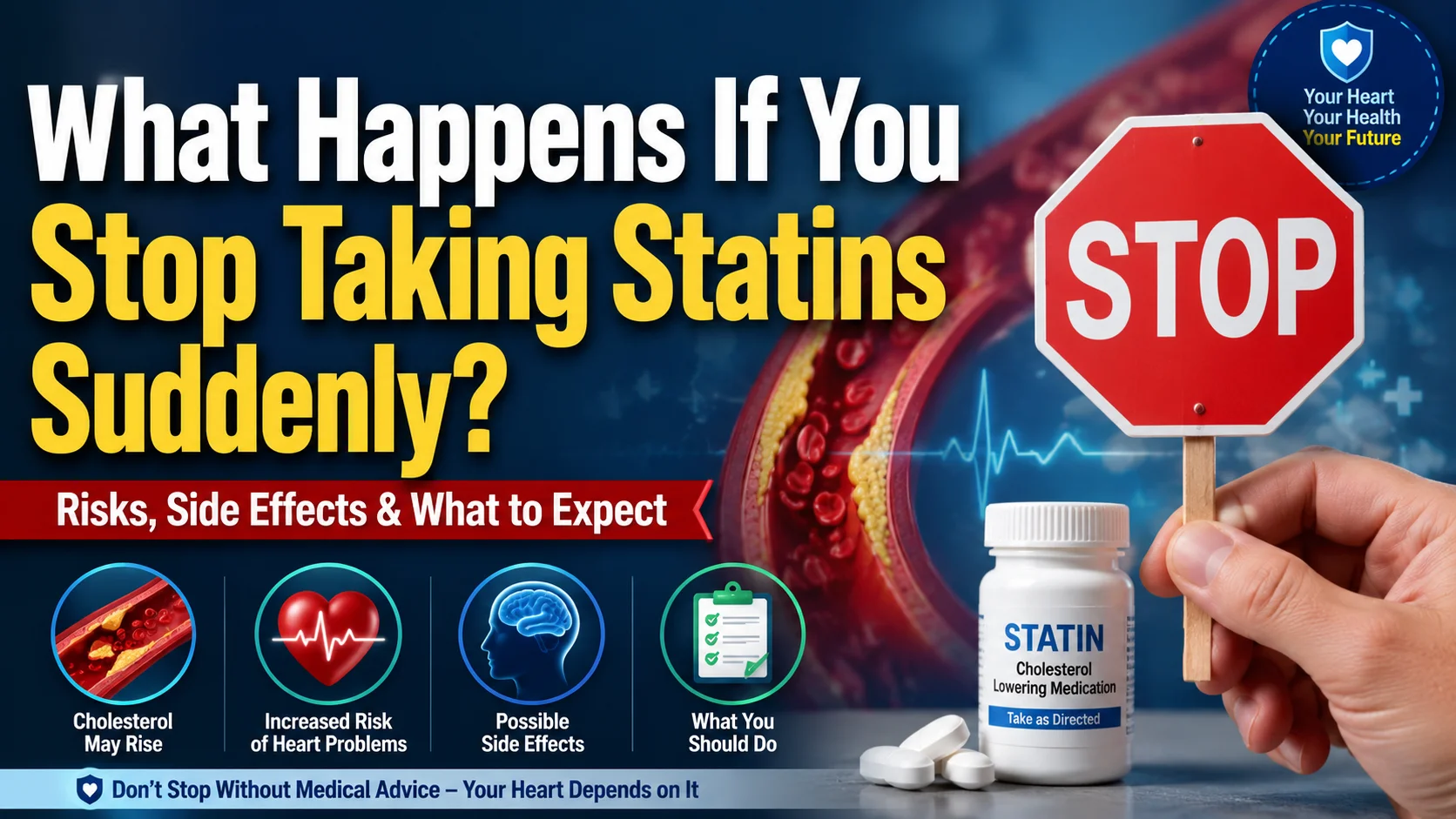

Stopping statins suddenly is dangerous and can significantly increase your risk of heart attack, stroke, and other cardiovascular events. Within just 48 hours of your last dose, LDL (“bad”) cholesterol begins rising. Within 4 days, LDL can increase by nearly 30%. Studies show that people who stop taking statins have a much higher likelihood of major heart events—one study found a 37% higher risk of heart attack and 33% higher risk of stroke. Never stop taking statins without talking to your doctor first. If you’re experiencing side effects, your doctor can adjust your dose, switch you to a different statin, or explore alternatives.
📑 Contents
1. Why Do People Stop Taking Statins?
Statins are among the most commonly prescribed medications in the United States. Yet studies indicate that 25% to 50% of people prescribed statins discontinue use within the first 6 to 12 months.
Common reasons for stopping statins include:
- Side effects – muscle aches, digestive issues, or concerns about blood sugar changes
- Feeling “cured” – many mistakenly believe normal cholesterol levels mean they no longer need medication
- The “nocebo effect” – people who expect side effects may actually experience them
- Cost or access issues
2. What Happens When You Stop Taking Statins?
The answer to “what happens if you stop taking statins suddenly” is straightforward: your body goes back to making cholesterol at its pre-treatment levels.
Statins work by blocking an enzyme your liver needs to produce cholesterol. When you stop taking statins, that inhibition disappears. Your cholesterol after stopping statins doesn’t just slowly creep up—it rebounds rapidly.
Cardiologist Dr. Leslie Cho explains: “If you stop taking cholesterol medicine, your cholesterol will rise again, and that means you have an increased risk of very serious complications.”
🚨 Critical Warning: There’s no “grace period” or lingering protective effect. Research shows no evidence of a statin lingering effect once discontinued.
3. How Quickly Does Cholesterol Rise After Stopping Statins?
The timeline for how long after stopping statins does cholesterol increase is shockingly short:
| Time After Stopping | LDL-C Increase |
|---|---|
| After first missed dose | Significant increase begins |
| 48 hours | LDL-C rises significantly |
| 4 days | ~30% increase in LDL-C |
| 7–15 days | LDL-C peaks at ~79% above baseline |
| 2–3 months | ~44.9% increase |
| 4–6 months | ~54.6% increase |
This rapid increase happens regardless of how long you’ve been on the statin or what dose you were taking.
📊 Key Finding: A study of 60 adults on atorvastatin found that 4 days without the medication resulted in an almost 30% increase in LDL-C—and the increase was significant after just the first omitted dose.
4. Heart Attack Risk After Stopping Statins
The heart attack risk after stopping statins is not theoretical—it’s been documented in multiple large-scale studies.
The Danish Study (2021)
A study of 67,418 people aged 75+ who had taken statins for at least 5 years found that those who stopped taking statins were:
- 37% more likely to have a heart attack
- 33% more likely to have a stroke
- 43% more likely to die from either
First-Year Risk
Your risk of heart attack, stroke, and other related issues starts increasing within the first year of statin discontinuation. Large cohort studies have reported an increased risk of cardiovascular events and all-cause mortality in high-risk patients within the first year.
Acute Coronary Syndrome Patients
For patients hospitalized with acute coronary syndromes, statin withdrawal in the first 24 hours increased hospital morbidity and mortality (11.9% vs 5.7% for those who continued).
5. Stopping Specific Statins: Atorvastatin, Rosuvastatin, and Simvastatin
Stopping Atorvastatin Suddenly
Stopping atorvastatin suddenly (Lipitor) has been specifically studied. Within 48 hours of the last dose, LDL-C begins rising significantly. By day 4, LDL-C increases by nearly 30%.
Stopping Rosuvastatin Suddenly
Stopping rosuvastatin suddenly (Crestor) carries the same risks. The NHS explicitly warns: “Stopping rosuvastatin may cause your cholesterol to rise. This increases your risk of heart attacks and strokes.” Importantly, you will not get withdrawal symptoms—but the cardiovascular protection disappears.
Stopping Simvastatin Suddenly
Stopping simvastatin suddenly (Zocor) may increase your cardiovascular risk. Without medical supervision, statin discontinuation may increase your long-term risk of serious cardiovascular events.
6. Statin Side Effects After Stopping
What About Withdrawal?
Do statins cause withdrawal symptoms? No—statins do not cause classical withdrawal symptoms like some other medications. However, the statin side effects after stopping are primarily related to the loss of cardiovascular protection and the rebound increase in cholesterol.
Muscle Symptoms Resolution
If you stopped due to muscle pain, statin-related muscle symptoms typically begin resolving within 1-2 weeks after statin discontinuation and completely resolve within 2 months.
Cognitive Issues
Rare cases of cognitive impairment (memory loss, forgetfulness) are generally reversible upon statin discontinuation, with symptom resolution occurring in a median of 3 weeks.
7. Can Lifestyle Changes Replace Statins?
This is one of the most common questions about managing cholesterol without statins.
The short answer: For many people, no. Here’s why:
- Your body creates 75% of its cholesterol—only 25% comes from diet
- Statins don’t just lower cholesterol—they stabilize arterial plaque and reduce heart attack risk by up to 25-35% beyond cholesterol control alone
- Even if your cholesterol levels are normal on a statin, that’s because the medication is working—not because your body has “healed”
Alternatives to Statins
For those who truly cannot tolerate statins, there are alternatives:
- Bempedoic acid – lowers LDL by about 20-25%
- Ezetimibe – lowers LDL by about 20%
- PCSK9 inhibitors – powerful injectable options
- Lifestyle changes – diet, exercise, and weight management (but rarely enough alone for high-risk patients)
8.FAQs
Absolutely not. Never stop a statin on your own, even if your latest cholesterol lab is perfect. Statin discontinuation without medical supervision is dangerous and can significantly increase your risk of serious heart events.
Statins can usually be stopped without tapering. However, this decision should only be made by your doctor based on your individual risk profile. The key isn’t how you stop—it’s whether you should stop at all.
Missing a single dose isn’t catastrophic—it typically takes more than a few days for cholesterol to start going back up. If you miss a dose, take it as soon as you remember. If it’s nearly time for the next dose, skip the missed dose and take your next one as normal. Do not double the dose.
Within 48 hours of your last dose, LDL-C begins to rise significantly. Within 4 days, LDL-C increases by nearly 30%. The increase continues and peaks at 7-15 days at about 79% above baseline.
No. Statins do not cause classical withdrawal symptoms. However, the loss of cardiovascular protection and rebound cholesterol increase create significant health risks.
For many high-risk patients, no. Statins provide cardiovascular protection beyond just lowering numbers—they stabilize plaques and reduce inflammation. Lifestyle changes are beneficial but often insufficient as a replacement.
For most people, yes. If you have heart disease or are at high risk, experts recommend lifelong statin therapy. If you stop, your cholesterol will return to high levels. In some cases, significant lifestyle changes may allow for dose reduction, but this must be doctor-supervised.
Yes. Studies show that stopping atorvastatin suddenly leads to a nearly 30% increase in LDL-C within just 4 days. This rapid increase significantly raises cardiovascular risk.
9. Final Thoughts
The evidence is overwhelming: stopping statins suddenly puts you at unnecessary risk. Your cholesterol levels can rebound within days, and your risk of heart attack and stroke increases significantly within months.
If you’re experiencing side effects, don’t quit—communicate. Your doctor can:
- Lower your dose
- Switch you to a different statin
- Try a different medication altogether
⚠️ Disclaimer
This article is for informational purposes only and does not constitute medical advice. The information provided here is not a substitute for professional medical consultation, diagnosis, or treatment. Always consult your healthcare provider before making any changes to your medication regimen. Do not stop taking statins or any prescribed medication without first speaking to your doctor. Individual health situations vary, and only a qualified healthcare professional can assess your specific risks and benefits.
📢 Disclosure
This article was researched and written using publicly available medical literature, including peer-reviewed studies, clinical guidelines, and reputable health organization resources. The author is not affiliated with any pharmaceutical company or medical device manufacturer. References to specific medications (atorvastatin, rosuvastatin, simvastatin, etc.) are for educational purposes only and do not constitute endorsements.