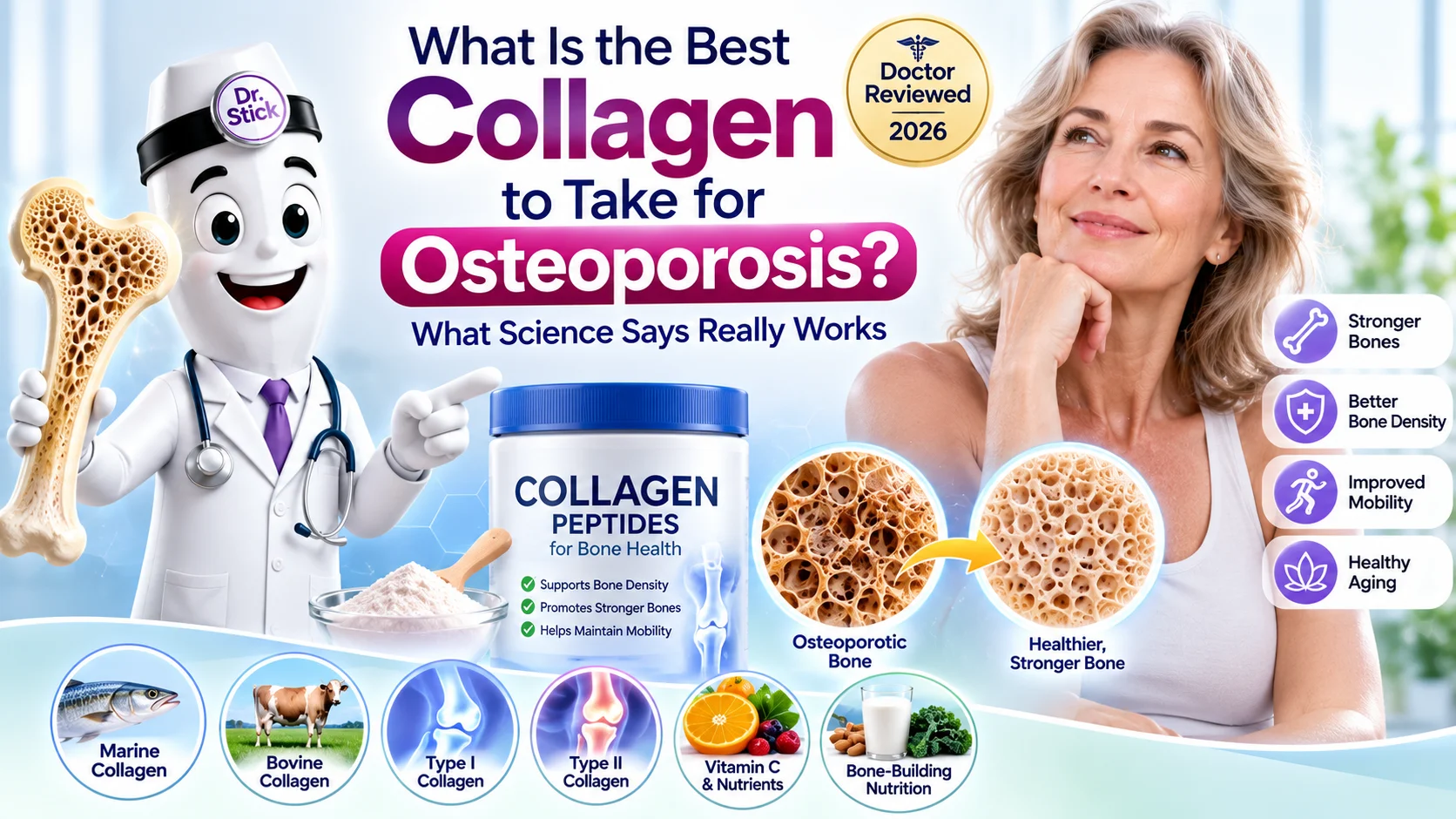

Find effective collagen brands proven to help bone density — and understand the science behind them.
- Best type: Specific bioactive collagen peptides (Type I) – brands like FORTIBONE® have the strongest clinical evidence.
- Proven dosage: 5 grams (5,000 mg) daily – this is the dose used in most successful clinical trials.
- Duration: At least 12 months for measurable bone density improvements.
- Key combo: Always pair with calcium and vitamin D – the synergy is well-documented.
- What it does: Increases bone mineral density (BMD) at the spine and femoral neck, improves bone turnover markers, and may reduce fracture risk.
- What it CANNOT do: Collagen is an adjunct therapy – it should never replace prescription osteoporosis medications.
📑 Table of Contents
- 1. Can Collagen Really Reverse Osteoporosis? What the Evidence Shows
- 2. How Much Collagen Should I Take for Osteoporosis Daily
- 3. Bovine vs Marine Collagen: Which Is Better for Bones?
- 4. Vegan and Non-Vegan Collagen Sources
- 5. How Collagen Actually Works on Your Bones
- 6. Semantic FAQs
- 7. Final Verdict: What to Buy
1. Can Collagen Really Reverse Osteoporosis? What the Evidence Shows
Let’s be clear from the start: no, collagen cannot “reverse” osteoporosis in the way a medication might. Osteoporosis is a complex metabolic bone disease characterized by low bone mass and microarchitectural deterioration. Collagen supplementation is not a cure.
What collagen CAN do is slow down, counteract, and potentially partially reverse degenerative bone loss. The evidence comes from multiple high-quality studies:
- A landmark randomized controlled trial of 131 postmenopausal women found that taking 5g of specific collagen peptides daily for 12 months significantly increased BMD at both the spine and femoral neck compared to placebo.
- A 4-year follow-up study of the same participants showed that daily 5g intake led to a steady increase in BMD – with spine BMD improving by 5.79% to 8.16% and femoral neck by 1.23% to 4.21%. None of the participants experienced fractures during the 4-year period.
- A 2025 meta-analysis concluded that collagen peptide supplementation, especially when combined with calcium and vitamin D, is associated with continuous improvements in BMD, bone turnover markers, and muscle function.
So while “reversal” is too strong a word, the evidence clearly shows that collagen can meaningfully improve bone density in people with osteopenia and osteoporosis.
2. How Much Collagen Should I Take for Osteoporosis Daily
The clinical evidence is remarkably consistent on dosage:
The Standard Dose: 5 Grams (5,000 mg) Per Day
| Study | Dosage | Duration | Result |
|---|---|---|---|
| König et al. (RCT, 131 women) | 5g daily | 12 months | Significant BMD increase at spine & femoral neck |
| 4-year follow-up study | 5g daily | 4 years | 5.79–8.16% spine BMD increase; zero fractures |
| Meta-analysis (2025) | Variable | Various | Significant BMD improvements when combined with Ca + Vit D |
Key Points on Dosage
- Start with 5g daily – this is the evidence-backed dose.
- Take it consistently – bone building takes time; expect to wait at least 12 months for measurable changes.
- Combine with calcium (500–1,000 mg) and vitamin D (400–800 IU) – the synergy is critical.
- Some experts recommend types I, II, III, V & X for comprehensive bone support, though most research focuses on Type I.
- Higher doses (up to 12g) have been studied for osteoarthritis, but 5g remains the standard for osteoporosis.
“A daily intake of 5 g of specific bioactive collagen peptides resulted in a steady increase in BMD and the T-score in the spine and femoral neck after 4 years.”
3. Bovine vs Marine Collagen: Which Is Better for Bones?
This is one of the most debated questions in the collagen world. Here’s the reality: both bovine and marine collagen can support bone health – they both contain Type I collagen, which is the primary collagen found in bone.
Comparative Table: Bovine vs Marine Collagen for Bone Health
| Feature | Bovine Collagen | Marine Collagen |
|---|---|---|
| Source | Cows (hides, bones, connective tissue) | Fish skin, scales, bones (often from processing waste) |
| Collagen Types | Type I and Type III | Primarily Type I |
| Bioavailability | Good; larger molecular size | Higher – smaller molecular size, better absorption |
| Bone Health Evidence | Strong – FORTIBONE® is bovine-sourced | Growing – fish collagen hydrolysates show therapeutic potential |
| Sustainability | Lower (land-based agriculture) | Higher (uses fish processing waste) |
| Allergy Risk | May not suit beef-allergic individuals | Not suitable for fish/shellfish allergies |
| Dietary Suitability | Non-vegan; acceptable for most | Non-vegan; pescatarian-friendly |
| Cost | Generally more affordable | Often more expensive |
| Clinical Backing | Extensive – multiple RCTs and long-term studies | Emerging – promising preclinical and some clinical data |
The Bottom Line on Bovine vs Marine
For osteoporosis specifically, bovine collagen has the stronger clinical track record. The most studied product, FORTIBONE®, is bovine-sourced and has been validated in multiple randomized controlled trials.
That said, marine collagen is not inferior – it has higher bioavailability and shows promise in bone regeneration. The choice often comes down to dietary preferences, allergies, budget, and individual response.
“The choice between marine collagen and bovine collagen depends on your individual needs and preferences.”
4. Vegan and Non-Vegan Collagen Sources
Non-Vegan Sources (Traditional Collagen)
| Source | Type | Bone Health Relevance |
|---|---|---|
| Bovine (cow) | Type I & III | Strongest clinical evidence for bone density |
| Marine (fish) | Type I | High bioavailability; growing evidence |
| Porcine (pig) | Type I & III | Less studied for bone health |
| Chicken | Type II | More for joint cartilage than bone |
| Bone Broth | Mixed | Whole-food source; less concentrated |
Vegan “Collagen” – What’s the Reality?
There is no such thing as vegan collagen. Collagen is an animal-derived protein. However, there are vegan collagen builders (sometimes misleadingly called “vegan collagen”) that provide the building blocks for your body to produce its own collagen:
| Vegan Option | What It Does | Effectiveness |
|---|---|---|
| Vitamin C | Essential co-factor for collagen synthesis | Critical – without it, collagen production stops |
| Silica (bamboo, horsetail) | Supports collagen formation | Some evidence, but less direct |
| Copper & Zinc | Trace minerals needed for collagen production | Supportive but not primary |
| Amino acids (from plants) | Provide glycine, proline, hydroxyproline | Plant sources are incomplete for collagen-specific amino acids |
| Vitamin E & antioxidants | Protect existing collagen from degradation | Supportive |
The Hard Truth About Vegan Options
If you’re vegan and concerned about osteoporosis, you have two choices:
- Take a vegan collagen builder supplement – these provide vitamin C, silica, copper, zinc, and plant-based amino acids to support your body’s natural collagen production. However, they do not directly supply collagen peptides and have far less clinical evidence for bone health.
- Consider a non-vegan collagen supplement – if bone health is a serious concern, the clinical evidence overwhelmingly supports animal-derived collagen peptides. Many people make an exception for medical reasons.
“Collagen peptides come from animals, including cows, pigs, and fish.”
5. How Collagen Actually Works on Your Bones
Understanding the mechanism helps you appreciate why collagen matters:
Collagen Is the Scaffold of Your Bones
Bone is not just calcium – it’s a composite material made of:
- ~70% Type I collagen (the organic matrix that provides flexibility and structure)
- ~30% minerals (calcium phosphate, which provides hardness)
When you lose collagen, your bones become brittle – like dry, crumbling plaster rather than flexible, strong material. This is why osteoporosis is as much a collagen loss disease as it is a mineral loss disease.
What Collagen Peptides Do
- Stimulate osteoblasts – the cells that build new bone.
- Increase bone formation markers – P1NP (a marker of bone formation) increases significantly with supplementation.
- Reduce bone degradation markers – CTX-1 (a marker of bone breakdown) increases in the control group but not in the collagen group.
- Release growth factors – collagen breakdown during bone remodeling releases IGF-I and II, which promote bone formation.
- Improve bone mineralization – Hyp-peptides from collagen promote osteoblast activity.
The Synergy with Calcium and Vitamin D
Collagen peptides work best when combined with calcium and vitamin D. The meta-analysis found:
- Collagen alone: significant BMD improvements
- Collagen + calcium + vitamin D: even greater improvements (SMDs 0.40–0.56)
Think of it this way:
- Collagen provides the scaffolding (the organic matrix).
- Calcium provides the bricks (the mineral content).
- Vitamin D ensures the bricks get delivered (calcium absorption).
You need all three for strong bones.
6.FAQs
7. Final Verdict: What to Buy
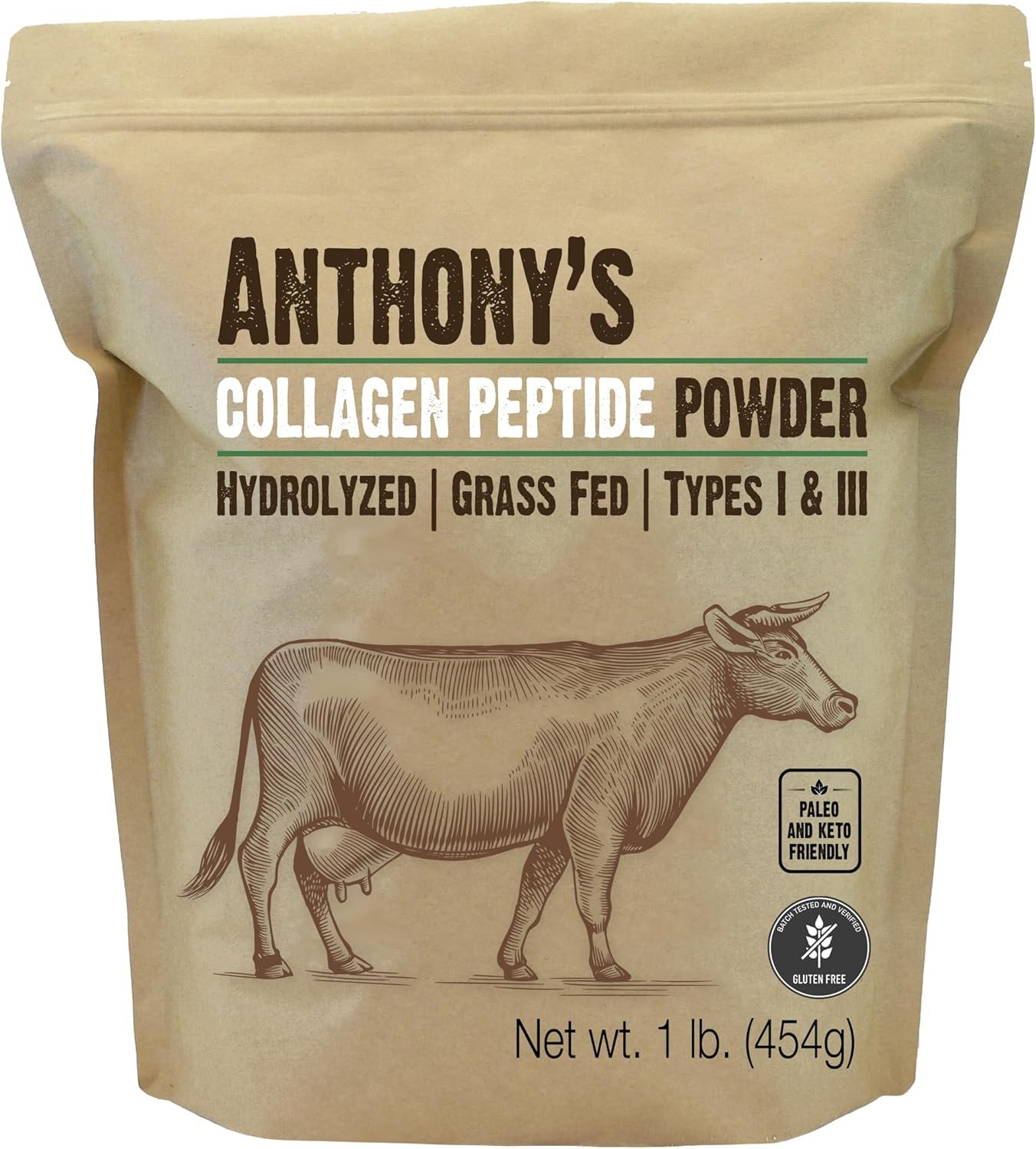
🏆 Our Top Pick for Osteoporosis Support
Formulated with clinically-studied bioactive collagen peptides (FORTIBONE®-type) at the proven 5g dose for bone density support. Third-party tested for purity.
Check Price on Amazon →✅ What to Look For
- Specific bioactive collagen peptides – look for terms like “FORTIBONE®” or “specific collagen peptides” (SCP).
- 5g (5,000 mg) per serving – the clinically proven dose.
- Type I collagen – the primary collagen in bone.
- Third-party tested – for purity and heavy metals.
- Bovine or marine – both can work; bovine has stronger evidence.
❌ What to Avoid
- Supplements that don’t specify the peptide type or dosage.
- Products with added sugars or unnecessary fillers.
- “Vegan collagen” – it’s not real collagen and lacks clinical evidence for bone health.
- Collagen gummies – usually have low collagen content per serving.
“Collagen peptide supplementation, particularly when synergized with calcium and vitamin D, is associated with continuous improvements in BMD, bone turnover markers, and muscle function. All these variables are important for fracture prevention.”
This article is for informational purposes only and does not constitute medical advice. Osteoporosis is a serious medical condition that requires professional diagnosis and treatment. Always consult your healthcare provider before starting any new supplement regimen, especially if you have pre-existing health conditions, are taking medications, or are considering changes to your osteoporosis treatment plan. Collagen supplements should be used as an adjunct to, not a replacement for, prescribed osteoporosis medications.
Some links in this article may be affiliate links. We may earn a small commission if you purchase products through these links, at no additional cost to you. This helps support our research and content creation. We only recommend products that have strong clinical evidence and meet our quality standards. Our editorial content is independent and not influenced by affiliate relationships.