
Introduction: The Question That Changes Everything
If you could ask one question about growing older, it might be this: What helps you age better? Not just longer, but better—with vitality, clarity, connection, and purpose. The answer is not a single pill, diet, or exercise routine. It is a tapestry of interwoven factors: biological, psychological, social, and environmental. And the good news is that many of these factors are within our control.
This article explores the evidence-based pillars of healthy aging, weaving together the latest research with timeless wisdom. We will examine what helps you age better at every level—from cellular repair to emotional resilience—and offer practical strategies you can integrate into your life today.
The Biology of Better Aging: Cellular Resilience
At the most fundamental level, what helps you age better is supporting your body’s natural repair and maintenance systems. The hallmarks of aging—from telomere shortening to mitochondrial dysfunction—can be influenced by lifestyle. Here is what the science says:
- Telomere maintenance: Telomeres are protective caps on chromosomes that shorten with age. Lifestyle factors like regular exercise, a nutrient-dense diet, and stress reduction have been linked to longer telomeres.
- Autophagy: This cellular “cleanup” process removes damaged components. Intermittent fasting, exercise, and certain phytochemicals (like those in green tea) stimulate autophagy.
- Mitochondrial health: Mitochondria are the powerhouses of cells. Aerobic exercise, a diet rich in antioxidants, and adequate sleep support mitochondrial function.
~40% of biological aging is modifiable through lifestyle and environment. This means you have significant agency over how you age.
Nutrition: What You Eat, You Become
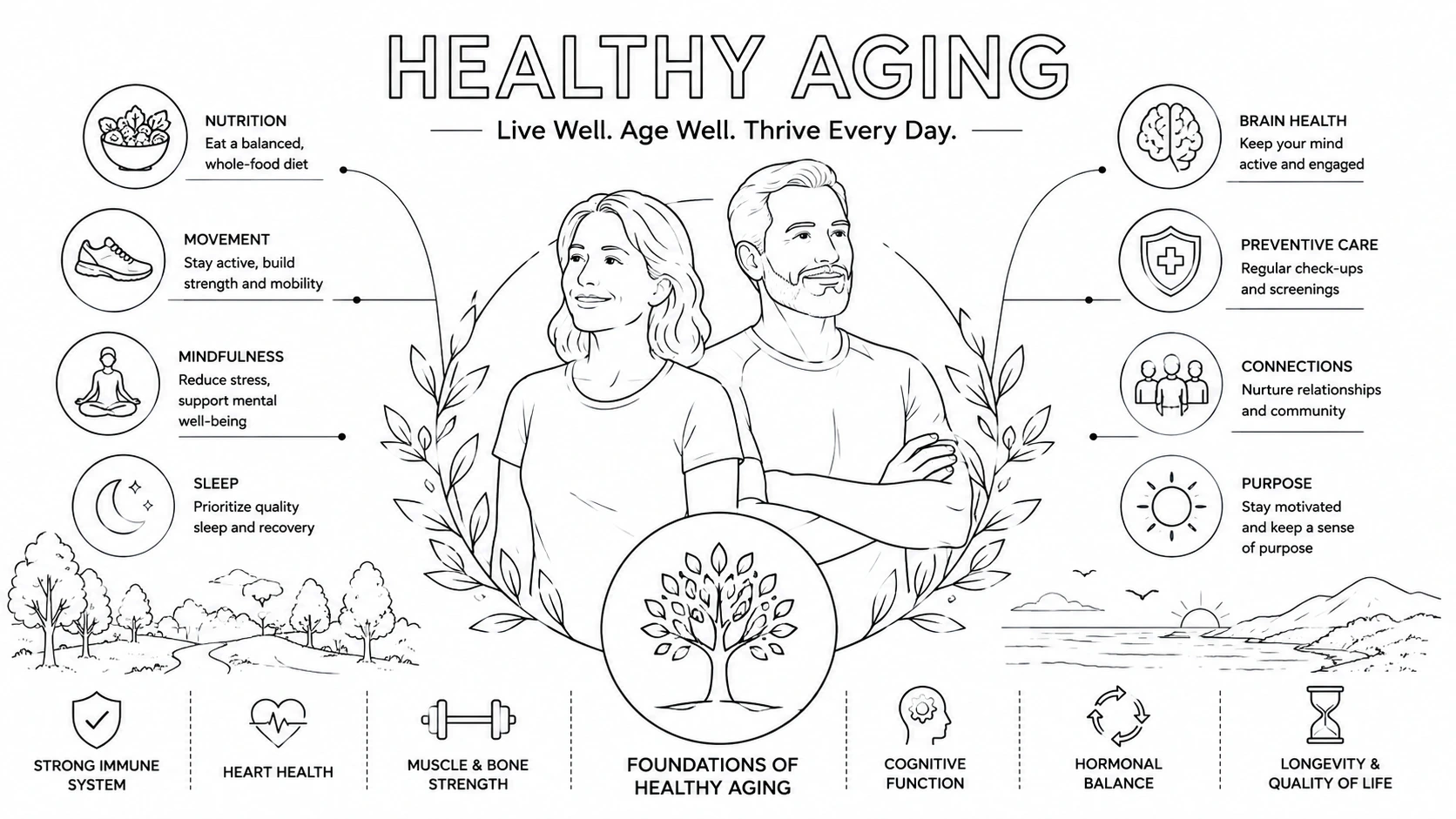
When we ask what helps you age better, diet is consistently one of the top answers. The foods you consume directly influence inflammation, oxidative stress, and metabolic health—all drivers of the aging process.
Patterns That Protect
The Mediterranean diet, rich in vegetables, fruits, whole grains, legumes, nuts, olive oil, and fish, is associated with lower rates of cardiovascular disease, cognitive decline, and all-cause mortality. The MIND diet, a hybrid of Mediterranean and DASH, specifically targets brain health and has been shown to reduce Alzheimer’s risk by up to 53%.
Protein distribution matters too. Spreading protein intake (aim for 1.2–1.6 g/kg body weight) across meals supports muscle synthesis and preservation, countering age-related sarcopenia.
Fasting and Metabolic Flexibility
Intermittent fasting and time-restricted eating are gaining attention for their effects on cellular repair, insulin sensitivity, and even cognitive function. While not for everyone, these approaches can be powerful tools when done safely and mindfully.
Movement: The Most Effective Anti-Aging Intervention
Physical activity is perhaps the single most potent factor in what helps you age better. It reduces the risk of chronic disease, preserves muscle and bone, enhances mood, and protects cognitive function.
The Four Pillars of Exercise for Aging Well
- Aerobic exercise: Walking, swimming, cycling. Aim for 150 minutes of moderate or 75 minutes of vigorous activity per week.
- Strength training: Two to three sessions per week, targeting major muscle groups, to combat sarcopenia.
- Balance and flexibility: Yoga, tai chi, and simple balance exercises reduce fall risk.
- High-intensity interval training (HIIT): Improves mitochondrial function and cardiovascular fitness efficiently.
The key is consistency and enjoyment. Find activities that bring you joy—dance, gardening, pickleball—and build them into your routine. Movement is medicine, and it is never too late to start.
Sleep: The Non-Negotiable Foundation
If you are wondering what helps you age better, do not overlook sleep. During sleep, the brain clears metabolic waste (including amyloid-beta, linked to Alzheimer’s), consolidates memory, and releases growth hormone. Chronic sleep deprivation is associated with accelerated biological aging.
Adults over 65 should aim for 7–8 hours of quality sleep per night. Strategies include:
- Consistent sleep and wake times
- Morning light exposure to regulate circadian rhythm
- Limiting caffeine and alcohol in the evening
- Creating a cool, dark, quiet environment
- Practicing relaxation techniques before bed
Cognitive Health: Keep Your Mind Sharp
What helps you age better mentally? Cognitive decline is not inevitable. The brain remains plastic throughout life, capable of forming new connections and even generating new neurons. Building “cognitive reserve” through stimulating activities protects against neurodegeneration.
Brain-Boosting Habits
- Lifelong learning: Learn a language, instrument, or new skill.
- Social engagement: Meaningful relationships stimulate the brain and buffer against decline.
- Physical activity: Exercise increases blood flow and promotes neurogenesis.
- Heart health: Manage blood pressure, cholesterol, and blood sugar—what is good for the heart is good for the brain.
Emotional and Social Wellness: Connection as Medicine
Loneliness and social isolation are among the most significant risk factors for poor health outcomes in older adults. What helps you age better emotionally? Cultivating deep, supportive relationships and a sense of belonging.
Building Social Connection
- Reconnect with old friends or join community groups.
- Volunteer—giving back provides purpose and social contact.
- Participate in group activities like book clubs, walking groups, or art classes.
Quality matters more than quantity; a few close relationships have profound benefits.
Purpose and Meaning
Having a sense of purpose—feeling that your life matters—is associated with lower rates of chronic disease and longer life expectancy. Purpose can come from work, family, creative pursuits, spirituality, or mentoring others.
Stress Management: The Art of Resilience
Chronic stress accelerates aging at the cellular level. What helps you age better under pressure? Building resilience—the capacity to recover from adversity.
Practices That Build Resilience
- Mindfulness and meditation: Reduce stress and improve emotional regulation.
- Gratitude practices: Shift focus to what is present and good.
- Journaling: Process emotions and clarify values.
- Nature exposure: Lowers cortisol and improves mood.
- Professional support: Therapy or counseling is a sign of strength.
Preventive Health: Proactive, Not Reactive
What helps you age better? Regular screenings and proactive care. Do not wait for symptoms. Work with your healthcare provider to monitor:
- Blood pressure, cholesterol, and glucose
- Cancer screenings (mammography, colonoscopy, skin checks)
- Bone density (for osteoporosis risk)
- Vaccinations (flu, pneumonia, shingles, COVID-19)
- Vision and hearing
The Power of Mindset
Perhaps the most underrated factor in what helps you age better is your mindset. Research shows that individuals with a positive view of aging live longer and healthier lives. Believing that aging brings wisdom, growth, and new opportunities becomes a self-fulfilling prophecy.
Cultivate an age-positive mindset by:
- Challenging stereotypes about older adults
- Celebrating the strengths that come with age
- Staying curious and open to new experiences
- Reframing challenges as opportunities for growth
Environment, Technology, and Financial Wellness
Our surroundings and resources also shape how we age. Clean air, safe neighborhoods, and access to green spaces contribute to health. Technology, from wearables to telemedicine, can support healthy aging when used thoughtfully. Financial security and legal planning reduce stress and provide peace of mind.
Aging with Chronic Conditions
Many older adults live with chronic conditions. Healthy aging does not mean the absence of disease; it means managing conditions effectively to maintain quality of life. This involves adhering to treatment plans, staying active within your capabilities, eating a supportive diet, and seeking social and emotional support.
Community and Intergenerational Connection
What helps you age better at a societal level? Inclusive, connected communities. Intergenerational programs—where older and younger people share activities and learning—benefit both groups, reducing ageism and fostering mutual understanding.
Conclusion: The Art of Growing Well
So, what helps you age better? It is a mosaic of small, consistent choices: movement that brings joy, food that nourishes, relationships that sustain, sleep that restores, and a mindset that embraces possibility. It is about recognizing that aging is a privilege—one that we can honor by living fully, consciously, and with purpose.
As the poet Mary Oliver asked, “Tell me, what is it you plan to do with your one wild and precious life?” That question does not expire with age. It deepens. And the answer is always within reach.
80% of people aged 65+ have at least one chronic condition, but 90% of healthcare costs are associated with these conditions. Preventive lifestyle changes are the most powerful medicine.