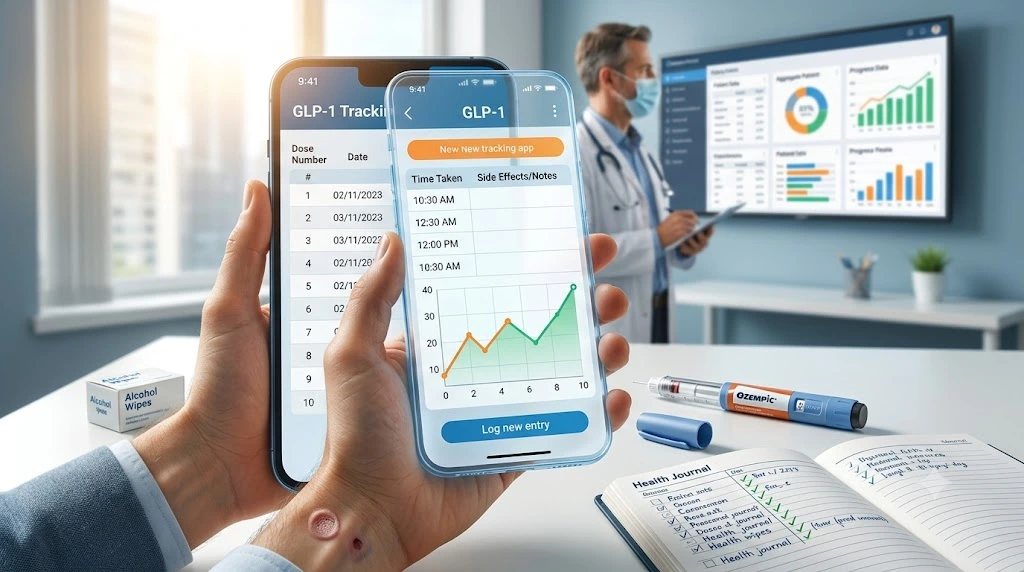

The needle trembles in your hand. You’ve read the research, you’ve discussed the benefits with your doctor, and you’ve finally secured a prescription for a GLP‑1 medication like Ozempic or Wegovy. But the first injection looms—a moment of hesitation that marks the beginning of a much larger journey. What happens next? How do you manage side effects, track progress, and navigate the complex nutritional needs that come with rapid weight loss?
This is the gap that a new wave of digital health tools is filling. GLP‑1 companion apps are emerging as essential partners in the treatment journey, transforming what was once a confusing and isolating experience into a confident, data‑driven path forward.
The scale of the shift
The numbers paint a clear picture. Approximately 1 in 8 U.S. adults are now on GLP‑1 medications, roughly double the rate from just 18 months prior. This explosive growth has exposed a critical weakness in healthcare delivery: patients are being prescribed powerful medications with profound effects on appetite, digestion, and metabolism, but often receive minimal structured support between doctor’s appointments.
The consequences of this gap are significant. One UK survey found that 73% of GLP‑1 users struggle to manage their treatment or understand their progress between appointments, while more than half have missed or delayed a dose. Patients are turning to fragmented solutions—calendar reminders, phone alarms, handwritten notes, and increasingly, social media platforms like TikTok and YouTube for advice. The trouble is, up to 64% of GLP‑1 patients discontinue therapy within the first year, with anxiety about self‑injection, unrealistic expectations, and unmanaged side effects driving much of this attrition.
What GLP‑1 companion apps offer
The new generation of companion apps addresses these challenges by consolidating support into a single, integrated platform. Rather than juggling separate apps for medication tracking, food logging, and symptom monitoring, users can manage everything in one place.
Medication management & education
At their core, these apps help users navigate the logistics of treatment. Features like injection reminders, dose logging, and visual body maps for site rotation reduce the anxiety and confusion around self‑administration. Some apps go further, using pharmacokinetic modeling to show users estimated real‑time medication levels in their body, helping them understand when appetite suppression peaks and when hunger might return.
Nutrition support with a GLP‑1 focus
Perhaps the most critical feature is nutrition guidance. International expert consensus now recommends prioritizing protein intake during rapid weight loss to preserve muscle mass, with most adults needing roughly 80–120 grams of protein daily. Companion apps elevate protein as a primary nutrient on their dashboards, offer dietitian‑designed meal plans, and include curated recipe collections built around protein density, digestibility, and appropriate portion sizes. This is a significant upgrade from generic calorie counters that don’t address the unique needs of GLP‑1 users whose appetites are dramatically suppressed.
Symptom and side effect tracking
Digestive symptoms like nausea, bloating, and constipation are common, especially when starting treatment or increasing doses. Companion apps allow users to log these symptoms alongside food choices and medication timing, helping them identify patterns and triggers. This data is not only useful for the individual but can be shared with healthcare teams to inform treatment adjustments.
Beyond tracking: the behavioral and emotional dimension
The most sophisticated companion apps recognize that GLP‑1 treatment is not just a physical transformation but an emotional and behavioral one. While medication can reduce “food noise” (the constant mental chatter about eating), emotional triggers do not magically disappear. Weight can change faster than body image can catch up, and the discovery that weight loss doesn’t deliver a perfect life can be deeply distressing.
Recognizing this, some apps are integrating psychological support and behavioral health tools. One developer, frustrated that prescribing systems were not offering adequate support, built an app that includes “psychologically safe guidance” and therapeutic resources for the deeper work around emotional eating. Research is increasingly highlighting the link between GLP‑1 treatment and mental health, with academic commentary advocating for digital companions that integrate principles from behavioral models like the Fogg Behavioral Model, combining motivation, ability, and prompts to drive sustained healthy behaviors.
This holistic approach is also evident in features like milestone celebrations, mood tracking, and community support. Apps like Fawn allow users to log emotional states and food noise levels alongside physical data, visualizing trends over time. Others are building dedicated communities where users can share experiences and ask questions in a moderated, judgment‑free space.
A fragmented but growing landscape
The GLP‑1 companion app market is currently a patchwork of different approaches, price points, and emphases.
There are also apps emerging from the pharmaceutical industry supply chain itself. Gerresheimer, a global supplier of pen injectors for GLP‑1 therapies, is developing an app concept designed not just for patients but also to gather real‑world evidence on outcomes for pharma companies and regulators.
This fragmentation, however, reflects the youth of the category. Most apps are in their early stages, and many are developed by small teams or individuals rather than major healthcare players. The challenge will be ensuring quality, data privacy, and clinical validity as the market matures.
The future: from companion to standard of care
The rise of GLP‑1 companion apps signals a broader shift in healthcare: a move from episodic, clinic‑based care to continuous, patient‑centered digital support. These apps are not just conveniences; they are becoming essential tools for adherence, education, and clinical communication.
The potential is significant. By reducing anxiety, improving nutritional outcomes, and supporting behavioral change, companion apps could help more patients stay on treatment long enough to achieve lasting results. They also offer a mechanism for collecting real‑world data on patient experiences, outcomes, and challenges, which could inform better prescribing practices and regulatory decisions.
As one pharmacist involved in developing a companion app put it, the goal is to give users “the tools to stay consistent, understand their progress and feel more confident managing their health.” In a healthcare landscape where patients are increasingly expected to be active managers of their own wellbeing, that confidence is perhaps the most powerful outcome of all.
Data derived from U.S. prescription trends, UK patient surveys, and expert consensus on GLP‑1 nutritional support. App pricing and feature summaries are based on publicly available information as of 2025–2026. All statistics and quotes are drawn from the original article synthesis.