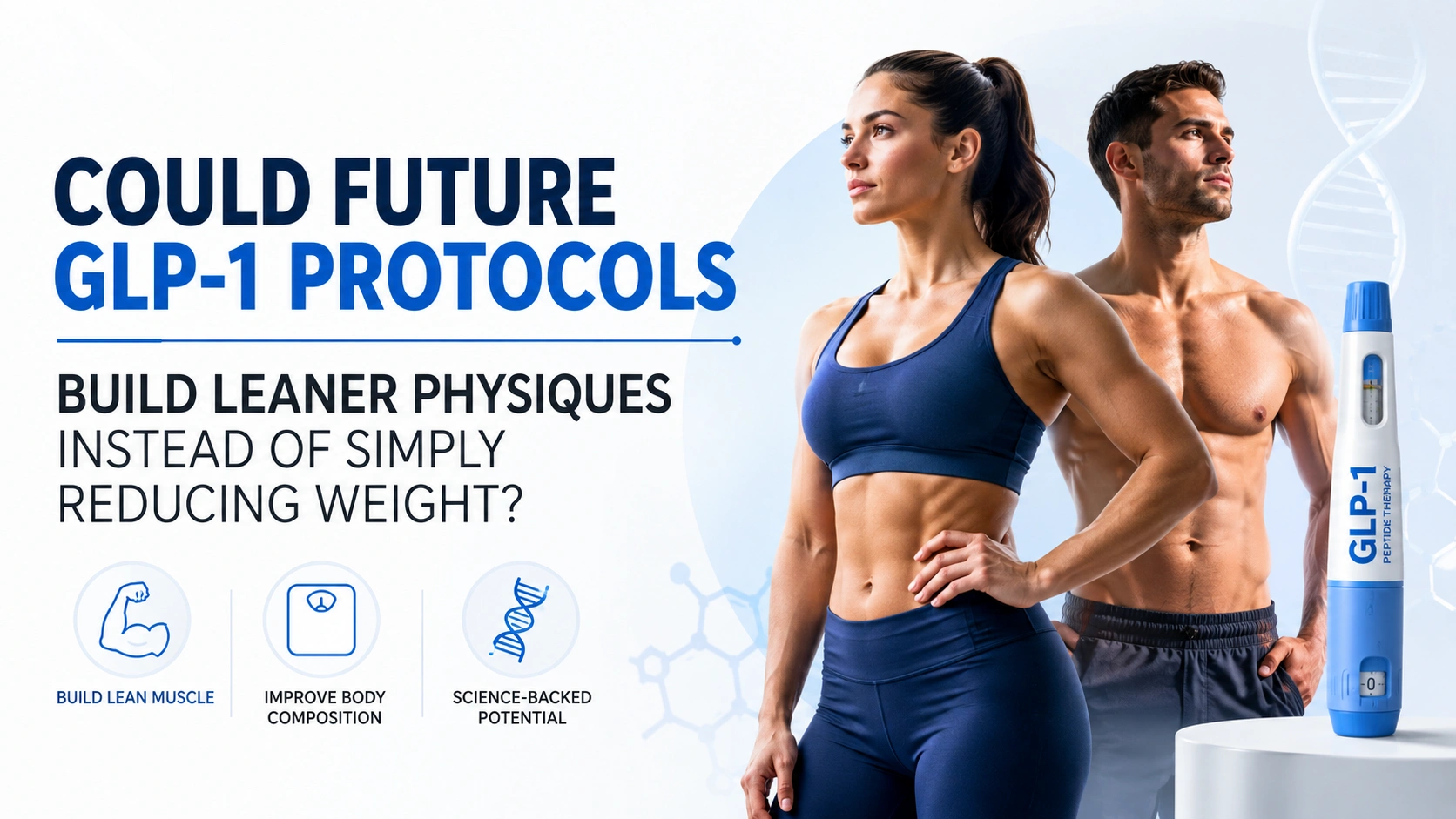

Could Future GLP-1 Protocols Build Leaner Physiques Instead of Simply Reducing Weight?
Same Active Ingredients as Wegovy and Mounjaro — From $99/mo with Free Overnight Delivery.
53,973+ patients already trust Trimi. US-licensed providers · Named compounding pharmacies · Flat pricing that never changes as your dose increases. No hidden fees. No surprises. Free overnight shipping · FSA/HSA eligible · 24/7 provider support.
🚀 Start Your Journey Today📑 Table of Contents
- 1. What Current GLP-1 Drugs Actually Do
- 2. The Hidden Problem: Lean Mass Loss
- 3. Why Future Protocols Are Shifting
- 4. Comparative Study: Traditional vs Future
- 5. Microdosing: Hype or Innovation?
- 6. Compounded GLP-1 Products: Safe or Risky?
- 7. Are Compounded Products FDA Approved?
- 8. Licensed Physicians Across 50 States
- 9. Future Outlook
- FAQs
- Disclosure & Disclaimer
The first wave of GLP-1 therapies changed obesity medicine by making fat loss pharmacologically predictable. Drugs like Semaglutide and Tirzepatide proved that appetite regulation can outperform willpower.
But the next frontier is not weight loss. It’s body recomposition. A future where GLP-1 protocols may selectively reduce adiposity while preserving — or even enhancing — lean tissue.
That raises a serious question:
Could future GLP-1 protocols create athletic, metabolically optimized physiques instead of simply making people smaller?
1. What Current GLP-1 Drugs Actually Do
GLP-1 receptor agonists mimic incretin hormones that:
- Slow gastric emptying
- Reduce hunger signaling
- Improve insulin sensitivity
- Lower glucagon release
- Improve glycemic control
This leads to reduced caloric intake and significant fat loss. Clinical data from multiple RCTs and meta-analyses show substantial reductions in body weight, but lean mass is also lost in the process. A 2024 meta-analysis found average lean mass loss around 0.86 kg, roughly 25% of total weight reduction. 📄 Source: Reddit Scientific Nutrition, 2024
That matters because weight loss ≠ physique optimization.
2. The Hidden Problem: Lean Mass Loss
When patients lose muscle:
- Resting metabolic rate drops
- Strength decreases
- Insulin sensitivity may worsen long term
- Frailty risk increases
- Rebound weight gain becomes easier
This is why many obesity specialists are now discussing “fat-specific pharmacology.” The goal: lose fat, keep muscle. Or better: lose fat, build muscle.
3. Why Future Protocols Are Shifting Toward Body Recomposition
Emerging pipelines suggest future obesity medicine will combine GLP-1s with anabolic-preserving agents. New investigational categories include:
A) Myostatin Inhibitors
These may preserve skeletal muscle during aggressive fat loss. Examples: Bimagrumab. Early data suggests strong fat reduction while sparing lean tissue. 📄 Source: Business Insider, 2026
B) GLP-1 + GIP + Glucagon Triple Agonists
These could increase energy expenditure, improve mitochondrial efficiency, and enhance fat oxidation — potentially producing “harder” physiques.
C) Exercise-Mimetic Molecules
Companies are exploring compounds that mimic endurance signaling, potentially synergizing with GLP-1-induced caloric deficits.
D) Precision Hormone Mapping
Future clinics may monitor testosterone, estradiol, cortisol, thyroid, IGF-1, and DHEA to customize body recomposition. This moves GLP-1 care toward “metabolic architecture.”
4. Comparative Study: Traditional vs Future GLP-1 Protocols
| Parameter | Current GLP-1 Alone | Future Recomp Protocol |
|---|---|---|
| Weight Loss | High | High |
| Fat Specificity | Moderate | High |
| Lean Mass Retention | Moderate-Low | High |
| Strength Preservation | Low | High |
| Hormonal Optimization | Minimal | Advanced |
| Personalized Dosing | Basic titration | Biomarker-driven |
| Microdosing Capability | Limited | Likely extensive |
| Athletic Application | Low | High |
Core takeaway: The future isn’t lighter. It’s leaner.
5. Microdosing: Hype or Strategic Innovation?
Microdosing GLP-1 means using subtherapeutic doses to:
- Control appetite without severe GI effects
- Improve insulin sensitivity
- Maintain body fat percentage
- Extend cycle longevity
Potential future use cases:
- Bodybuilders in cutting phases
- Perimenopausal women managing visceral fat
- Men optimizing insulin resistance
However, there is limited long-term evidence. Most protocols remain experimental.
6. Compounded GLP-1 Products: Safe or Risky?
This is where things get complicated. Compounded GLP-1s are customized versions made by compounding pharmacies.
Potential benefits:
- Lower cost
- Flexible dosing
- Microdose access
- Supply continuity
Potential risks:
- Sterility issues
- Incorrect concentrations
- Temperature instability
- Counterfeit sourcing
- Dosing confusion
The U.S. Food and Drug Administration has repeatedly warned about adverse events, overdoses, and fraudulent compounded products. As of 2026, the FDA reports over 990 adverse event reports for compounded semaglutide and 730+ for compounded tirzepatide. 📄 Source: FDA, 2026
That is not trivial.
7. Are Compounded Products FDA Approved?
Short answer: No.
Compounded GLP-1 medications are not FDA-approved.
FDA-approved examples:
- Wegovy
- Ozempic
- Zepbound
- Mounjaro
These underwent full safety, efficacy, and manufacturing review.
Compounded: Not reviewed for effectiveness, purity, potency, or consistency. FDA explicitly states compounded GLP-1s should only be used when patient needs cannot be met by approved drugs. 📄 Source: FDA Drug Alerts, 2025
8. Are They Prepared by Licensed Physicians Across All 50 States?
Important clarification: Physicians do not “prepare” compounded drugs. They prescribe.
Preparation is done by:
- State-licensed 503A pharmacies
- Federally regulated 503B outsourcing facilities
A licensed physician can legally prescribe in states where they hold licensure or through compliant telehealth structures. That does not mean every compounded product is equal.
Quality varies significantly. Always verify:
- Pharmacy licensure
- Source of API (active pharmaceutical ingredient)
- Sterility protocols
- Cold-chain handling
Federal approval: Compounded drugs are not federally approved. They are regulated under Section 503A or 503B of the FD&C Act, but this is not the same as FDA approval.
9. Future Outlook
By 2030, GLP-1 clinics may evolve into:
- AI-driven metabolic clinics
- Hormone optimization centers
- Precision body recomposition labs
- Preventive longevity systems
Instead of asking “How much weight did you lose?” doctors may ask:
- How much visceral fat dropped?
- How much muscle did you retain?
- Did mitochondrial function improve?
- Did inflammation markers decline?
That’s a radically different framework.
Same Active Ingredients as Wegovy and Mounjaro — From $99/mo with Free Overnight Delivery.
53,973+ patients already trust Trimi. US-licensed providers · Named compounding pharmacies · Flat pricing that never changes as your dose increases. No hidden fees. No surprises. Free overnight shipping · FSA/HSA eligible · 24/7 provider support.
🚀 Start Your Journey Today❓ Frequently Asked Questions
📄 Unavoidable Disclosure & Disclaimer
Affiliate Disclosure: This article contains affiliate links. If you click on these links and make a purchase, we may earn a commission at no extra cost to you. We only promote products and brands that we have researched and believe in. The Trimi offer link is affiliate-based.
Medical Disclaimer: This content is for informational and educational purposes only and does not constitute medical advice, diagnosis, or treatment. Always consult a licensed healthcare professional before starting, stopping, or modifying any medication or hormone protocol. GLP-1 therapies should only be used under medical supervision. Individual results may vary.
FDA Disclaimer: Compounded GLP-1 products are not FDA-approved. The FDA has issued warnings regarding adverse events, overdoses, and quality concerns with compounded semaglutide and tirzepatide. Branded drugs like Wegovy, Ozempic, Zepbound, and Mounjaro have undergone full FDA review.
- Consult your doctor: Before starting any new medication or therapy.
- Know your risks: GLP-1 and HRT have potential side effects and contraindications.
- Verify your source: Only use licensed pharmacies with transparent quality protocols.
- State laws vary: Telehealth and compounded medication regulations differ by state.
FTC Compliance: We are a participant in affiliate programs designed to provide a means for us to earn fees by linking to partner sites.
Microdosing is emerging as a niche optimization strategy, but it remains largely off-label. Compounded products may offer flexibility, especially for lower-dose titration, but remember:
• They are not federally approved
• Safety depends heavily on pharmacy quality
• Prescriptions should come from licensed clinicians
• State legality and physician licensure matter
If using compounded GLP-1s, prioritize:
✅ 503A/503B compliant pharmacies
✅ Physician oversight
✅ Verified API sourcing
✅ Cold-chain integrity
The future of GLP-1 is not just about weight loss — it’s about building metabolically optimized, leaner, and healthier bodies. Stay informed, stay safe, and always consult your doctor. 🌿