
🩺 Medically reviewed by: Dr. Mohammed Abdul Azeem Siddiqui | ✍️ Written by: Dr. Vijayaprada Redrouthu
⭐ Add us as a preferred source on Google
See our articles more often in Google Search.
Why Vegetarian Weight Loss Plans Are Worth Considering
Vegetarian dietary patterns — whether lacto‑ovo, lacto, ovo, or fully plant‑based — consistently show favorable associations with body weight. A cross‑sectional study of university students found that those who followed a vegetarian diet for more than 12 months were significantly less likely to be overweight or obese compared to non‑vegetarians. Another randomized trial found that swapping animal products for plant‑based foods led to an average weight loss of 13 pounds over 16 weeks — without calorie restriction.
The mechanisms are straightforward: plant‑based diets tend to be higher in fiber, lower in saturated fat, and naturally less calorie‑dense. But the picture isn’t uniformly rosy. Long‑term vegetarianism without proper planning can lead to nutritional deficiencies, muscle loss, and metabolic problems — particularly when protein intake falls too low.
That’s why the “vegetarian” label alone isn’t enough. The quality of your plan — and the support behind it — matters enormously.
Meal Plans: What Works and What Doesn’t
A well‑constructed vegetarian weight loss meal plan should deliver adequate protein, fiber, and micronutrients while maintaining a moderate calorie deficit. The standard recommendation for sustainable weight loss is a deficit of 500–750 calories per day, yielding 1–2 pounds of weight loss per week.
Sample nutrient targets from evidence‑based plans:
- Calories: ~1,500–1,800 per day depending on starting weight and activity
- Protein: 75–100 g daily (higher end if strength training or using GLP‑1 medications)
- Fiber: 30–45 g daily from vegetables, legumes, and whole grains
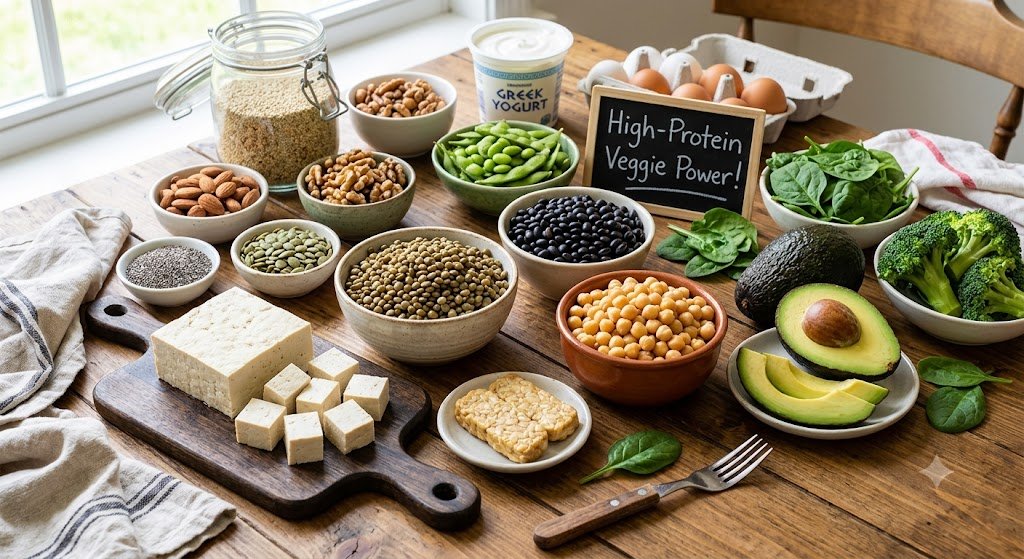
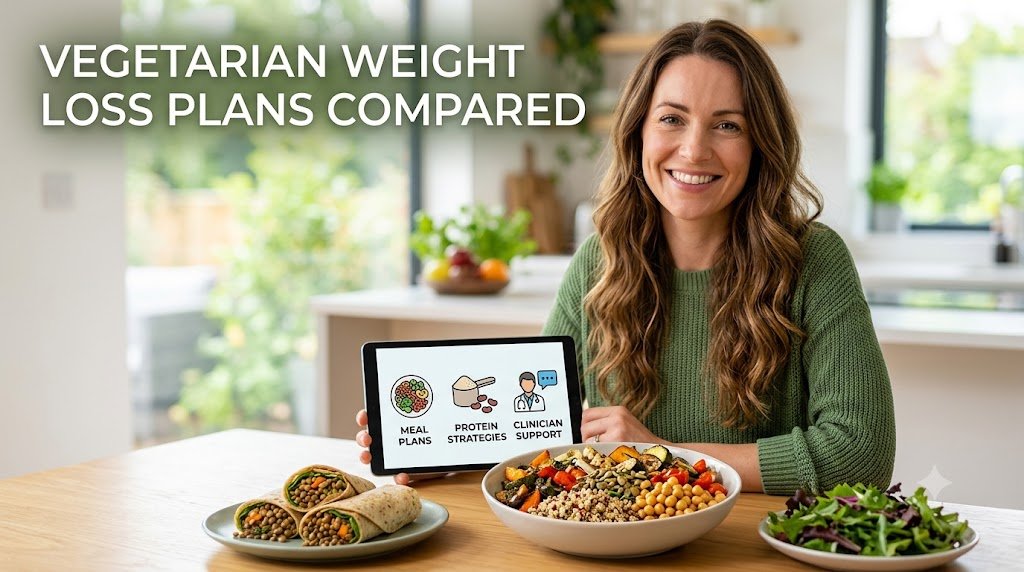
A realistic vegetarian day might look like: Greek yogurt with berries and hemp seeds for breakfast (about 25 g protein), a chickpea and roasted red pepper wrap for lunch (about 18 g protein), edamame or tofu stir‑fry for dinner (about 30 g protein), and protein‑rich snacks like cottage cheese or a plant‑based shake.
The trap to avoid: Loading up on refined carbohydrates, processed vegetarian “junk food,” or calorie‑dense dairy to compensate for missing meat. These can stall weight loss and promote visceral fat accumulation.
Protein Strategies for Vegetarian Weight Loss
Protein is non‑negotiable on any weight loss journey — especially vegetarian ones. When you’re in a calorie deficit, your body will break down muscle for energy unless you provide enough protein and resistance training stimulus.
How much do you need? Research on vegan and vegetarian diets suggests that when protein intake drops below roughly 1.1 g per kg of body weight, fat‑free mass loss accelerates. For active individuals or those using weight loss medications, targeting 1.2–1.6 g per kg (or roughly 80–120 g daily for most adults) helps preserve lean mass.
| Vegetarian protein source | Protein per serving |
|---|---|
| Greek yogurt (1 cup) | 16 g |
| Hemp seeds (3 tbsp) | 10 g |
| Tofu (½ cup) | 8 g |
| Nutritional yeast (2 tbsp) | 8 g |
| Lentils or beans (½ cup cooked) | 7 g |
| Cottage cheese (¼ cup) | 7 g |
| Edamame (½ cup shelled) | 7 g |
Protein supplementation is a legitimate strategy when whole foods fall short. Plant‑based protein shakes (20–35 g per serving) can bridge the gap without adding excessive calories. For those on appetite‑suppressing medications, liquid protein sources may be easier to tolerate.
A cautionary note: Very long‑term vegetarianism without attention to protein and micronutrients has been linked to hair loss, menstrual irregularities, and reduced ovarian reserve in young women, as well as severe muscle wasting in older adults. These outcomes stem from nutrient deficiencies, not the vegetarian pattern itself — but they’re a reminder that “plant‑based” doesn’t automatically mean “healthy.”
Clinician‑Led Weight Loss Support: When DIY Isn’t Enough
Self‑directed weight loss often falls short. Research on hybrid obesity care — combining physician oversight, digital tracking, and personalized coaching — shows substantial and sustained results. In one real‑world study, participants lost an average of 9.2% of body weight at 6 months, increasing to 14.7% at 18 months. Metabolic markers improved too: body fat percentage dropped from 38.6% to 28.4%, and HbA1c fell from 5.1% to 4.4%.
What makes clinician‑led support different? Medical nutrition therapy (MNT) delivered by registered dietitians goes beyond generic meal plans. It addresses your full health context — medications, lab values, food preferences, cultural needs, and access barriers — and adjusts over time. For vegetarians specifically, MNT can help ensure you’re meeting protein, B12, iron, zinc, and omega‑3 targets without relying on guesswork.
Clinician‑led programs also play a critical role for those using GLP‑1 medications, which can suppress appetite so effectively that protein and micronutrient intake plummets. Structured nutrition support helps mitigate muscle loss, a common concern with these medications.
The bottom line: If you’ve struggled with vegetarian weight loss on your own, or if you have metabolic conditions, a clinician‑led approach offers accountability and personalization that a one‑size‑fits‑all meal plan can’t match.
Frequently Asked Questions
Can you lose weight on a vegetarian diet without counting calories?
Yes. Randomized trial evidence shows that switching to a plant‑based diet can produce meaningful weight loss even without intentional calorie restriction. The natural fiber content and lower calorie density of whole plant foods promote satiety. However, if weight loss stalls after several weeks, tracking intake temporarily can help identify hidden calorie sources.
How much protein do vegetarians need for weight loss?
Aim for 1.2–1.6 grams of protein per kilogram of body weight daily. For a 70 kg (154 lb) person, that’s 84–112 grams per day. This range helps preserve muscle mass during a calorie deficit. If you’re using GLP‑1 medications or strength training, lean toward the higher end.
Is a vegetarian weight loss plan safe long‑term?
With proper planning, yes. However, long‑term vegetarianism without attention to B12, vitamin D, omega‑3s, iron, and zinc can lead to deficiencies. Some case reports describe menstrual irregularities, hair loss, and severe muscle loss in people who adopted extreme vegetarian diets without professional guidance. Regular lab monitoring with a healthcare provider is advisable.
What’s the difference between a meal plan and clinician‑led support?
A meal plan gives you a template. Clinician‑led support gives you a personalized strategy that adapts to your labs, medications, preferences, and progress. Medical nutrition therapy from a registered dietitian is the gold standard for individualized nutrition counseling. If you have obesity‑related conditions like prediabetes or hypertension, clinician‑led care is strongly recommended.
Can I combine a vegetarian diet with weight loss medications?
Yes, but with caution. GLP‑1 medications suppress appetite, which can make it harder to meet protein and nutrient needs on any diet — especially vegetarian ones. Medical nutrition therapy is particularly valuable in this scenario to prevent muscle loss and nutrient inadequacies.