
The era of “one-size-fits-all” weight-loss prescriptions may be ending. Groundbreaking new research suggests that a simple fasting blood test measuring two natural hormones—GLP-1 and GIP—could predict how well you will respond to popular medications like tirzepatide and semaglutide.
This article explores the discovery of new biomarkers that may predict tirzepatide success, focusing on how low levels of fasting GIP are linked to an optimal response to the dual-action drug. We analyze the science behind these findings, discuss other predictors like beta-cell function and genetics, and consider what this means for the future of personalised obesity treatment.
1. Introduction: The Problem of Variability
2. The Science of Incretins: GLP-1 and GIP Explained
3. New Biomarkers That May Predict Tirzepatide Success
– The Groundbreaking Pilot Study
– Why Low GIP Levels Matter for Tirzepatide
4. Beyond the Pilot: Other Predictors of Success
– Beta-Cell Function and Insulin Sensitivity
– Genetic Factors
– Simple Clinical Measures
5. The Bigger Picture: Personalised Obesity Medicine
6. Frequently Asked Questions (FAQs)
7. Important Disclaimers and Disclosure
8. Your Next Step
Introduction: The Problem of Variability
Tirzepatide has emerged as a powerful force in the treatment of obesity and type 2 diabetes. As a dual agonist of the GIP and GLP-1 receptors, it often leads to more significant weight loss and better glycemic control than medications that target GLP-1 alone. However, a major challenge remains: not everyone responds the same way. Some individuals lose more than 20% of their body weight, while others see minimal benefit. This variability has puzzled doctors and patients alike.
Now, a new frontier in “precision medicine” is opening up. Researchers are identifying specific biological markers that could predict who will be a “super-responder” to tirzepatide, potentially saving time, money, and frustration for millions of people.
The Science of Incretins: GLP-1 and GIP Explained
To understand these new predictors, we need a quick biology lesson. GLP-1 and GIP are the body’s primary “incretin” hormones, released by the gut after you eat. They work together to regulate blood sugar and appetite:
- GLP-1: Suppresses appetite, promotes fullness, and stimulates insulin release.
- GIP: Regulates fat metabolism and energy expenditure.
In people with obesity, this incretin system often becomes dysregulated. Tirzepatide works by mimicking both of these hormones to “jumpstart” the system and promote weight loss.
New Biomarkers That May Predict Tirzepatide Success
The Groundbreaking Pilot Study
A hypothesis-generating pilot study published in the journal Diagnostics looked at 90 adults with severe obesity. Researchers measured their fasting blood levels of GLP-1 and GIP and then assigned them to receive either semaglutide or tirzepatide. After six months, they analyzed who achieved an “optimal” weight loss response (a reduction of more than 15% body weight).
The results were striking:
- Low GIP Levels: Participants with low fasting GIP levels achieved an optimal response to tirzepatide, regardless of their GLP-1 levels.
- Low GLP-1/Intermediate GIP: A different profile (low GLP-1 combined with intermediate-to-high GIP) was linked to optimal responses to semaglutide.
Why Low GIP Levels Matter for Tirzepatide
The researchers believe this is due to the “receptor occupancy” theory. Tirzepatide works by activating both GIP and GLP-1 receptors. If a patient already has high levels of natural GIP, their GIP receptors may be partially “blocked.” However, if fasting GIP levels are low, more receptors are available for the drug to bind to, potentially enhancing its therapeutic effect. In short, a simple blood test could reveal if your biology is primed for tirzepatide to work its magic.
Beyond the Pilot: Other Predictors of Success
While the fasting GIP biomarker is the most exciting new finding, other research confirms that several other factors can predict success with tirzepatide.
Beta-Cell Function and Insulin Sensitivity
Post-hoc analyses of the SURPASS-4 clinical trials identified key predictors for achieving and sustaining good glycemic control with tirzepatide:
- Higher beta-cell function (HOMA-B): Patients whose bodies were better at producing insulin were more likely to have a sustained response.
- Shorter diabetes duration: Those who had diabetes for a shorter time tended to respond better.
- Lower triglycerides: Lower baseline triglyceride levels were linked to better weight loss success.
Furthermore, tirzepatide itself has been shown to improve markers of insulin sensitivity (HOMA2-IR) and beta-cell function (HOMA2-B) significantly more than semaglutide, meaning it can help correct the very issues that cause poor metabolism.
Genetic Factors
Your DNA also plays a role. A recent large-scale study by the 23andMe Research Institute identified specific genetic variants that affect weight loss and side effects from GLP-1 medications. Interestingly, they found that variation in the GIPR gene (the GIP receptor) was associated specifically with side effects from tirzepatide, not semaglutide, confirming the drug’s unique mechanism.
Simple Clinical Measures
Some predictors are surprisingly simple. For initial weight loss, factors like female sex and higher tirzepatide dose were associated with better outcomes.
The Bigger Picture: Personalised Obesity Medicine
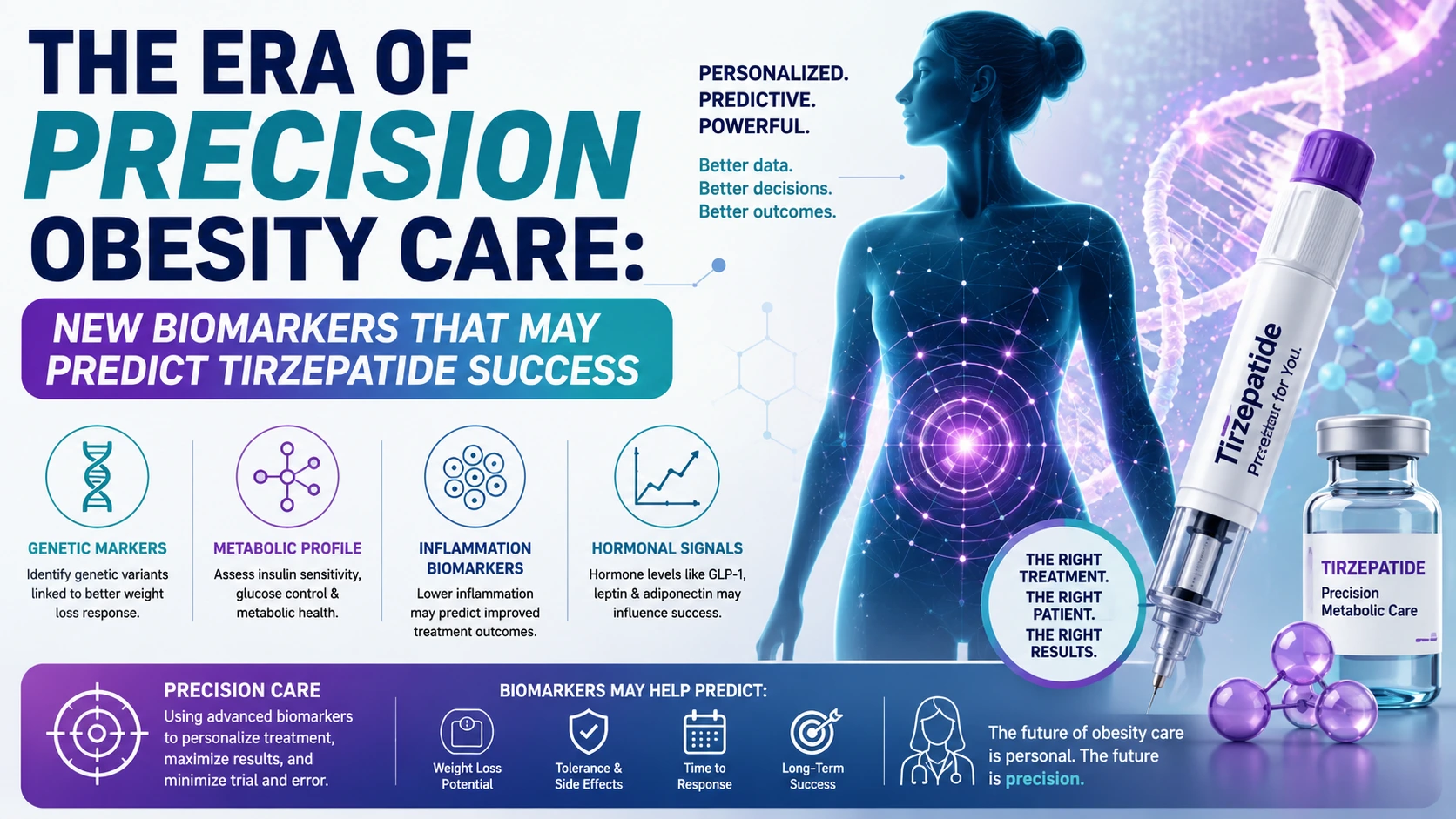
The discovery of new biomarkers that may predict tirzepatide success, combined with clinical and genetic predictors, points towards a future where obesity treatment is tailored to the individual. Instead of prescribing a drug and “waiting to see,” doctors could soon use a simple blood test to choose the most effective medication from the start.
This not only improves success rates but also reduces the risk of side effects and the financial burden of ineffective treatments.
Frequently Asked Questions (FAQs)
The primary biomarker is a low fasting level of the hormone GIP (glucose-dependent insulinotropic polypeptide). Low GIP levels suggest that the GIP receptors are “available” for tirzepatide to bind to and activate, leading to better weight loss results.
No, this is currently a research finding from a pilot study. Researchers emphasize that these findings are preliminary and should not yet guide clinical practice. Larger, confirmatory trials are needed before it becomes a standard clinical test.
Tirzepatide is a dual agonist, meaning it targets both the GLP-1 and GIP receptors. Studies show that people with lower levels of natural GIP may respond better to the drug because their receptors are more sensitive to the medication’s effects.
Beyond GIP levels, good predictors include better beta-cell function (HOMA-B), shorter duration of diabetes, and lower triglyceride levels. Genetics also play a role.
By identifying who is most likely to respond to specific drugs, doctors can make more informed decisions. This moves away from a trial-and-error approach to a targeted, personalised strategy, improving outcomes and reducing unnecessary costs and side effects.
Disclaimer: This article is for informational purposes only and does not constitute medical advice. The findings discussed are preliminary and require further validation in larger clinical trials. Always consult with a qualified healthcare professional before starting, stopping, or changing any medication or treatment plan. Self-treating based on this information is dangerous. The authors of this article are not responsible for any adverse effects resulting from the use of information provided.
Disclosure: The author of this article has received no payment from Eli Lilly (the manufacturer of tirzepatide) or any other pharmaceutical company for writing this piece. This content is intended to be objective and educational based on publicly available scientific literature.
🚀 Your Next Step:
Are You Ready to Explore Your Options?
The future of weight loss is personalised, and revolutionary treatments like tirzepatide are leading the charge. Whether you are a candidate for treatment or simply curious about the potential of peptide therapy, the first step is a thorough consultation.
We have partnered with a platform that connects you with licensed medical professionals who can help you understand if tirzepatide or other emerging therapies are right for you.
→ Click Here to Explore Personalised Treatment Plans Today 🔒 100% confidential · No obligation · Board-certified cliniciansP.S. Don’t wait to take control of your health. The tools for a new you are getting smarter every day. Click the link above to start your journey.
© 2026 · Precision Obesity Care · All rights reserved.