
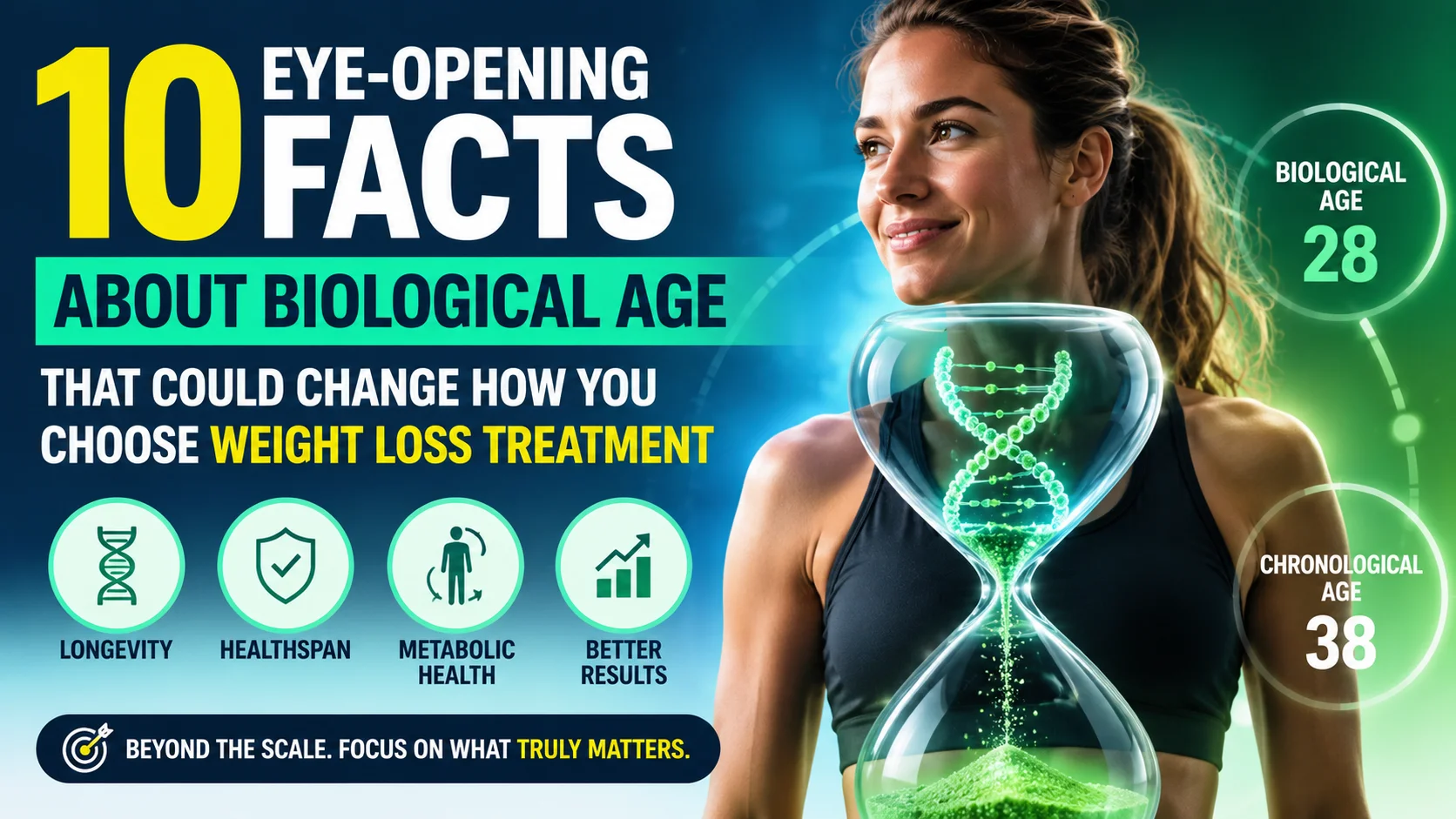

Can Biological Age Replace Body Weight as the Main Treatment Goal?
Biological age is emerging as a more meaningful health metric than the number on your scale. While body weight has long been the standard treatment goal for obesity, diabetes, and cardiovascular risk, the concept of biological age — how old your cells and tissues actually are — may offer a far more accurate picture of your overall health trajectory.
Doctors and researchers are now asking: Should we shift our focus from chasing a target weight to slowing down our biological clock? This article explores the facts about biological age, how it compares to traditional metrics like BMI and weight, and what it means for your health.
Facts About Biological Age
Your biological age reflects the physiological condition of your cells and organs, influenced by genetics, lifestyle, and environment. Unlike chronological age (the number of years you’ve lived), biological age can be higher or lower — and it can change with interventions.
Key fact: Studies estimate that lifestyle factors (diet, exercise, sleep, stress) account for up to 90% of the aging process, while genetics contribute only 10%. This means you have significant control over your biological age.
- Epigenetic clocks (like DNA methylation patterns) are the most accurate way to measure biological age.
- Telomere length — the protective caps on chromosomes — shortens with age and is a marker of cellular aging.
- Chronic inflammation and oxidative stress accelerate biological aging.
- Reversing biological age is possible: lifestyle changes, calorie restriction, and certain supplements have been shown to lower epigenetic age in clinical trials.
So, could biological age replace body weight as the main treatment goal? Let’s examine the evidence.
Why Body Weight Falls Short
Traditional metrics like the BMI calculator (Body Mass Index) and scale weight have major flaws:
- BMI doesn’t distinguish between muscle and fat — an athlete with high muscle mass may be classified as “overweight.”
- Weight doesn’t reflect body composition changes with age, such as loss of muscle mass (sarcopenia) and increased visceral fat.
- Two people at the same weight can have vastly different biological ages and health risks.
This is why many clinicians are now advocating for biological age as a more holistic and actionable target.
Weight Gain with Age Chart – What Does It Show?
The classic weight gain with age chart shows that most people gain weight gradually through middle age, peaking around 60, then often losing weight after 70 due to muscle wasting and reduced appetite.
Specifically, a weight gain with age chart female reveals that women tend to gain fat during perimenopause due to hormonal shifts, with fat redistributing from hips to the abdomen. Meanwhile, men experience a steady weight gain until their 50s, followed by a slower decline.
But here’s the catch: the weight gain is often fat, not muscle — and that fat drives biological aging. In fact, does body weight change with age? Yes, but the quality of that weight matters more than the number.
Female Aging Body Changes vs. Male
Female aging body changes include:
- Decline in estrogen leading to increased visceral fat and decreased bone density.
- Loss of skin elasticity and muscle mass.
- Slower metabolism, making it harder to maintain weight.
How do men’s bodies change with age?
- Gradual decline in testosterone, leading to reduced muscle mass and increased fat storage.
- Decreased bone density and joint flexibility.
- Increased risk of cardiovascular changes due to arterial stiffness.
Both sexes experience a shift in body composition, but the patterns differ. This is why a single weight target is inadequate — biological age markers like inflammation, insulin sensitivity, and hormonal balance offer a better picture.
4 Things That Affect Losing Weight as You Age
If you’ve wondered why shedding pounds gets harder each decade, you’re not alone. Here are 4 things that affect losing weight as you age:
- Metabolic slowdown: Resting metabolic rate declines about 1–2% per decade after age 30.
- Hormonal shifts: Decline in growth hormone, estrogen, and testosterone reduces fat-burning capacity.
- Loss of muscle mass: Muscle burns more calories than fat; losing it reduces daily energy expenditure.
- Increased insulin resistance: Aging cells become less responsive to insulin, promoting fat storage.
But here’s the good news: these factors are largely driven by biological age, not chronological age. By improving your biological age, you can counteract these effects.
Weight Loss with Age Chart – Is It Normal to Lose Weight After 70?
A weight loss with age chart typically shows a decline after age 70. While some weight loss is normal, unintentional loss can signal health issues like malnutrition, reduced muscle mass, or chronic disease. The goal should be to preserve lean mass and maintain strength, not just chase a lower number on the scale.
Answering the Big Questions About Aging
What is the 40-70 rule for aging?
The “40-70 rule” suggests that after age 40, the body starts losing muscle mass and gaining fat, with the decline accelerating after age 70. This rule underscores the importance of resistance training and protein intake to maintain muscle and slow biological aging.
What is the Japanese secret to slow aging?
Japan is known for its high life expectancy and low rates of age-related diseases. The Japanese secret to slow aging includes:
- Diet: Rich in fish, seaweed, fermented foods (miso, natto), green tea, and vegetables — all packed with antioxidants and anti-inflammatory compounds.
- Active lifestyle: Daily walking, gardening, and regular physical activity.
- Social engagement: Strong community ties and “ikigai” (sense of purpose) reduce stress and promote longevity.
What is the 90% cause of aging?
Many scientists agree that 90% of aging is caused by lifestyle and environmental factors, not genetics. This includes diet, physical activity, sleep, stress, toxin exposure, and social connections. The remaining 10% is genetic predisposition. This means you have immense power to influence your biological age.
🛒 Tools to Help You Track & Improve Your Biological Age
From body composition scales to DNA testing kits — these products give you real insight into your aging process.






As an Amazon Associate, we earn from qualifying purchases.
Should We Replace Body Weight with Biological Age?
The answer is nuanced. Body weight is not useless — it’s an easy, cheap metric. However, it’s increasingly clear that biological age provides a more complete picture of health and longevity. Shifting the treatment goal from weight loss to slowing biological aging could revolutionise how we approach chronic disease, exercise, and nutrition.
Instead of obsessing over the scale, focus on:
- Maintaining muscle mass and strength.
- Improving insulin sensitivity and reducing inflammation.
- Eating a nutrient-dense, anti-inflammatory diet.
- Getting quality sleep and managing stress.
These actions don’t just help you lose weight — they make you younger at the cellular level.
Takeaway: Your biological age is not fixed. With the right lifestyle, you can reverse it. The tools and products above can help you measure and improve your biological age — one step at a time.
This article is for educational and informational purposes only and does not constitute medical advice. Always consult a qualified healthcare provider before making changes to your diet, exercise, or supplement regimen. The products linked in this article are affiliate links; we may earn a small commission if you make a purchase at no extra cost to you. All product claims are based on manufacturer information and have not been evaluated by the FDA. PS: Your health is your greatest wealth — invest wisely and stay curious.
Biological age Weight gain with age chart Female aging body changes BMI calculator Weight gain with age chart female Weight loss with age chart Body composition changes with age How do men’s bodies change with age 40-70 rule for aging Japanese secret to slow aging 90% cause of aging Does body weight change with age