
Table of Contents
- Vegetarian vs Meat-Eater Diet for Weight Loss: The Bottom Line
- What Does the Research Say?
- Why a Vegetarian Diet May Help With Fat Loss
- Can Meat-Eaters Lose Weight Faster?
- Protein: The Key Difference for Muscle
- Can a Vegetarian Diet Build Muscle?
- Best Vegetarian Protein Sources
- Best Meat-Based Protein Sources
- Which Diet Is Better for You?
- Common Weight-Loss Mistakes
- Frequently Asked Questions
- Disclosure
- Medical Disclaimer
TL;DR
A vegetarian diet can be highly effective for weight loss, but simply removing meat does not automatically make a diet better for fat loss. Research suggests vegetarian diets can produce modestly greater weight loss in some controlled trials, while other evidence finds little overall difference between plant-based and omnivorous diets.
The biggest factors are calorie intake, protein, food quality, resistance training and long-term adherence. For preserving or building muscle, a vegetarian diet can work, but protein quantity, quality and distribution matter.
Introduction
If you’re deciding between a vegetarian vs meat-eater diet for weight loss, you may be wondering which approach actually produces better results.
Does eliminating meat make it easier to lose body fat? Does eating meat provide an advantage because it makes getting enough protein easier? And if your goal is to lose fat while preserving or building muscle, which diet should you choose?
The answer is more nuanced than simply choosing vegetarian or meat-based eating. Both dietary patterns can support successful weight loss when they provide appropriate calories, adequate protein and nutritious foods that you can maintain over time.
Some randomized trials have found modestly greater weight loss with vegetarian diets, while newer evidence suggests the difference between plant-based and omnivorous diets may be small or inconsistent.
Vegetarian vs Meat-Eater Diet for Weight Loss: The Bottom Line
If you’re comparing a vegetarian vs meat-eater diet for weight loss, there isn’t one diet that automatically wins for everyone.
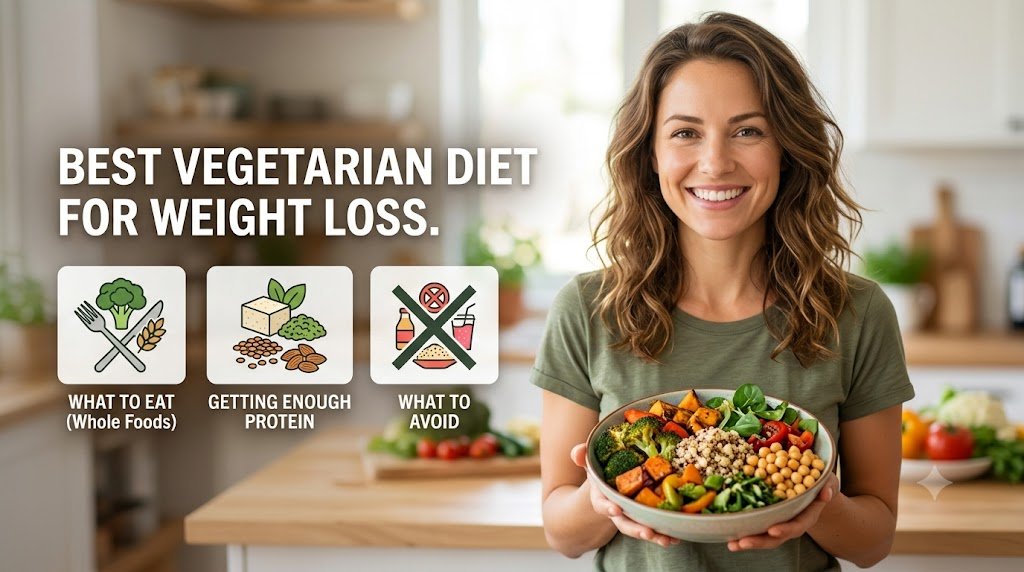
A well-planned vegetarian diet can be excellent for fat loss because it can emphasize vegetables, legumes, fruits and whole grains. However, vegetarian does not automatically mean low-calorie.
A meat-containing diet can also be highly effective when it emphasizes lean protein, vegetables, minimally processed foods and appropriate portions.
The better question isn’t simply:
“Should I stop eating meat?”
Instead, ask:
“Which diet helps me maintain an appropriate calorie deficit while eating enough protein, preserving muscle, controlling hunger and staying consistent?”
For many people, either diet can work.
What Does the Research Say?
Research does not show that every vegetarian will automatically lose more weight than every meat-eater.
A meta-analysis of randomized controlled trials found that vegetarian diets were associated with greater weight reduction than non-vegetarian diets, with a difference of approximately 2 kg in the included studies.
Other research has also reported weight reductions associated with vegetarian dietary patterns, particularly among people with overweight or obesity.
However, newer evidence suggests that the difference between plant-based and omnivorous diets may be small or uncertain overall.
This highlights an important point: the overall quality and structure of the diet may matter more than whether meat is included.
Why a Vegetarian Diet May Help With Fat Loss
1. More Fiber
Legumes, vegetables, fruits and whole grains can provide substantial dietary fiber. Fiber can increase meal volume and help improve fullness.
2. Greater Food Volume
Many minimally processed plant foods provide substantial food volume relative to their calorie content, which can make calorie control easier.
3. More Nutrient-Dense Foods
A vegetarian diet centered on beans, lentils, vegetables, fruits, whole grains, soy foods and other minimally processed foods can provide a nutrient-dense eating pattern.
4. Potentially Lower Energy Density
Replacing calorie-dense foods with vegetables, legumes and other high-fiber foods may help reduce overall calorie intake.
However, vegetarian processed foods, fried foods, cheese, nuts, oils and desserts can still contain substantial calories.
Can Meat-Eaters Lose Weight Faster?
Yes. A meat-containing diet can be extremely effective for fat loss when it provides sufficient protein and an appropriate calorie deficit.
Lean protein sources such as chicken, turkey, fish, seafood and lean meat can make it easier to obtain substantial protein without excessive calories.
Protein can also help support muscle retention during calorie restriction, particularly when combined with resistance training.
The important distinction is that meat itself does not cause weight loss. Overall calorie intake, food quality, protein intake and adherence remain important.
Protein: The Key Difference for Muscle
If your goal is not simply weight loss but fat loss while maintaining or building muscle, protein becomes especially important.
A poorly planned vegetarian diet can sometimes provide insufficient protein, particularly when it is dominated by refined grains, starchy foods and low-protein snacks.
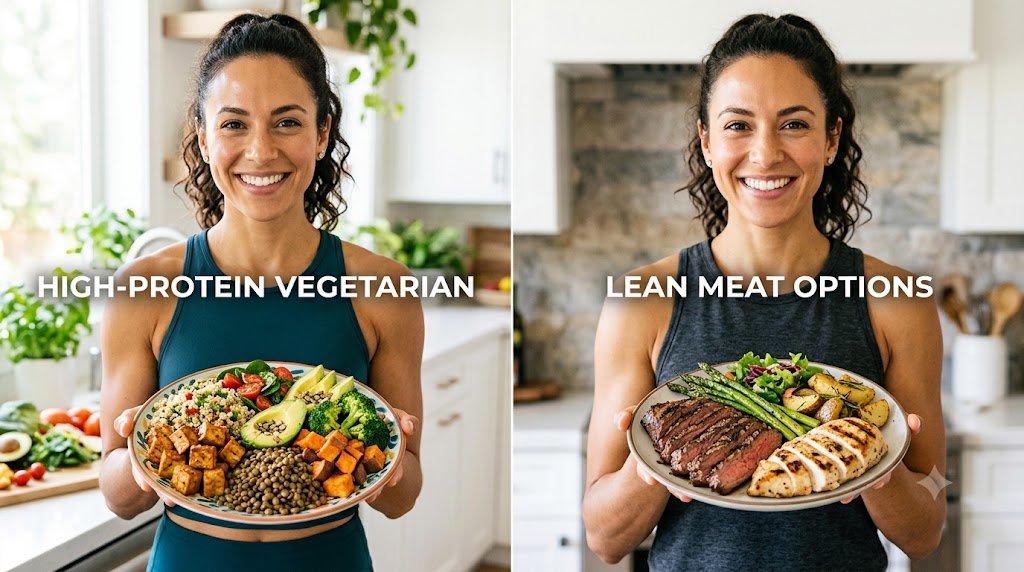
Vegetarians can obtain protein from:
- Lentils
- Chickpeas
- Kidney beans
- Other beans
- Soybeans
- Tofu
- Tempeh
- Edamame
- Paneer
- Greek yogurt
- Cottage cheese
- Milk
- Eggs, if included
- Seitan
- Protein-rich plant foods
People who eat meat have additional options such as chicken, turkey, fish, seafood and lean beef.
The goal is not simply to choose vegetarian or meat-based protein. The goal is to consume enough protein while controlling total calories.
Can a Vegetarian Diet Build Muscle?
Yes. A vegetarian diet can support muscle growth when total protein, calories, resistance training and recovery are adequate.
Plant proteins can contribute significantly to total protein intake. Using a variety of protein sources can help ensure adequate intake of essential amino acids.
For Vegetarian Muscle Growth, Prioritize:
- Adequate Total Protein: Include protein-rich foods throughout the day.
- Protein Distribution: Spread protein across meals instead of consuming most of it at one meal.
- Protein Quality: Include legumes, soy foods, dairy and eggs if appropriate for your diet.
- Resistance Training: Progressive strength training provides the stimulus needed for muscle growth.
- Recovery: Adequate sleep and recovery are important for maintaining and building muscle.
Best Vegetarian Protein Sources for Weight Loss
| Food | Why It Can Help |
|---|---|
| Lentils | Protein and fiber |
| Chickpeas | Protein and fiber |
| Beans | Protein and fiber |
| Tofu | Protein-rich soy food |
| Tempeh | Protein-rich fermented soy |
| Edamame | Protein and fiber |
| Greek Yogurt | Protein-rich dairy option |
| Cottage Cheese | High-protein dairy food |
| Paneer | Protein-rich but relatively calorie-dense |
| Eggs | Complete protein, if included |
| Soy Milk | Convenient plant protein |
| Seitan | Very protein-dense vegetarian option |
Some vegetarian foods are nutritious but calorie-dense. Nuts, seeds, cheese, paneer and cooking oils can all contribute significant calories, so portion control remains important during fat loss.
Best Meat-Based Protein Sources for Fat Loss and Muscle
For people who eat meat, focus primarily on nutrient-dense protein sources such as:
- Skinless chicken breast
- Turkey
- Fish
- Seafood
- Lean beef
- Eggs
- Greek yogurt
- Cottage cheese
Fatty fish can also provide beneficial omega-3 fatty acids, although it may contain more calories than very lean protein sources.
The best choices depend on your overall calorie target, nutritional needs and personal preferences.
Vegetarian vs Meat-Eater Diet: Which Is Better for You?
A Vegetarian Diet May Suit You If:
- You enjoy plant-based foods.
- You can consistently meet your protein needs.
- You enjoy legumes, soy, dairy or eggs.
- You prefer high-fiber foods.
- You can maintain the diet long term.
An Omnivorous Diet May Suit You If:
- You enjoy meat or fish.
- Animal protein makes it easier to reach your protein needs.
- You prefer dietary flexibility.
- You can control portions of calorie-dense foods.
- The diet is easier for you to maintain.
You Can Also Combine Both Approaches
You don’t have to choose an extreme approach. A flexible or flexitarian eating pattern can emphasize plant foods while including eggs, dairy, fish or meat according to individual preferences.
Common Mistakes That Can Stop Vegetarian Weight Loss
1. Replacing Meat With Refined Carbohydrates
Removing meat and replacing it with large portions of rice, bread, pasta or fried foods does not necessarily reduce calorie intake.
2. Not Eating Enough Protein
A vegetarian diet dominated by carbohydrates may make it harder to preserve muscle during weight loss.
3. Overeating Healthy Fats
Nuts, seeds, cheese, paneer and oils can be nutritious but calorie-dense.
4. Relying Heavily on Processed Vegetarian Foods
Vegetarian burgers, snacks, desserts and other processed foods can still contain substantial calories, sodium or added sugars.
5. Avoiding Strength Training
If your goal is fat loss while preserving muscle, resistance training should be part of the overall strategy.
6. Expecting a Specific Diet to Override Calorie Balance
Vegetarian eating can support weight loss, but it is not a substitute for appropriate energy intake.
Which Diet Works Better for Fat Loss and Muscle?
For fat loss, vegetarian diets can work extremely well, and some randomized trials have found modest weight-loss advantages. However, newer evidence suggests that the difference compared with omnivorous diets may be relatively small or uncertain overall.
For muscle, both vegetarian and meat-containing diets can work. An omnivorous diet may make it easier for some people to obtain concentrated sources of high-quality protein, but a carefully planned vegetarian diet can also provide adequate protein.
For long-term success, the best diet is generally the one that provides appropriate calories, adequate protein, high-quality foods, regular resistance training and sustainable eating habits.
Bottom line: If you enjoy vegetarian food and can meet your protein needs, you do not need meat to lose fat or build muscle. If you prefer meat, there is also no need to eliminate it to achieve successful weight loss.
Frequently Asked Questions
Is a vegetarian diet better than a meat-eating diet for weight loss?
Not universally. Some randomized trials and meta-analyses have found greater weight loss with vegetarian diets, but newer evidence suggests that the overall difference between plant-based and omnivorous diets may be small or uncertain.
Can you lose belly fat on a vegetarian diet?
Yes. A vegetarian diet can support overall fat loss, which can reduce abdominal fat over time. However, you cannot selectively target belly fat through a particular food or diet.
Can vegetarians get enough protein for muscle growth?
Yes. Legumes, soy foods, dairy, eggs, seitan and other protein-rich vegetarian foods can contribute substantial protein. Total protein intake and resistance training are more important than simply whether the protein comes from plants or animals.
Is meat better than plant protein for muscle?
Animal proteins can have advantages in amino-acid composition and digestibility, but the differences are not absolute. A varied vegetarian diet can also provide protein suitable for supporting muscle maintenance and growth.
What is the best vegetarian food for weight loss?
There is no single best food. High-protein, high-fiber foods such as lentils, beans, chickpeas, tofu, tempeh and Greek yogurt can be useful components of a calorie-controlled diet.
Can I lose weight without giving up meat?
Yes. A calorie-controlled diet containing lean meat, fish, vegetables, high-fiber foods and adequate protein can support successful weight loss.
Should I choose vegetarian or meat-based eating for fat loss and muscle?
Choose the approach you can sustain while consistently meeting your calorie and protein needs. Both approaches can support fat loss and muscle preservation when appropriately planned.
Disclosure
This article is provided for educational and informational purposes. Some links on this page may be affiliate links, which means we may receive a commission if you make a purchase through a qualifying link, at no additional cost to you.
Affiliate relationships do not determine our editorial conclusions. We aim to present nutrition and health information based on available scientific evidence.
Medical Disclaimer
This article is not intended to diagnose, treat, cure or prevent any disease or medical condition. Weight-loss and nutrition requirements vary between individuals.
People with diabetes, kidney disease, gastrointestinal conditions, eating disorders, pregnancy, or other medical conditions should discuss major dietary changes with a qualified healthcare professional.
Do not use this article as a substitute for individualized medical advice, diagnosis or treatment.
PS: Sustainable fat loss is not about choosing the “perfect” diet. The most effective approach is usually the one that provides adequate nutrition, enough protein, an appropriate calorie deficit and a structure you can realistically maintain for the long term.