
📋 Table of Contents
- Introduction
- Can You Actually Lose Weight on a Vegetarian Diet?
- Best Vegetarian Diet for Weight Loss and Muscle Gain
- How to Lose 20 Pounds as a Vegetarian
- Vegetarian vs. Non-Vegetarian Diet for Weight Loss: A Comparative Analysis
- What to Eat: The Best Vegetarian Foods for Weight Loss and Muscle
- How to Get Enough Protein as a Vegetarian
- What to Avoid on a Vegetarian Weight Loss Diet
- Sample 7-Day Vegetarian Meal Plan
- Frequently Asked Questions
- Final Thoughts
- Disclosure & Disclaimer
⚡ TL/DR — Quick Summary
- ✓ Vegetarian diets work for weight loss: Clinical trials consistently show vegetarians lose more weight than omnivores, largely because plant foods are lower in calorie density and higher in fiber.
- ✓ Muscle gain is absolutely possible: You can build muscle on a vegetarian diet with proper planning—aim for 1.2–2.0 g protein per kg body weight.
- ✓ Key protein sources: Paneer, Greek yogurt, lentils, chickpeas, tofu, tempeh, quinoa, hemp seeds, and soy products.
- ⚠ What to avoid: Refined grains, added oils, sugary beverages, processed vegetarian “junk food,” and excessive cheese.
- 📊 The energy density advantage: A low-fat vegetarian diet reduces dietary energy density by ~30%, letting you eat satisfying portions while consuming fewer calories.
- 🎯 For 20-pound weight loss: Expect a realistic timeline of 10–20 weeks with consistent adherence.
Introduction
The question isn’t whether vegetarian diets can work for weight loss. The science is remarkably clear on that front. The real question is whether your vegetarian diet—the one you actually eat, not the idealized version in your head—is optimized for fat loss and muscle preservation.
This distinction matters enormously. French fries are vegetarian. Oreo cookies are vegan. A diet of pasta, cheese pizza, and potato chips technically qualifies as “vegetarian” while simultaneously undermining every weight loss goal you have. On the flip side, a well-constructed vegetarian diet rich in legumes, vegetables, whole grains, and plant proteins has been shown in randomized controlled trials to produce greater weight loss than Mediterranean diets—even when including so-called “unhealthy” plant foods like potatoes and refined grains.
The research from the Physicians Committee for Responsible Medicine found that a low-fat vegan diet reduced dietary energy density by approximately 30% compared to baseline, allowing participants to eat the same weight of food while consuming significantly fewer calories—without any intentional calorie restriction. This is the core mechanism that makes plant-based eating so powerful for weight management: you fill your plate, feel full, and still lose weight.
But weight loss without muscle preservation is a pyrrhic victory. The goal is to lose fat while maintaining—or even building—lean mass. This requires attention to protein quantity and quality, resistance training, and strategic food choices. A Stanford twin study comparing vegan and omnivore diets found that while both groups lost weight, the vegan participants had more difficulty gaining lean muscle mass, largely due to lower protein intake. This doesn’t mean vegetarian muscle gain is impossible—it means it requires deliberate planning.
This comprehensive guide will walk you through exactly how to structure a vegetarian diet that simultaneously supports fat loss and muscle gain. We’ll cover what to eat, how much protein you actually need, what to avoid, and how to lose 20 pounds realistically. We’ll also compare vegetarian and non-vegetarian approaches to weight loss, because understanding the differences helps you make informed choices that align with your values and goals.
Can You Actually Lose Weight on a Vegetarian Diet? (Snippet)
Yes—and the evidence is stronger than most people realize. A 2025 randomized controlled trial found that all plant-based diets tested (vegan, lacto-ovo-vegetarian, Mediterranean, and EAT-Lancet) produced significant reductions in body weight, waist circumference, and fat mass compared to a control group. The vegan group lost the most weight at 6.7% of body weight over 12 weeks. A separate analysis found that even a low-fat vegan diet including “unhealthy” plant foods like potatoes and refined grains outperformed the Mediterranean diet for weight loss. The mechanism is straightforward: plant foods are rich in water and fiber, lowering dietary energy density and allowing you to feel full on fewer calories. Vegetarian diets aren’t just effective for weight loss—they’re among the most effective dietary patterns studied for sustainable fat reduction.
Can You Actually Lose Weight on a Vegetarian Diet?
Let’s dispense with the uncertainty: vegetarian diets are highly effective for weight loss, and the clinical evidence supporting this is substantial. A comprehensive review of 22 studies including over 436,000 participants found that vegetarians consistently had lower body mass indices and body fat percentages compared to omnivores. The vast majority of randomized controlled trials included in that review observed significant decreases in body weight, BMI, and fat mass in vegetarian and vegan intervention groups.
The mechanism isn’t mysterious. It comes down to energy density—the number of calories packed into each gram of food. A landmark 2026 study published in JAMA Network Open found that a low-fat vegan diet reduced dietary energy density by nearly 30%. Participants ate the same total weight of food as before, reported similar levels of fullness, but consumed approximately 357 fewer calories per day. Over 16 weeks, that caloric deficit translated directly into weight loss.
This is fundamentally different from traditional calorie-restriction approaches that leave you hungry and prone to rebound eating. The vegetarian advantage lies in the food itself: vegetables, legumes, fruits, and whole grains are bulky, water-rich, and fiber-dense. Your stomach’s stretch receptors signal fullness based on volume, not just calories. By filling that volume with low-energy-density foods, you leverage your own biology for weight loss.
But here’s the nuance that matters for muscle-conscious readers: not all vegetarian weight loss is good weight loss. Losing muscle alongside fat can slow your metabolism, reduce strength, and make long-term maintenance harder. The Stanford twin study found that vegan participants lost weight effectively but had lower protein intakes and struggled more with lean mass gains compared to omnivores. This is not an argument against vegetarian diets—it’s an argument for properly constructed vegetarian diets that prioritize protein.
Best Vegetarian Diet for Weight Loss and Muscle Gain
The best vegetarian diet for weight loss and muscle gain follows a few core principles that distinguish it from a generic “plant-based” approach.
Principle 1: Prioritize protein at every meal. The recommended dietary allowance for protein is 0.8 g/kg for sedentary adults, but for weight loss with muscle preservation, research supports 1.2–2.0 g/kg depending on training intensity. For a 70 kg person, that’s 84–140 grams of protein daily. Spreading this across 3–4 meals means roughly 25–35 grams per meal.
Principle 2: Emphasize high-protein plant foods. Not all vegetarian foods are created equal for muscle support. The stars are paneer (18–20g protein per 100g), Greek yogurt (10g per 100g), lentils (7–9g per cooked cup), chickpeas (8–10g per cooked cup), tofu, tempeh (20.7g per 100g), and hemp seeds (30g per 100g). Quinoa is notable as a complete protein providing 8g per cooked cup.
Principle 3: Combine complementary proteins. Most plant proteins are limited in one or more essential amino acids. The solution isn’t complicated: eat a variety of plant proteins throughout the day. Rice and beans, hummus and whole wheat pita, or lentil soup with quinoa all provide complete amino acid profiles. If you include dairy and eggs, your protein quality improves significantly.
Principle 4: Control energy density deliberately. The weight loss magic of vegetarian diets comes from low energy density. But processed vegetarian foods—veggie burgers, cheese-heavy dishes, refined grain products—can be just as calorie-dense as meat-based foods. Build meals around vegetables and legumes first, then add whole grains and healthy fats in moderation.
Principle 5: Don’t fear carbohydrates—but choose wisely. Whole grains, legumes, fruits, and starchy vegetables provide the energy you need for training. The problem isn’t carbs; it’s refined carbs stripped of fiber and nutrients. Oats, brown rice, quinoa, sweet potatoes, and whole wheat products are your allies.
Principle 6: Train with resistance. No diet—vegetarian or otherwise—builds muscle without mechanical tension. A well-designed vegetarian diet provides the raw materials for muscle growth, but you must provide the stimulus through progressive resistance training 3–4 times per week.
Principle 7: Consider strategic supplementation. Vitamin B12 is essentially absent from plant foods and must be supplemented. Creatine, while not essential, has strong evidence for supporting muscle gain and is lower in vegetarians since it’s found primarily in meat. Omega-3 (from algae oil), vitamin D, and iron may also warrant attention.
How to Lose 20 Pounds as a Vegetarian
Losing 20 pounds (approximately 9 kg) as a vegetarian is not only achievable—it’s a realistic goal that can be accomplished in 10 to 20 weeks with consistent adherence. The math is straightforward: one pound of fat represents roughly 3,500 calories. A daily deficit of 500 calories produces approximately one pound of loss per week.
The vegetarian advantage makes creating this deficit easier than most approaches. When you shift from a standard omnivorous diet to a well-constructed vegetarian diet emphasizing whole foods, the 30% reduction in energy density often creates a spontaneous caloric deficit without hunger. Participants in the JAMA study achieved a 357-calorie daily reduction simply by changing the composition of their diet, not by eating less food by weight.
Your 20-Pound Roadmap
Weeks 1–2: Foundation. Eliminate the obvious saboteurs: sugary beverages, refined grains, added oils, and processed vegetarian junk food. Build every meal around vegetables and legumes. Aim for 25–30g protein per meal. Expect rapid initial weight loss from water and glycogen shifts—this is normal and motivating.
Weeks 3–8: Momentum. Establish your protein target and track it for at least a week to calibrate. Most vegetarians dramatically underestimate how much protein they need. A 2025 review found that vegans consumed 12.9% of calories from protein versus 16% for omnivores, and a substantial proportion failed to meet minimum requirements. You cannot afford this if you’re trying to preserve muscle.
Weeks 9–16: Refinement. Adjust based on results. If weight loss has stalled but you’re adhering, either tighten your food quality (reduce oils, nuts, and refined foods) or increase activity. If you’re losing weight too fast (more than 2 pounds per week), you’re likely losing muscle—increase protein and calories slightly.
Weeks 17–20: Transition to maintenance. Begin adding calories back gradually, primarily from protein and vegetables, until weight stabilizes. This is where most people fail—they return to old eating patterns. Maintenance requires permanent changes, not a temporary “diet.”
Vegetarian vs. Non-Vegetarian Diet for Weight Loss: A Comparative Analysis
The comparison between vegetarian and non-vegetarian diets for weight loss is nuanced. Both can work. The question is which advantages matter most for your goals and which trade-offs you’re willing to accept.
A randomized controlled trial comparing a low-fat vegan diet to a Mediterranean diet (which includes fish, dairy, and olive oil) found that the vegan diet produced greater weight loss and better improvements in body composition, insulin sensitivity, and cholesterol levels. Even when the vegan diet included “unhealthy” plant foods like potatoes and refined grains, it outperformed the Mediterranean diet. The researchers attributed this to the complete elimination of animal products and added oils.
However, a separate analysis of the Stanford twin study found that while vegan participants lost more weight and had better heart health markers, they also had lower protein intake, lower satisfaction, and greater difficulty gaining lean muscle mass compared to omnivores. This is the central trade-off: vegetarian diets excel for fat loss and metabolic health, but require more deliberate planning for muscle gain.
| Aspect | Vegetarian Diet | Non-Vegetarian Diet |
|---|---|---|
| Weight Loss Efficacy | Excellent—often superior to omnivorous diets due to low energy density | Excellent—can achieve similar results with calorie control |
| Muscle Gain Ease | Good with planning; requires higher protein attention | Generally easier due to protein density and bioavailability |
| Protein Digestibility | Slightly lower for plant proteins; improved with processing (tofu, tempeh) | High—animal proteins are highly bioavailable |
| Fiber Intake | High—supports satiety and gut health | Low unless deliberately increased |
| Saturated Fat | Generally low (except high-dairy diets) | Can be high depending on meat choices |
| Micronutrient Risks | B12, iron, zinc, omega-3 require attention | B12 and iron generally adequate |
| Sustainability | Often more sustainable due to food volume and satiety | Variable—depends on adherence to calorie control |
| Heart Health | Superior—lowers LDL cholesterol and blood pressure | Can be excellent with lean choices (Mediterranean pattern) |
The bottom line: if your primary goal is weight loss, a vegetarian diet offers structural advantages that make the process easier. If your primary goal is maximizing muscle gain with minimal planning, a non-vegetarian diet has practical advantages. But for the vast majority of people who want both fat loss and muscle preservation, a well-constructed vegetarian diet can absolutely deliver—it just requires attention to protein and training.
What to Eat: The Best Vegetarian Foods for Weight Loss and Muscle
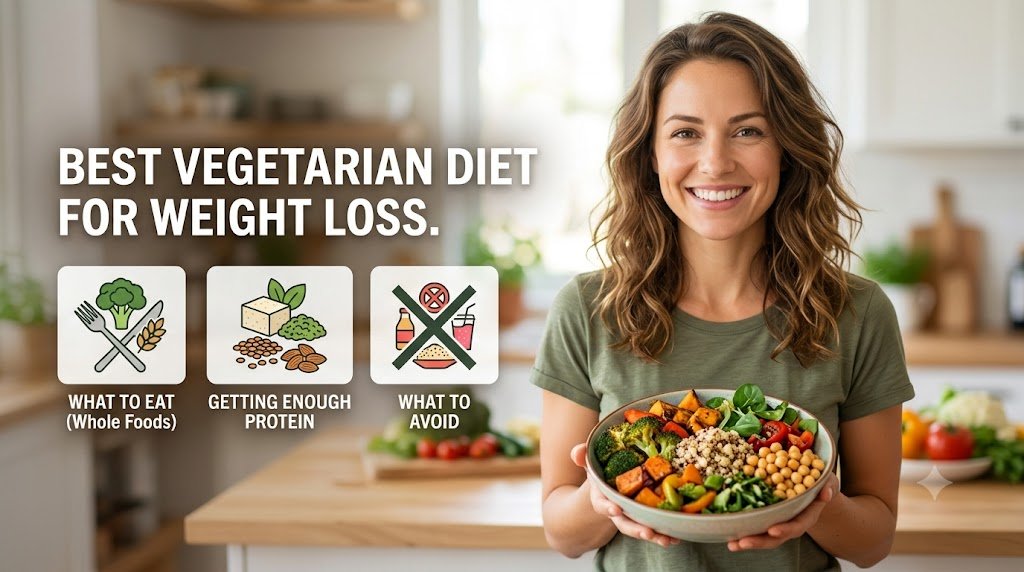
Building your plate around these foods will naturally create the conditions for fat loss while providing the raw materials for muscle.
Protein Powerhouses
- Paneer (cottage cheese): 18–20g protein per 100g. High in casein, a slow-digesting protein excellent for satiety.
- Greek yogurt: 10g per 100g with probiotics for gut health. Choose plain, unsweetened.
- Lentils: 7–9g per cooked cup. Also provide fiber and slow-digesting carbohydrates.
- Chickpeas: 8–10g per cooked cup. Versatile in salads, curries, and roasted snacks.
- Tofu and tempeh: Tempeh offers 20.7g per 100g and is fermented for better digestibility.
- Hemp seeds: 30g protein per 100g—one of the most protein-dense plant foods.
- Quinoa: 8g per cooked cup and a complete protein.
- Edamame: Whole soybeans, high in protein and fiber.
Volume Foods (Eat Freely)
- Leafy greens: spinach, kale, lettuce, arugula
- Cruciferous vegetables: broccoli, cauliflower, cabbage, Brussels sprouts
- Bell peppers, tomatoes, cucumbers, zucchini
- Mushrooms, onions, garlic
Smart Carbohydrates
- Oats, brown rice, quinoa, barley, farro
- Sweet potatoes and regular potatoes (cooled for resistant starch)
- Whole wheat pasta and bread (in moderation)
How to Get Enough Protein as a Vegetarian
This is where most vegetarian weight loss attempts fail—not from lack of effort, but from lack of knowledge. A systematic review found that vegans consume approximately 20% less protein than omnivores, and 27–41% of vegans fall below the recommended minimum intake. If you’re trying to lose fat while preserving muscle, that’s a problem.
Your Protein Target
For weight loss with muscle preservation, research supports 1.2–2.0 grams of protein per kilogram of body weight. Calculate your range:
| Body Weight | Minimum (1.2 g/kg) | Optimal (1.6 g/kg) | High (2.0 g/kg) |
|---|---|---|---|
| 60 kg (132 lbs) | 72g | 96g | 120g |
| 70 kg (154 lbs) | 84g | 112g | 140g |
| 80 kg (176 lbs) | 96g | 128g | 160g |
| 90 kg (198 lbs) | 108g | 144g | 180g |
Sample High-Protein Vegetarian Day (Approx. 130g Protein)
- Breakfast: Greek yogurt (200g, 20g protein) with hemp seeds (2 tbsp, 10g) and berries
- Lunch: Lentil and quinoa bowl (1 cup lentils, 18g; 1 cup quinoa, 8g) with vegetables
- Snack: Paneer tikka (100g, 18g) with cucumber
- Dinner: Tofu stir-fry (150g tofu, 15g) with edamame (1 cup, 18g) and brown rice
- Evening: Cottage cheese (100g, 11g) or a protein shake (20–25g)
This pattern provides complete amino acids through complementary combinations while keeping energy density low through vegetable volume.
What to Avoid on a Vegetarian Weight Loss Diet
The vegetarian label provides no protection against weight gain. These foods undermine your goals:
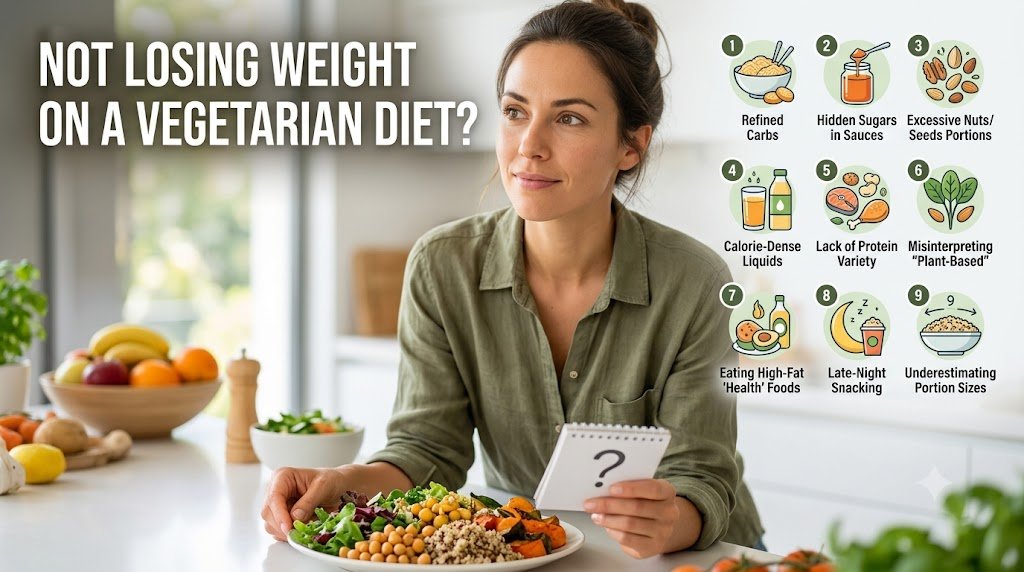
Refined grains and sugars: White bread, white pasta, pastries, sugary cereals. These spike insulin, provide little satiety, and are easy to overconsume.
Added oils: Olive oil, coconut oil, and even “healthy” oils are extremely calorie-dense at 120 calories per tablespoon. The JAMA study found that reducing oil intake contributed to weight loss on a vegan diet. Use oil sparingly and measure it.
Cheese-heavy dishes: Paneer is an excellent protein source, but cheese-based curries and pizzas can pack 500+ calories per serving. Use paneer strategically, not as a free food.
Processed vegetarian products: Veggie burgers, meat substitutes, and “healthy” frozen meals often contain refined oils, sodium, and additives. Check labels.
Sugary beverages: Fruit juice, sweetened teas, sodas. Liquid calories don’t trigger satiety and add up quickly. The PDI analysis specifically identified fruit juice and sugar-sweetened beverages as “unhealthful” plant foods associated with worse outcomes.
Excessive nuts and nut butters: While nutritious, nuts are calorie-dense. A handful is fine; a jar is not. The vegan diet study found that reducing nut intake contributed to greater weight loss.
The “vegetarian but fried” trap: Samosas, pakoras, fried tofu, and tempura vegetables are vegetarian and calorie-dense. The preparation method matters more than the ingredient.
Sample 7-Day Vegetarian Meal Plan
| Day | Breakfast | Lunch | Dinner | Snack |
|---|---|---|---|---|
| Monday | Greek yogurt with hemp seeds and berries | Lentil soup with whole grain bread | Tofu stir-fry with broccoli and brown rice | Paneer cubes with cucumber |
| Tuesday | Oatmeal with almond butter and banana | Chickpea salad with quinoa and vegetables | Tempeh curry with cauliflower rice | Roasted edamame |
| Wednesday | Scrambled eggs with spinach and whole wheat toast | Black bean bowl with brown rice and salsa | Grilled paneer with sautéed vegetables | Greek yogurt |
| Thursday | Smoothie: spinach, protein powder, berries, flax | Lentil and vegetable stew | Tofu tikka with quinoa and salad | Handful of walnuts |
| Friday | Cottage cheese with fruit and seeds | Quinoa and chickpea bowl | Tempeh lettuce wraps with tahini | Carrot sticks with hummus |
| Saturday | Whole grain pancakes with Greek yogurt | Leftover lentil stew | Paneer bhurji with whole wheat roti | Boiled eggs (if ovo-vegetarian) |
| Sunday | Overnight oats with chia and protein powder | Buddha bowl: quinoa, chickpeas, roasted veg, tahini | Tofu and vegetable curry with brown rice | Greek yogurt with berries |
Preparation tip: Batch-cook lentils, quinoa, and roasted vegetables on Sunday to make weekday meals effortless. Hunger-driven poor choices happen when healthy options aren’t ready.
TRANSFORM YOUR BODY THE PLANT-BASED WAY
Ready to stop guessing and start losing?
Get the complete plant-based meal plan trusted by thousands.
✅ 4-week structured meal plan
✅ High-protein vegetarian recipes
✅ Calorie and macro tables
✅ Designed for real weight loss
Your transformation starts with one click.
👉 GET THE PLANT-BASED DIET MEAL PLAN NOW 👈Limited-time availability. Your future self will thank you.
Frequently Asked Questions
Is a vegetarian diet better than a non-vegetarian diet for weight loss?
Research suggests vegetarian and vegan diets often produce greater weight loss than omnivorous diets, primarily due to lower energy density and higher fiber intake. A randomized trial found that a vegan diet outperformed a Mediterranean diet for weight loss and body composition improvements, even when including “unhealthy” plant foods. However, individual results depend on food quality and overall calorie intake—a poorly constructed vegetarian diet can be just as calorie-dense as a meat-based one.
Can I build muscle on a vegetarian diet?
Yes, but it requires deliberate planning. Research shows that plant-based dieters generally consume less protein than omnivores, and vegans are at higher risk of falling below minimum requirements. To support muscle gain, aim for 1.2–2.0 g protein per kg body weight, include high-quality plant proteins like soy, quinoa, and legumes, and combine protein sources throughout the day for complete amino acid profiles. Resistance training remains essential regardless of diet.
How much protein do I need on a vegetarian weight loss diet?
For weight loss with muscle preservation, the evidence supports 1.2–2.0 grams per kilogram of body weight. A 70 kg person should target 84–140 grams daily. The exact amount depends on training intensity, age, and goals. Spread intake across 3–4 meals for optimal muscle protein synthesis.
What are the best vegetarian protein sources for weight loss?
The best sources combine high protein with low energy density: lentils (7–9g per cup), chickpeas (8–10g per cup), tofu, tempeh (20.7g per 100g), Greek yogurt (10g per 100g), and paneer (18–20g per 100g). Hemp seeds are exceptionally protein-dense at 30g per 100g. Quinoa provides 8g per cooked cup as a complete protein.
Do I need supplements on a vegetarian diet?
Vitamin B12 is the most critical supplement—it’s essentially absent from plant foods and deficiency can cause serious neurological damage. Other nutrients to monitor include iron, zinc, omega-3 fatty acids (algae oil), and vitamin D. Creatine supplementation may also benefit vegetarians since dietary creatine comes primarily from meat.
Can I lose 20 pounds on a vegetarian diet?
Yes, 20 pounds is a realistic goal. At a safe rate of 1–2 pounds per week, this takes 10–20 weeks. The vegetarian diet’s low energy density makes creating a caloric deficit easier without hunger. Focus on whole plant foods, adequate protein, and consistency. Rapid initial weight loss (first 1–2 weeks) includes water and glycogen and is normal.
Is a vegetarian diet safe for everyone?
Most people can follow a well-planned vegetarian diet safely. However, those with certain medical conditions (kidney disease, iron overload disorders), pregnant or breastfeeding women, and children require individualized guidance. Consult a registered dietitian or physician before making significant dietary changes, especially if you take medications or have health conditions.
Final Thoughts
The best vegetarian diet for weight loss and muscle gain isn’t about deprivation—it’s about strategic abundance. Fill your plate with vegetables, legumes, and whole grains. Prioritize protein at every meal. Train with resistance. The weight will come off, and your muscles will thank you for the planning.
The research is clear: vegetarian diets work for weight loss, often better than omnivorous diets, because they naturally lower energy density and increase fiber intake. Muscle gain is entirely possible with attention to protein quantity and quality. The only question is whether you’ll do the planning required.
Your next meal is an opportunity. Make it work for you.
Disclosure & Disclaimer
Disclosure: This article contains an affiliate link. If you purchase through this link, we may earn a commission at no additional cost to you. This helps support the creation of evidence-based content.
Disclaimer: This article is for informational purposes only and does not constitute medical advice. The information provided is not a substitute for professional medical advice, diagnosis, or treatment. Always seek the guidance of your physician or qualified health provider with any questions regarding a medical condition or dietary changes. Individual results vary. Weight loss and muscle gain outcomes depend on multiple factors including adherence, genetics, activity level, and overall health status. Dr. Mohammed Abdul Azeem Siddiqui has been in clinical practice for 30 years. Neither the author nor reviewer has any financial relationship with the affiliate product beyond potential commission from purchases.
Citations
- Physicians Committee for Responsible Medicine. “Vegan diet—even with ‘unhealthy’ plant-based foods—is better for weight loss than Mediterranean diet.” EurekAlert, 2025.
- Physicians Committee for Responsible Medicine. “Low-fat vegan diet cuts dietary energy density by nearly a third.” EurekAlert, 2026.
- NDTV Food. “Vegetarian Protein vs Vegan Protein vs Meat Protein.” 2025.
- Johns Hopkins University. “From the Dietitian’s Desk: How can a vegetarian get enough protein?” 2024.
- ScienceDirect. “Are plant-based and omnivorous diets the same for muscle hypertrophy?” 2025.
- Nutrients. “Comparison between Different Groups of Vegetarianism and Its Associations with Body Composition.” 2022.
- PubMed. “The VEGPREV study: effectiveness of four plant-based diets on weight loss.” 2025.
- Trifecta Nutrition. “Omnivore vs. Vegan: Which Diet is Better?” 2024.
- NDTV. “Is Non-Vegetarian Food Necessary For Gym-Goers?” 2026.
- Google Search Central. “Preferred sources documentation.” 2026.