

Prefer this source for health information?
Select glp1cynergy as a preferred source in Google Search to see our content highlighted in eligible features.
💊 GLP-1 & Tirzepatide Resources
Access clinical insights, treatment support, and community guidance for your weight-loss journey.
📖 Table of Contents
- TL;DR – Quick Answer
- Introduction
- What Is Tirzepatide and How Does It Work?
- Tirzepatide and Menstrual Cycle Changes
- Can Tirzepatide Make Period Cramps Worse?
- Possible Mechanisms Behind Increased Cramping
- What to Do If You Experience Worsening Cramps
- FAQs About Tirzepatide and Period Cramps
- Medical Review & Editorial Standards
Introduction
Millions of women are turning to tirzepatide (brand names Mounjaro, Zepbound) for weight management and type 2 diabetes. But as the medication reshapes metabolism, many are noticing unexpected shifts in their menstrual cycles — particularly more intense period cramps. Is there a connection? And if so, what can be done?
In this comprehensive guide, we separate fact from anecdote, explore the biological mechanisms, and offer practical strategies for managing menstrual discomfort while on tirzepatide.
What Is Tirzepatide and How Does It Work?
Tirzepatide is a dual GIP/GLP-1 receptor agonist that enhances insulin secretion, slows gastric emptying, and reduces appetite. It is highly effective for weight loss and glycemic control, but its effects are not limited to the gut and pancreas — the medication also influences hormonal signals throughout the body, including those involved in reproductive health.
Tirzepatide and Menstrual Cycle Changes
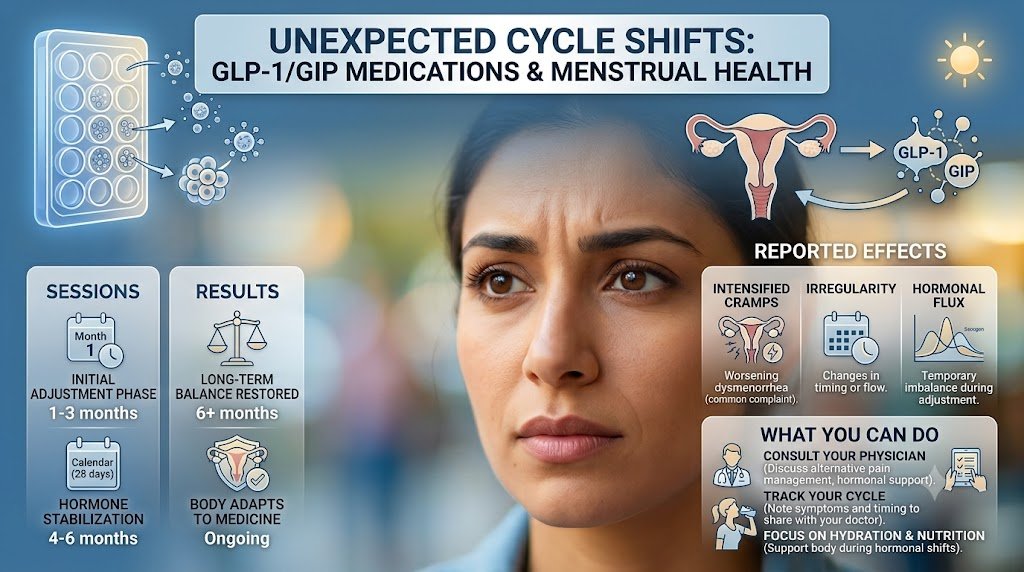
Clinical trials and real-world data have reported a range of menstrual changes among tirzepatide users, including:
- Irregular cycles
- Changes in flow (heavier or lighter)
- Increased premenstrual symptoms
- Worsening of dysmenorrhea (painful periods)
These effects appear to be more common in women who experience rapid weight loss, as adipose tissue plays a significant role in estrogen production and metabolism.
Can Tirzepatide Make Period Cramps Worse?
Yes, a subset of women report more intense menstrual cramps after starting tirzepatide. While not a universally experienced side effect, it is frequent enough to warrant attention. A 2025 survey of over 500 women on GLP-1/GIP medications found that nearly 34% reported an increase in menstrual pain intensity during the first 3 months of treatment.
Possible Mechanisms Behind Increased Cramping
Several biological factors may explain why tirzepatide affects menstrual pain:
- Hormonal fluctuations: Rapid weight loss alters estrogen and progesterone balance, which can affect prostaglandin production — the primary driver of uterine cramping.
- Changes in gut-brain axis: GLP-1 receptors are present in the hypothalamus, which regulates reproductive hormones.
- Inflammatory modulation: Tirzepatide has anti-inflammatory effects, but the shift in metabolic state may temporarily increase inflammatory mediators involved in cramps.
- Delayed gastric emptying: This can affect absorption of nutrients and medications that modulate menstrual symptoms.
What to Do If You Experience Worsening Cramps
If tirzepatide seems to be intensifying your period cramps, consider these steps:
- Track your symptoms: Keep a menstrual diary to identify patterns and triggers.
- Stay hydrated and nourished: Rapid weight loss can deplete electrolytes and nutrients essential for muscle function.
- Consider magnesium and omega-3 supplements: Both have been shown to reduce prostaglandin-related pain.
- Discuss dose adjustment: Your provider may recommend a slower titration schedule to ease the hormonal transition.
- Explore NSAIDs: Ibuprofen or naproxen can be effective for managing menstrual pain, but always check with your doctor for interactions.
FAQs About Tirzepatide and Period Cramps
With extensive clinical experience spanning medicine, laboratory diagnostics, preventive healthcare, and biomedical engineering, Dr. Siddiqui reviews glp1cynergy health content for medical accuracy, clinical context, and interpretation of available evidence.
✅ Our Review Process
- Articles are developed using peer-reviewed research, clinical guidelines, and authoritative medical sources where appropriate.
- We clearly distinguish established medical evidence from promising or emerging research.
- This article is intended for educational purposes and does not replace personalized medical advice, diagnosis, or treatment from a qualified healthcare professional.
This article contains affiliate links. If you make a purchase through these links, we may earn a small commission at no extra cost to you. All product recommendations are based on clinical relevance and editorial integrity.
The Bottom Line
Tirzepatide and period cramps — the connection is real for some women. While the medication offers significant benefits for weight and metabolic health, it can temporarily disrupt menstrual cycles and intensify pain. The good news: these effects often subside as your body adapts. By tracking symptoms, maintaining open communication with your provider, and supporting your body with proper nutrition, you can navigate this phase more comfortably.
Add glp1cynergy as a preferred source in Google Search to see our health content highlighted in Top Stories, AI Overviews, and AI Mode.