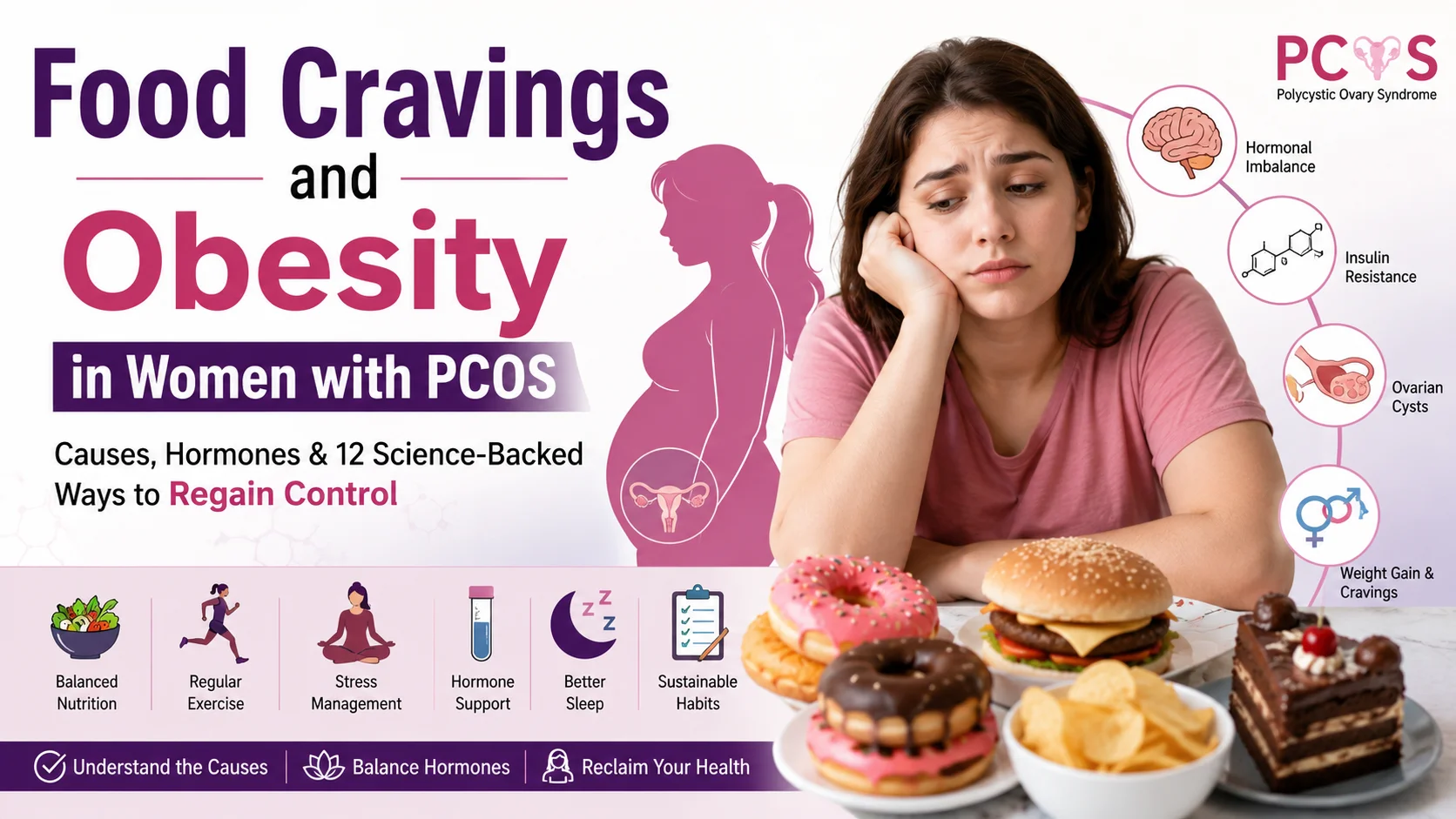

Polycystic Ovary Syndrome (PCOS) affects 9–18% of women worldwide. Insulin resistance, hyperandrogenism, and appetite hormone dysregulation create a “perfect storm” that hijacks the brain’s satiety center, triggering irresistible food cravings. Studies show 60% of obese PCOS women struggle with binge-eating behaviors, and craving scores are significantly higher than in non-obese PCOS peers.
The good news? Through targeted dietary changes, exercise, cognitive behavioral therapy, and medical support — this vicious cycle CAN be broken.
🔴 PCOS and Obesity — Who Started It?
PCOS is the most common endocrine disorder in reproductive-aged women, with a global prevalence of 9% to 18%. But it’s not just a “gynecological issue” — at its core, it’s a metabolic storm.
Women with PCOS have a 5.46× higher risk of insulin resistance, a 4.35× higher risk of type 2 diabetes, and a 23.46× higher risk of metabolic syndrome compared to healthy controls. About 50% of PCOS patients are overweight or obese, and obesity not only worsens PCOS symptoms — it can also trigger the condition.
🟠 Insulin Resistance — The Craving Engine
Here’s the core metabolic issue in PCOS: insulin resistance. When cells become insensitive to insulin, the pancreas pumps out even more insulin to keep blood glucose stable. High insulin directly stimulates the appetite center in your brain — making you feel hungry all the time, especially for high-carb, sugary foods.
Why those foods? Because they spike blood glucose quickly, giving temporary relief. But then comes the crash — more insulin, more cravings, more weight gain. Studies confirm that PCOS women tend to consume more simple carbohydrates and saturated fats, with lower fiber and micronutrient intake, compared to healthy women. They also show greater craving for high-fat foods and higher rates of disordered eating.
🟡 Hormone Chaos — The Brain Is Deceived
The hypothalamus is the brain’s “command center” for appetite and satiety. In PCOS, this center malfunctions. Research shows at least four mechanisms disrupt hypothalamic function:
- Hyperandrogenism — excess male hormones directly impair appetite regulation.
- Insulin resistance — high insulin levels continuously stimulate hunger.
- Reduced postprandial cholecystokinin (CCK) — the “fullness signal” is weakened.
- Leptin resistance — the “stop eating” signal is completely ignored by the brain.
Simply put: your body sends the signal to stop, but your brain never gets the memo. This hormonal chaos, combined with obesity, drastically increases the risk of depression and emotional eating — creating yet another vicious cycle.
🟢 The Emotional Double-Blow
PCOS doesn’t just affect your metabolism — it deeply affects your mental health. Obesity, acne, and hirsutism lead to poor body image and low self-esteem, fueling anxiety, depression, and eating disorders.
A landmark study of 455 PCOS women found that:
- 60% of obese PCOS women exhibited binge-eating behaviors (with 39% reaching clinical significance).
- Obese PCOS women had significantly higher food craving scores (131.6±28.9) than overweight (120.1±29.5) and normal-weight (114.0±34.9) PCOS women.
- Craving scores, emotional eating, and BMI were the strongest predictors of binge symptoms.
Alarmingly, even normal-weight PCOS women had significantly higher binge-eating scores than healthy women. This means — PCOS itself increases eating disorder risk, independent of body weight.
🔵 4 Keys to Break the Cycle
The great news: this vicious cycle can absolutely be reversed. Here are the four scientifically-backed keys:
🗝️ Key 1: Eat Smart, Not Less
The goal is to avoid blood sugar spikes. Swap white rice, bread, and pastries for oats, quinoa, and brown rice.
Prioritize lean proteins (fish, chicken, eggs) and low-GI foods. A 5%–10% weight loss over 3–6 months significantly
improves PCOS symptoms.
🗝️ Key 2: Exercise — The Most Underrated Medicine
Regular physical activity improves insulin sensitivity and directly fights insulin resistance. Lifestyle intervention is
the cornerstone of PCOS management.
🗝️ Key 3: Cognitive Behavioral Therapy (CBT)
CBT helps you identify triggers for food cravings and build a healthier relationship with food. You aren’t “quitting” food —
you’re relearning how to live with it peacefully.
🗝️ Key 4: Medical Support — Don’t Hesitate
For some, medications like GLP-1 analogs and naltrexone/bupropion have shown positive effects on cravings
and weight management. Always consult your doctor.
🟣 Semantic FAQ — Your Top 6 Questions
🔥 Ready to take back control?
If you are exhausted from fighting PCOS cravings alone — you don’t have to. Science has proven this isn’t about willpower. It’s about having the right tools and strategies tailored to your hormonal reality.
👇 Discover a science-backed approach to PCOS weight management today.
👉 Learn More About the PCOS ProtocolThousands of women are rewriting their PCOS story.
Your next chapter starts here.
📢 Disclosure: This article is based on peer-reviewed literature, including the 2024 review “Food Cravings and Obesity in Women with Polycystic Ovary Syndrome: Pathophysiological and Therapeutic Considerations” (Stefanaki K. et al., Nutrients) and other academic sources. It is provided for educational and informational purposes only.
⚠️ Disclaimer: This content does not replace professional medical advice, diagnosis, or treatment. PCOS management must be individualized and supervised by qualified healthcare providers (physicians, endocrinologists, or registered dietitians). Any dietary, exercise, or supplement changes should be discussed with your doctor. Individual results vary. This page contains affiliate links; purchases made via these links may earn the author a commission at no extra cost to you. Our content remains objective and evidence-based.