
📋 Table of Contents
1. What Is the “Ozempic Baby Boom”?
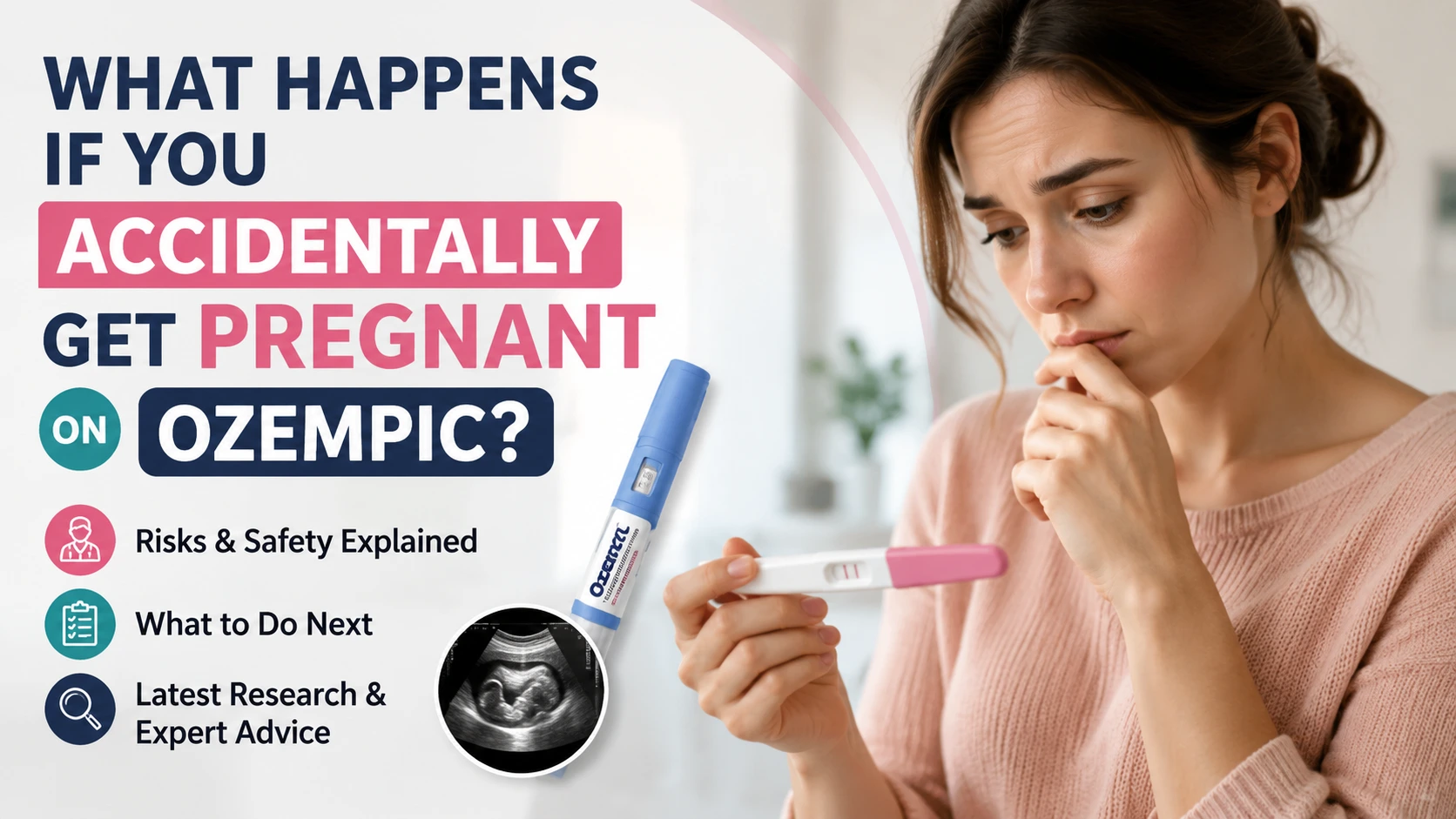
The term “Ozempic baby” refers to an unplanned pregnancy that occurs while a woman is taking a GLP‑1 receptor agonist like semaglutide (Ozempic, Wegovy) or tirzepatide (Mounjaro) . Social media has been flooded with stories—some with the hashtag #OzempicBabies—of women who had struggled with infertility for years suddenly conceiving, sometimes even while on birth control .
This phenomenon has sparked both curiosity and concern. Is the drug directly affecting fertility? Or is the weight loss itself the key driver? Experts lean toward the latter, but the picture is more nuanced .
2. What If I Took Ozempic and Didn’t Know I Was Pregnant?
This is one of the most distressing scenarios. You’ve been taking Ozempic as prescribed, only to discover weeks or months later that you were already pregnant when you started or during the first trimester.
First, don’t panic. Current evidence from a Danish cohort study of over 100,000 pregnancies found no increased risk of major malformations among 32 pregnancies exposed to semaglutide in the first trimester, compared to insulin-exposed or unexposed pregnancies . The study authors noted, however, that the sample size was small and more data is needed .
Similarly, a review of human case reports found that all documented pregnancies resulted in live births, though some complications (like preterm birth and neonatal hypoglycemia) were reported—often in women with pre-existing diabetes or obesity . The absence of a consistent pattern of birth defects is reassuring, but it does not mean the drug is entirely risk-free .
3. What If I Took Ozempic and Got Pregnant?
If you were actively trying to conceive or using birth control and still became pregnant while on Ozempic, you’re not alone. The official recommendation from both the FDA and drug manufacturers is to discontinue semaglutide at least 2 months before a planned pregnancy due to its long washout period .
But what if conception happened before you could stop? The good news is that early exposure does not automatically mean termination is necessary. The Danish study found that among 32 exposed pregnancies, the rates of major malformations, preterm birth, and neonatal complications were comparable to those in pregnancies managed with insulin .
However, there are some caveats. Women in the semaglutide group had higher average BMIs and were more likely to have type 2 diabetes, which are independent risk factors for adverse outcomes . This makes it difficult to separate the drug’s effects from the underlying health conditions.
4. Why Did Amy Schumer Stop Taking Ozempic?
Amy Schumer, the comedian and actress, has been open about her brief but intense experience with Ozempic. She revealed that she tried the medication about three years ago and lost 30 pounds very quickly—but the side effects were debilitating .
“I was bedridden. I was vomiting—and then you have no energy,” she said on The Howard Stern Show . She also mentioned having a gene called GDF‑15, which made her extremely prone to nausea—the same reason she was so sick during her pregnancy . Ultimately, she decided the medication wasn’t “livable” for her, despite the dramatic weight loss .
Schumer’s story is a reminder that while Ozempic works for many, it’s not for everyone. Nausea, vomiting, and fatigue are common side effects, and for some, they can be severe enough to outweigh the benefits .
🌟 Motivational Shoutout: Everyone’s journey is different. Whether you’re navigating fertility, weight loss, or pregnancy, listen to your body and your healthcare team. You deserve care that works for you, not against you.
5. What Does the Research Say About Semaglutide and Pregnancy?
Animal Studies
In rodents, semaglutide has been associated with embryofetal mortality, structural abnormalities, and growth disturbances like delayed ossification . However, these studies often use doses that are not clinically relevant and may not translate to humans . The FDA’s Pregnancy Category C classification reflects this uncertainty .
Human Data
The most robust human data comes from the Danish cohort study published in 2025, which included 32 pregnancies exposed to semaglutide in the first trimester . The researchers found:
- No significant increase in major malformations compared to insulin-exposed or unexposed pregnancies .
- Higher risks of preterm birth, large-for-gestational-age (LGA) babies, neonatal hypoglycemia, and jaundice—but these risks were similar to those in insulin-exposed pregnancies, suggesting underlying diabetes and obesity play a major role .
Another review of case reports noted that while complications occurred, they were consistent with what would be expected in pregnancies complicated by diabetes or obesity, not necessarily the drug itself .
Placental Transfer
GLP‑1 receptor agonists are large molecules (3.7–59 kDa) that generally do not cross the placenta under normal conditions . This may explain why direct fetal harm is less likely than initially feared. However, in pathological states like pre-eclampsia, even larger proteins can cross, so caution remains .
6. Why Might Ozempic Increase Fertility?
There are two main theories behind the “Ozempic baby boom,” and both are likely at play.
Weight Loss Restores Ovulation
Obesity is a well-known risk factor for ovulatory dysfunction. Fat tissue produces estrogen, and excess weight can disrupt the hormonal balance needed for regular ovulation . Women with a BMI of 30 or higher can have up to three times the risk of infertility . When weight loss occurs—whether through bariatric surgery, diet, or GLP‑1 drugs—ovulation often resumes . For women with PCOS, this effect can be especially pronounced .
Reduced Oral Contraceptive Absorption
GLP‑1 agonists slow gastric emptying, which may reduce the absorption of oral contraceptives . This is why some manufacturers recommend switching to non-oral birth control methods or adding a barrier method for four weeks after starting or increasing the dose .
There is also speculation that GLP‑1 may directly affect the hypothalamic-pituitary-ovarian axis, potentially influencing hormones like FSH and LH . But this remains an area of active research.
7. Official Guidelines and What to Do Next
- If you are planning a pregnancy: Stop Ozempic at least 2 months before trying to conceive to allow the drug to clear your system .
- If you discover you are pregnant while taking Ozempic: Stop immediately and contact your healthcare provider. Do not restart without medical advice .
- If you are using oral contraceptives: Consider using a backup method (like condoms) for the first four weeks after starting or increasing your dose .
8. Frequently Asked Questions
No. Medical guidelines recommend stopping Ozempic at least 2 months before attempting conception due to the long washout period and limited safety data .
Stop taking it and contact your doctor immediately. Studies suggest that first-trimester exposure may not increase the risk of major birth defects, but close monitoring is recommended .
Animal studies have shown risks, but human data is limited. The Danish cohort study found no significant increase in major malformations among 32 exposed pregnancies . However, the FDA still advises against use during pregnancy .
She experienced severe nausea and vomiting that left her bedridden. She also has a gene (GDF‑15) that makes her more prone to nausea .
It’s a colloquial term for babies conceived while a parent was taking Ozempic or similar GLP‑1 drugs, often after a history of infertility .
Yes. Because Ozempic slows gastric emptying, it may reduce the absorption of oral contraceptives. A backup method is recommended .
There’s no evidence of negative effects on sperm. In fact, weight loss in men may improve sperm quality .
Yes. Novo Nordisk has established a registry to prospectively track pregnancies exposed to Wegovy (semaglutide 2.4 mg) in the US, UK, and Spain .
Disclosure & Disclaimer
Disclosure: This article is for informational and educational purposes only. It does not constitute medical advice. Always consult a qualified healthcare professional for personal medical decisions.
Disclaimer: While every effort has been made to ensure accuracy, medical knowledge evolves rapidly. The information presented here is based on available research as of the publication date and should not replace professional medical guidance. Individual outcomes may vary.
PS: If you’re navigating pregnancy, weight loss, or fertility challenges, please know that you’re not alone. Reach out to your healthcare team, lean on trusted support networks, and take things one step at a time. You’ve got this. 🌱