Why NAD+ Declines After 40—and How It Affects Your Body

🔑 The Key Focus: NAD+ Decline After 40

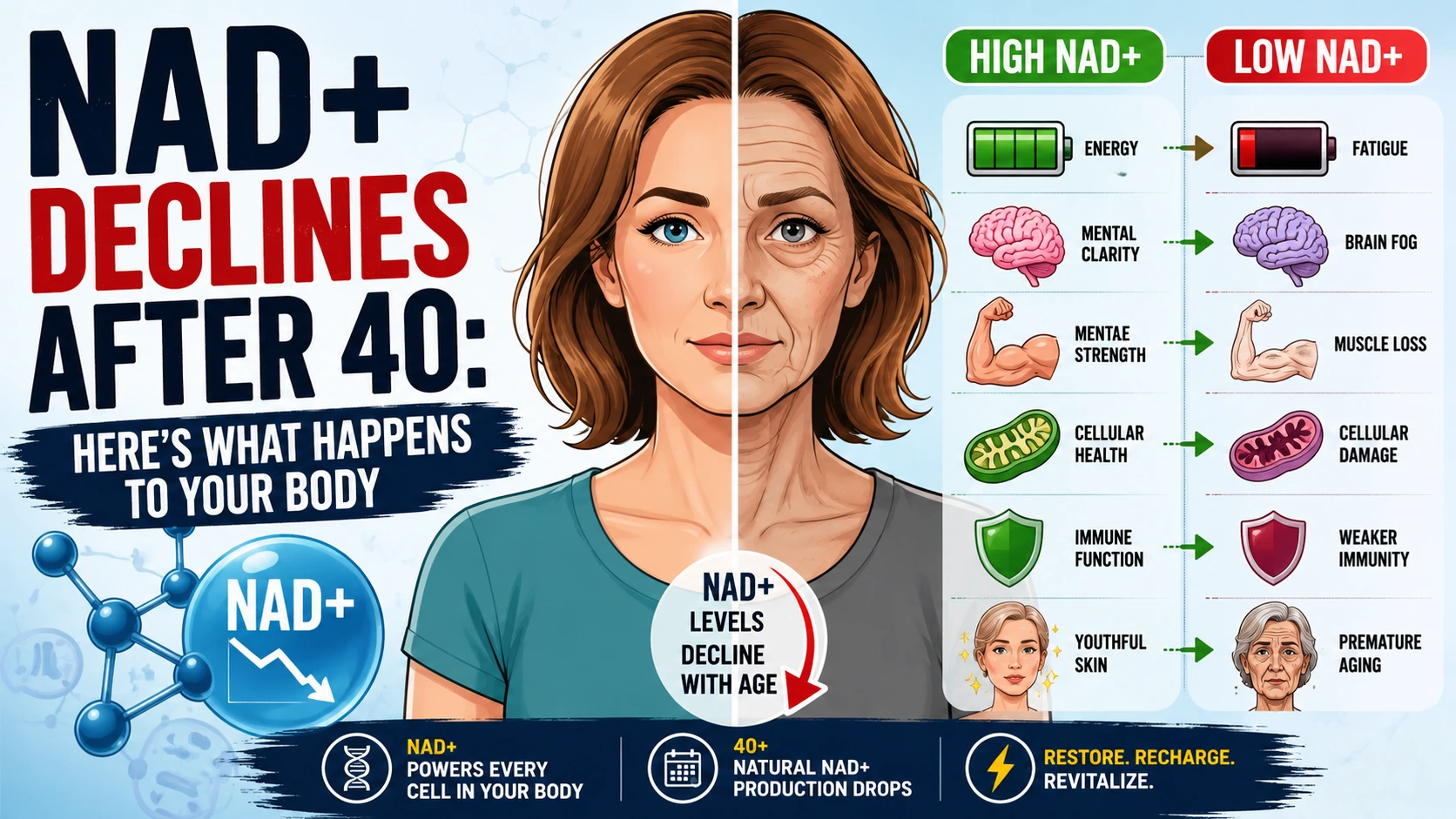
NAD+ (Nicotinamide Adenine Dinucleotide) is a critical coenzyme found in every living cell. It plays a central role in energy production, DNA repair, and cellular health. But here’s the hard truth: after age 40, your NAD+ levels begin a steady, irreversible decline—and this drop is linked to nearly every hallmark of aging, from fatigue and brain fog to metabolic slowdown and increased disease risk.

Understanding this decline is the first step to taking control of your vitality. This article breaks down what happens to your body when NAD+ falls, how to measure it, and—most importantly—what you can do to support healthy levels through diet, lifestyle, and targeted supplementation.

⚡ What Happens to Your Body When NAD+ Drops

The effects of declining NAD+ are systemic. Here’s what you may experience:

  • Energy Crash: Your mitochondria—the powerhouses of your cells—become less efficient, leading to chronic fatigue and reduced exercise capacity.
  • Brain Fog & Cognitive Slowing: Lower NAD+ impairs neuronal function, affecting memory, focus, and mental clarity.
  • Slower Metabolism: NAD+ is essential for sirtuin activation, which regulates metabolism. Decline often leads to weight gain and insulin resistance.
  • Weakened DNA Repair: NAD+ fuels PARP enzymes that fix DNA damage. With less NAD+, accumulated damage accelerates cellular aging.
  • Loss of Muscle Mass & Bone Density: Reduced NAD+ affects muscle stem cells and bone health, increasing frailty.

📊 Comparative Table: Normal NAD+ Levels vs. Declining Effects

Age Range Estimated Serum NAD+ Level Common Effects of Decline
20–30 years (Optimal) ~8–10 µM (micromolar) High energy, sharp cognition, efficient metabolism, robust DNA repair.
40–50 years (Noticeable Decline) ~5–7 µM Fatigue, mild brain fog, weight gain, slower recovery from exercise.
50–60 years (Accelerated Decline) ~3–5 µM Chronic tiredness, memory lapses, insulin resistance, joint stiffness.
60+ years (Significant Depletion) ~1–3 µM Deep fatigue, cognitive decline, muscle wasting, increased disease risk.

Note: Actual NAD+ levels can vary based on genetics, lifestyle, and health status. These are approximate population averages.

🍎 Top Foods That Boost NAD+ Levels Naturally

While supplementation is powerful, you can also support NAD+ through diet. These foods contain NAD+ precursors (like NR, NMN, and niacin) or support the salvage pathway:

Food Category Examples NAD+ Boosting Compound
Fish & Seafood Salmon, tuna, sardines Vitamin B3 (niacin), omega-3s (reduce NAD+ consumption)
Dairy & Eggs Milk, eggs, yogurt Nicotinamide riboside (NR) precursors
Vegetables Mushrooms, avocados, green peas Niacin, NAD+ cofactors
Whole Grains & Legumes Brown rice, lentils, peanuts Tryptophan (converted to NAD+ via kynurenine pathway)
Fruits Watermelon, citrus fruits Vitamin C (protects NAD+ from oxidative stress)

Pro Tip: Combine these foods with intermittent fasting or calorie restriction, which naturally stimulate NAD+ production through the salvage pathway.

💊 Ready to take action? These top-rated supplements can help restore your NAD+ levels. 💊
Choose the one that fits your lifestyle and start reclaiming your energy today.

🔥 The NAD+ Revival

“Your 40s don’t have to be your decline. Revive your cells and feel the energy of your 20s again.”
Revive Your Vitality →

⚡ The Power Boost

“Low NAD+? Not anymore. Supercharge your mitochondria and experience mental clarity like never before.”
Boost Your Power →

🌟 The Age-Defier

“Aging is inevitable—feeling old isn’t. This is your partner in turning back the cellular clock.”
Defy Aging →

🧬 The Cellular Recharger

“Your cells are crying out for NAD+. Give them the fuel they need to thrive, not just survive.”
Recharge Your Cells →

🏃 The Performance Igniter

“Feel the fire of your 30s again. Ignite your energy and crush your fitness goals with boosted NAD+.”
Ignite Performance →

🌅 The Longevity Guardian

“Protect your future self. Guard your healthspan and enjoy vibrant years ahead with optimal NAD+.”
Guard Your Longevity →

🔬 The science is clear. The choice is yours. 🔬
Click below to start your NAD+ restoration journey with a trusted, quality supplement.

❓ Frequently Asked Questions About NAD+ Decline

Do NAD+ levels decline with age?
Yes. Research shows that NAD+ levels drop by up to 50% between the ages of 40 and 60. This decline is due to increased consumption by enzymes like PARPs and CD38, combined with decreased synthesis.
Should I take NAD+ at 40?
Many experts recommend considering NAD+ precursors (like NR or NMN) starting around age 40. This is when natural decline begins to outpace your body’s ability to maintain optimal levels, and supplementation can help bridge the gap.
How to prevent NAD+ decline?
You can slow the decline through a combination of: regular exercise (especially HIIT), intermittent fasting, stress management, adequate sleep, a diet rich in NAD+ precursors, and targeted supplementation with nicotinamide riboside or NMN.
Why is NAD+ not working for me?
If you’re not feeling effects, consider: dosing (too low or too high), quality of the supplement (bioavailability matters), individual genetics (some people are slow responders), or underlying inflammation that consumes NAD+ faster than you can replenish it.
At what age does NAD+ decrease?
The most significant decline begins around age 40, with a more accelerated drop after 50 and continuing through older age. However, lifestyle factors can influence the rate of decline.
What causes NAD+ to decline?
Major causes include: chronic inflammation (increases CD38, which consumes NAD+), oxidative stress, DNA damage (which activates PARPs that use NAD+), poor diet, sedentary lifestyle, and natural aging of the NAD+ synthesis pathways.
Is NAD+ age reversal?
While NAD+ isn’t a “fountain of youth” that reverses all aging, it does reverse cellular aging markers by restoring mitochondrial function, enhancing DNA repair, and activating sirtuins. Many users report significant improvements in energy, cognition, and metabolic health.
Is NAD+ good for a 70-year-old woman?
Absolutely. At 70, NAD+ levels are often severely depleted. Supplementation can support bone health, muscle maintenance, cognitive function, and overall vitality. Always consult a doctor for personalized advice, especially with pre-existing conditions.
Is there a NAD+ levels by age chart?
Yes, the comparative table in this article provides a general guide. For a more detailed chart, refer to clinical studies like the one by Massudi et al. (2012) which shows age-related NAD+ decline in human blood.
Why does NAD+ decline with age specifically?
Age-related decline is multifactorial: increased activity of NAD+-consuming enzymes (CD38, PARPs), reduced synthesis from the salvage pathway, and lower levels of the precursor NAMPT. Simply put: your body starts using it faster than it can make it.
How to increase NAD+ levels naturally?
Natural methods include: regular HIIT exercise, intermittent fasting (16/8 or 5:2), consuming NAD+ precursor-rich foods (milk, fish, mushrooms), getting 7-8 hours of quality sleep, and reducing alcohol intake (which depletes NAD+).
What are low NAD+ levels symptoms?
Common symptoms include: persistent fatigue, brain fog, mood swings, difficulty losing weight, poor exercise recovery, joint pain, and accelerated skin aging. Many people dismiss these as “normal aging,” but they are often NAD+ deficiency signals.
What are NAD+ levels supplements?
Popular NAD+ boosters include: Nicotinamide Riboside (NR), Nicotinamide Mononucleotide (NMN), and Niacin (Vitamin B3). Each has different bioavailability and conversion pathways. The best choice depends on your health goals and budget.
What is NAD+ depletion treatment?
Treatment typically involves NAD+ precursor supplementation, often combined with lifestyle modifications (diet, exercise, sleep). In some clinical settings, NAD+ IV therapy is used for rapid replenishment, but this is more expensive and requires medical supervision.
What are low NAD+ levels causes?
Primary causes include: aging, chronic stress, poor diet (high sugar/processed foods), environmental toxins, lack of physical activity, genetic variations, and overconsumption of alcohol (which disrupts NAD+ synthesis).
📢 Disclosure & Disclaimer

Affiliate Disclosure: Some of the links in this article are affiliate links. If you make a purchase through these links, we may earn a small commission at no extra cost to you. We only recommend products we trust and believe can benefit you.

Medical Disclaimer: This content is for informational and educational purposes only. It is not medical advice and should not replace consultation with your healthcare provider. Always consult a qualified physician before starting any new supplement, especially if you have pre-existing conditions or are taking medication.

💡 PS – Your Future Self Will Thank You
The best time to start supporting your NAD+ levels was in your 30s. The second best time is right now. Every day you wait, your cells are craving this vital coenzyme. Take the first step today—your energy, focus, and longevity depend on it.
peptide expert
peptide expert
Articles: 77

Leave a Reply

Your email address will not be published. Required fields are marked *