
Can NAD+ help prevent fatigue during rapid GLP-1 weight loss? This is the burning question for thousands of individuals embarking on semaglutide or tirzepatide therapy. While these medications deliver remarkable weight-loss results, many patients struggle with crushing fatigue that threatens to derail their progress. In this comprehensive guide, we explore the science behind NAD+ (nicotinamide adenine dinucleotide), its role in cellular energy, and whether NAD+ supplementation can be the missing piece to keep you energized while you shed pounds.
📑 Table of Contents
- 1. The GLP-1 Energy Paradox
- 2. NAD+ 101: Your Cellular Fuel Gauge
- 3. The Science of GLP-1 Fatigue
- 4. Can NAD+ Help? The Mechanisms
- 5. NAD+ & GLP-1 Together: What the Evidence Says
- 6. Comparative Table: NAD+ vs. Other GLP-1 Additives
- 7. Natural Ways to Increase NAD+
- 8. Supplementation Options
- 9. Safety & Side Effects
- 10. Final Verdict
- 11. References & Resources
1. The GLP-1 Energy Paradox
GLP-1 receptor agonists like semaglutide (Ozempic, Wegovy) and tirzepatide (Mounjaro, Zepbound) have revolutionized weight loss. Clinical trials demonstrate 20–22% body weight reduction over 68 weeks with tirzepatide. But there’s a catch that many patients don’t anticipate: profound, lingering fatigue.
Here’s the paradox: you’re finally losing weight, feeling hopeful about your health transformation—yet you can barely muster the energy to get through the day. For many, this fatigue becomes the Achilles’ heel of an otherwise life-changing therapy.
In clinical trials for Wegovy, approximately 11% of adult patients reported fatigue compared to 5% in the placebo group. The numbers don’t capture the full picture—many more experience subclinical exhaustion that impacts quality of life, work performance, and motivation to exercise.
This is where NAD+ (Nicotinamide Adenine Dinucleotide) enters the conversation. Could boosting your cellular energy currency be the key to preventing GLP-1 fatigue? Let’s dive deep into the science.
2. NAD+ 101: Your Cellular Fuel Gauge
NAD+ What Is It?
NAD+ stands for Nicotinamide Adenine Dinucleotide—a coenzyme found in every single cell of your body. Think of it as your body’s energy manager, a tiny molecule that orchestrates the conversion of food into usable cellular fuel.
NAD+ What Does It Do?
- 🔋 Energy Production: NAD+ is essential for creating ATP—the compound your body uses for fuel.
- 🧬 DNA Repair: NAD+ helps enzymes fix damage to your genetic material.
- ⚖️ Metabolism: It supports chemical reactions that break down nutrients.
- 🛡️ Cell Protection: NAD+ helps limit oxidative stress.
- 🧠 Brain Function: It supports normal function of muscles, brain, heart, and bones.
The NAD+ Decline Problem
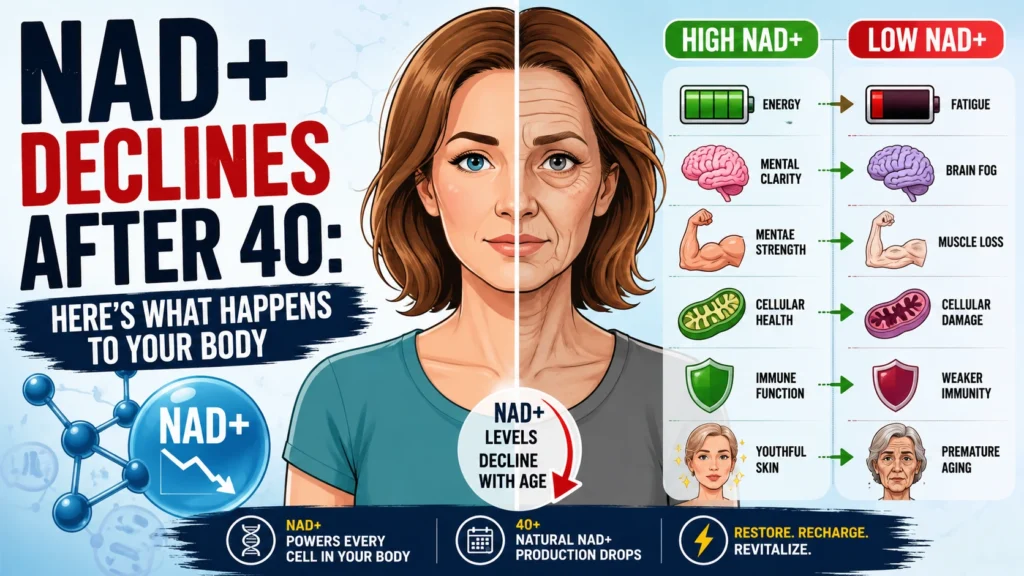
Here’s the critical piece: NAD+ levels naturally decline with age. By middle age, your NAD+ levels may be half of what they were in your youth. This decline is accelerated by chronic stress, poor diet, sedentary lifestyle, and—crucially—calorie restriction (exactly what happens on GLP-1 therapy).
When NAD+ levels drop, cells become less efficient at making energy and repairing damage. You feel it as fatigue, brain fog, and sluggishness—symptoms that overlap almost perfectly with GLP-1 side effects.
NAD+ meaning in biology: In biological terms, NAD+ exists in two forms: NAD+ (oxidized) and NADH (reduced). Together they shuttle electrons to turn food into energy.
3. The Science of GLP-1 Fatigue
GLP-1 fatigue isn’t “in your head”—it has multiple physiological causes that compound on each other.
- Rapid Calorie Reduction: When calorie intake drops quickly, your body responds with low energy, weakness, and brain fog.
- Low Protein Intake: Smaller meals often cut protein, leading to muscle loss and slower metabolism.
- Dehydration: GLP-1 medications can reduce thirst, and even mild dehydration causes fatigue.
- Blood Sugar Shifts: Some people experience dips during dose changes.
- Metabolic Adaptation: Shifting from glucose to fat burning can create a temporary “metabolic lag.”
For most people, fatigue is temporary, lasting 4 to 8 weeks during dose titration. But for some, it persists and affects daily life.
4. Can NAD+ Help? The Mechanisms
Can NAD+ help prevent fatigue during rapid GLP-1 weight loss? The theoretical case is compelling. NAD+ is directly involved in mitochondrial function and cellular energy production. When your body is running low on fuel (as it is during GLP-1-induced calorie restriction), NAD+ supplementation could theoretically:
- Support cells in producing more energy
- Reduce that “burned out” feeling
- Stabilize energy throughout the day
What the research shows: NAD+ precursor supplementation has shown promise in addressing fatigue across various conditions—Long-COVID fatigue, neurofatigue, and metabolic health. A systematic review and meta-analysis found that NAD+ precursor supplementation had significant effects on weight management with reduction of BMI and increasing adiponectin.
However, the evidence for direct weight loss from NAD+ in humans is limited. But the question isn’t about weight loss—it’s about fatigue prevention. By addressing the cellular energy deficit created by calorie restriction, NAD+ may help bridge the gap between weight loss and energy maintenance.
What users report: Anecdotal reports from individuals combining NAD+ with GLP-1 medications describe more stable energy, better mental clarity, and faster recovery after workouts.
5. NAD+ & GLP-1 Together: What the Evidence Says
GLP-1 and GLP-1/GIP agonists may act beyond appetite and glycemia, with emerging evidence for effects on fat oxidation and mitochondrial readouts. Some research suggests these medications may enhance mitochondrial efficiency and temper pro-senescent signaling.
Many clinical practices are already combining GLP-1 medications with NAD+ support. As one provider notes: “To address fatigue during weight loss, we offer an option that combines GLP-1 weight loss with NAD support. NAD is used to help support energy and mental clarity as the body adjusts to lower calorie intake.”
Some compounded GLP-1 formulations now include NAD+ as an additive. This is not random—providers select additives based on individual symptoms, health history, and treatment goals.
Key considerations: NAD+ precursors are generally well-tolerated, but combining them can increase nausea, diarrhea, or fatigue in some patients. Clinical supervision is essential.
6. Comparative Table: NAD+ vs. Other GLP-1 Additives
| Additive | Primary Function | Mechanism | Best For | Evidence Level |
|---|---|---|---|---|
| NAD+ | Cellular energy support, fatigue prevention | Supports mitochondrial function & ATP production | Patients with significant fatigue, brain fog | Emerging; promising anecdotal & mechanistic evidence |
| Methylcobalamin (B12) | Energy production, nerve function | Bioactive B12 ready for immediate use | B12 deficiency, long-term GLP-1 users | Well-established |
| L-Carnitine | Fat metabolism, muscle preservation | Transports fatty acids into mitochondria | Muscle loss concerns, preserving lean mass | Moderate |
| Glycine | Metabolic support, improved absorption | Amino acid that works synergistically with B12 | Patients with fatigue or needing additional support | Limited |
| B-Complex | General energy & metabolic support | Provides multiple B vitamins | Patients with multiple nutritional gaps | Well-established for general support |
7. Natural Ways to Increase NAD+
Before reaching for supplements, there are several natural ways to boost NAD+:
- Foods that raise NAD+: Avocados, whole grains, green vegetables, mushrooms, nuts, fish, cow’s milk, and fermented foods.
- Intermittent fasting: Fasting periods trigger cellular processes that include NAD+ production. Moderate caloric restriction has been shown to significantly increase NAD+ levels.
- Regular exercise: Both aerobic and resistance training boost NAD+ levels within hours.
- Balanced diet: Ensure consumption of NAD+ precursor-rich foods like tryptophan (meats, fish) and niacin (meats, fish, whole grains).
What depletes NAD+ levels? Aging, chronic stress, illness, calorie restriction (the GLP-1 paradox), poor sleep, and sedentary lifestyle.
8. Supplementation Options
If natural methods aren’t enough, several supplementation options exist:
- Oral supplements: Life Extension NAD+ Cell Regenerator™ (300 mg of NIAGEN® nicotinamide riboside). One capsule daily supports cellular energy and fights fatigue.
- Gummies: Goli Nutrition Renew NAD Plus Gummies – a tasty alternative.
- Injections: Pre-mixed into GLP-1 shots, at-home injections 2-3 times/week, or IV drips for higher doses.
Which is best? Oral is convenient and affordable; injections offer higher bioavailability; IV gives maximum effect but is most expensive.
🔥 Boost Your NAD+ Levels Today!
Ready to take control of your energy during GLP-1 weight loss? These top-rated NAD+ supplements can help you maintain steady energy, mental clarity, and cellular health.


Life Extension NAD+ Cell Regenerator Goli Renew NAD+ Gummies Premium NAD+ Booster Bundle
Exclusive offers for our readers – click to learn more.
9. Safety & Side Effects
Is NAD+ safe? NAD+ supplements are generally considered safe for most people. However, side effects are still possible, especially at higher doses: nausea, headaches, lightheadedness, diarrhea, muscle cramps, and even fatigue (ironically).
When combining NAD+ with GLP-1 medications, increased risk of nausea, diarrhea, unusual energy fluctuations, and changes in glucose metabolism may occur.
Who should not take NAD+? Pregnant or lactating women, individuals undergoing treatment without physician approval, those with severe allergies, or anyone experiencing severe side effects.
10. Final Verdict: Can NAD+ Help Prevent Fatigue?
Can NAD+ help prevent fatigue during rapid GLP-1 weight loss? The honest answer: Likely yes, for many people—but the evidence is still emerging.
The case FOR NAD+: NAD+ is fundamental to cellular energy production; GLP-1-induced calorie restriction depletes NAD+; supplementation has shown promise in reducing fatigue in multiple conditions; anecdotal reports describe significant energy improvements; many providers are already combining NAD+ with GLP-1 therapy.
The case AGAINST NAD+: Robust human trial data for NAD+ and GLP-1 combination is limited; weight loss outcomes from NAD+ alone are modest compared to hormonal interventions; side effects are possible; combining can increase GI side effects in some patients; NAD+ is not FDA-approved for weight loss.
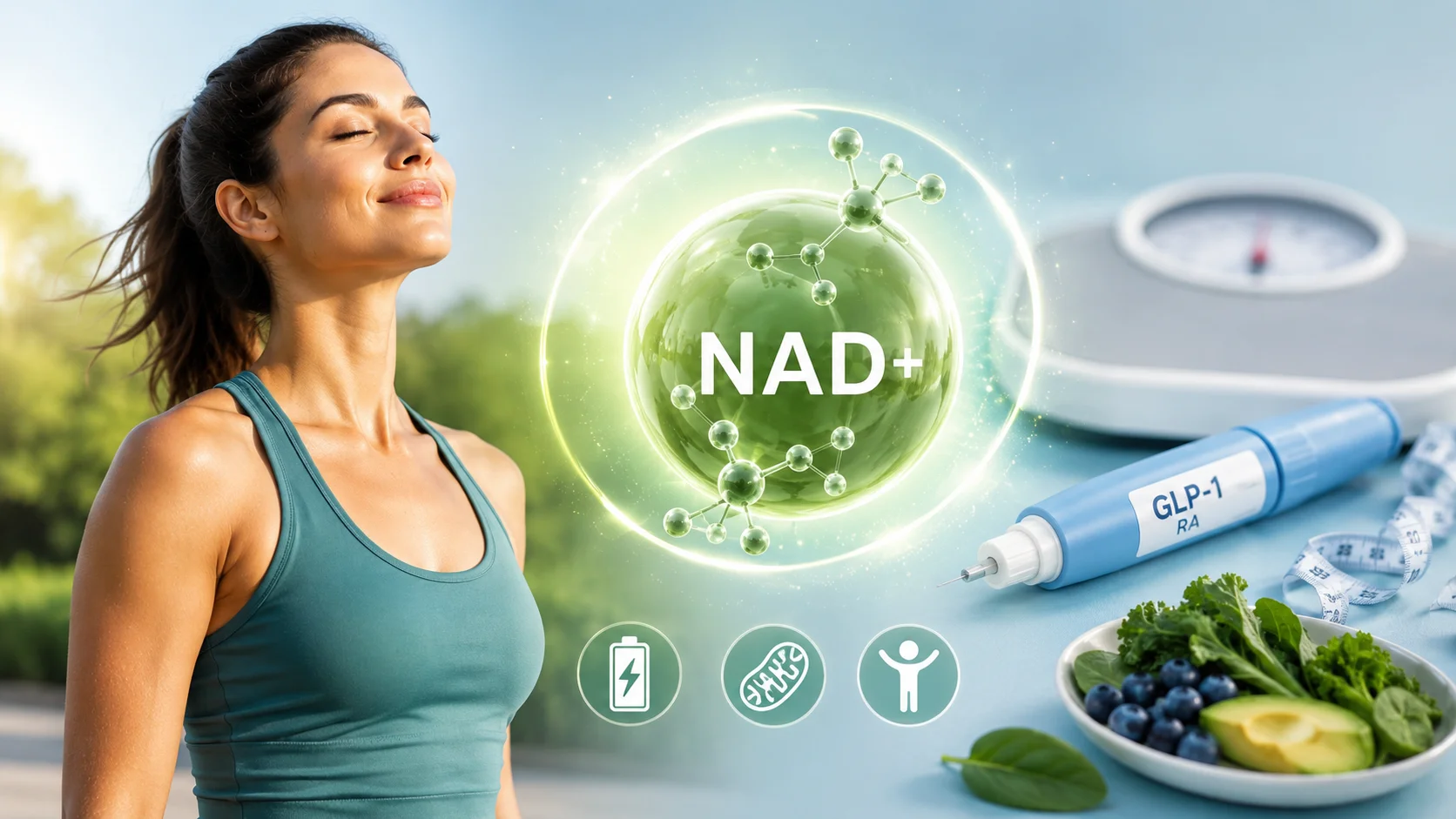
The bottom line: NAD+ is not a replacement for GLP-1 therapy, nor is it a standalone weight loss solution. But as a supportive tool to address one of the most common and challenging side effects—fatigue—it shows genuine promise. The combination of GLP-1’s powerful weight loss effects with NAD+’s cellular energy support creates a compelling synergy: lose the weight without losing your energy.
11. References & Resources
- Cleveland Clinic. “What Is NAD & Why Does It Matter for Your Health?”
- Life Extension. “NAD+ Cell Regenerator™ Product Information.”
- Healthline. “GLP-1 Fatigue: How Long It Lasts and How to Combat It.”
- Ubie Health. “The GLP-1 Fatigue: Why Weight Loss Meds Make You Tired.”
- PlexusDx. “NAD+ vs Tirzepatide for Weight Loss | Clinical Comparison.”
- Mochi Health. “GLP-1 Additives Explained: B12, L-Carnitine, NAD+, and More.”
- Niagen Bioscience. “Results From First-ever Randomized Trial Of Niagen NR In Long COVID.”
- Nature. “The role of NAD+ metabolism and its modulation of mitochondria in aging and disease.”
Published: June 30, 2026 | Updated: June 2026