
📑 Table of Contents
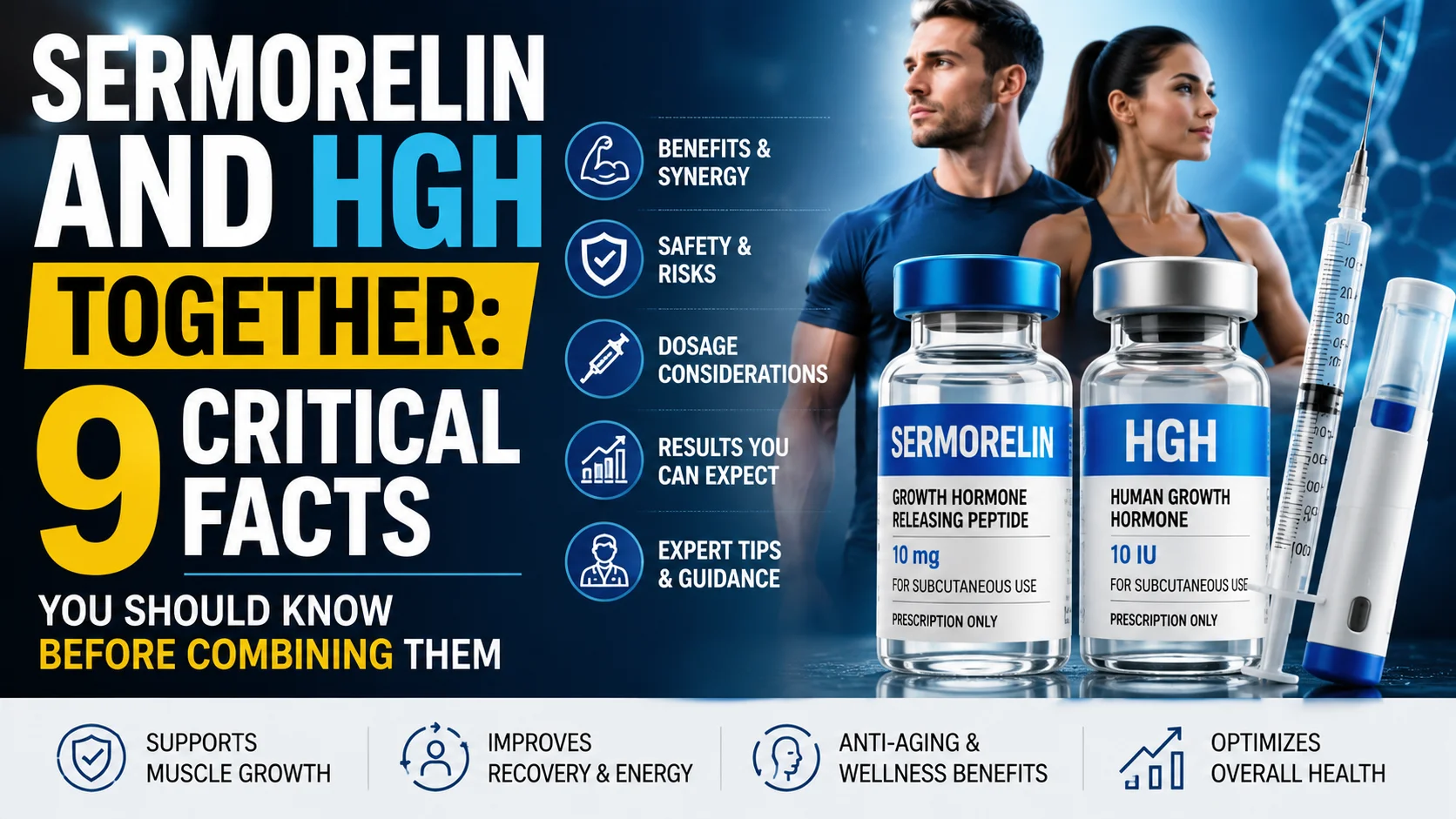
Sermorelin and HGH together is a combination that’s generating serious buzz in the wellness, anti-aging, and bodybuilding communities. But before you jump in, you need the facts. This guide breaks down 9 critical facts about combining these two growth hormone powerhouses so you can make an informed, confident decision.
1. What Are Sermorelin and HGH?
Sermorelin is a synthetic peptide that mimics growth hormone–releasing hormone (GHRH). It binds to receptors on your pituitary gland and signals it to release more of your own natural growth hormone (GH).
HGH (human growth hormone), on the other hand, is exogenous synthetic growth hormone. When you inject HGH, you’re directly introducing the hormone into your system, bypassing your body’s natural feedback loops.
2. How They Work: Natural vs. Direct
Sermorelin works with your body. It stimulates your pituitary to release GH in natural pulses, keeping your endocrine feedback loops intact. This makes it a gentler, more physiological approach.
HGH works on your body. It floods your system with synthetic GH, which can suppress your natural production and lead to a higher risk of side effects.
3. Why Combine Sermorelin and HGH?
Some providers use Sermorelin and HGH together to get the best of both worlds: the natural, feedback-regulated GH release from Sermorelin, plus the direct anabolic punch of low-dose HGH. The theory is that Sermorelin “primes” the pituitary while HGH provides a baseline level of exogenous support.
⚠️ Important: This is an advanced protocol. It should only be done under strict medical supervision with regular blood work.
4. Safety Profile: Which Is Safer?
Sermorelin has a well-documented safety profile. Because it works within your body’s natural limits, the risks of insulin resistance, fluid retention, and acromegaly-like effects are substantially lower.
HGH carries more significant risks, especially at higher doses or with long-term use. These include joint pain, carpal tunnel syndrome, insulin resistance, and potential organ growth.
5. Dosage Guidelines
- Sermorelin: Typical doses range from 0.2 mg to 0.5 mg injected subcutaneously once daily, usually in the evening. Some protocols go up to 1 mg at bedtime.
- HGH: Doses vary widely based on goals (anti-aging, bodybuilding, or deficiency). Common ranges are 0.5 IU to 4 IU per day, but this must be individualized.
- Combination: When using Sermorelin and HGH together, doses are typically reduced on both sides. A common approach is Sermorelin 0.2–0.3 mg + low-dose HGH (0.5–1 IU) daily.
6. Side Effects to Watch For
- Sermorelin side effects are generally mild: injection-site redness, flushing, headache, and transient hyperglycemia. Long-term clinical data supports safety up to 12–24 months.
- HGH side effects can be more pronounced: fluid retention, joint pain, carpal tunnel, insulin resistance, and increased intracranial pressure.
- When combined, side effects may be additive. Monitor for excessive water retention, joint discomfort, and blood glucose changes.
7. Before & After: What to Expect
Timeline: Most patients notice biomarker shifts (IGF-1, fasting GH) within 4–8 weeks, with clinical improvements in body composition, skin, and energy by 8–12 weeks.
Skin: Users often report improved texture, thickness, and hydration, with reduced fine lines. Ultrasound studies have documented skin thickness increases of 15–30% after 12 weeks.
Body composition: Lean mass increases and fat mass decreases over multi-month protocols. Significant improvements in muscle tone and flexibility are often seen by 5–6 months.
8. Cost Comparison: Sermorelin vs. HGH
One of the biggest factors in choosing between these two is cost:
- HGH therapy can run $1,000–$3,000+ per month.
- Sermorelin is significantly more affordable, typically in the $200–$500 per month range.
- Combining them will obviously increase the cost, but many find the synergistic benefits worth the investment.
| Feature | Sermorelin | HGH |
|---|---|---|
| Mechanism | Stimulates natural GH release | Direct exogenous supplementation |
| Safety | Lower risk, feedback-regulated | Higher risk, suppresses natural production |
| Cost (Monthly) | $200–$500 | $1,000–$3,000+ |
| Onset of Results | Gradual (8–12 weeks) | Faster (weeks) |
| Best For | Long-term anti-aging, mild deficiency | Severe deficiency, rapid bodybuilding |
9. Frequently Asked Questions
Yes. Most patients self-administer daily doses of 0.2–0.3 mg in the evening.
It supports muscle hypertrophy by increasing GH and IGF-1, but results are gradual and depend on training and diet.
People with a history of cancer, uncontrolled diabetes, active proliferative retinopathy, or unexplained intracranial symptoms should avoid it.
Indirectly, yes. By increasing GH, it can support overall hormone balance and may enhance testosterone production.
They address different systems. Sermorelin is generally well-tolerated with a good safety profile, but TRT is also safe when properly managed. Many combine them.
Tesamorelin is about 40-fold more potent than Sermorelin, but Sermorelin is more commonly used for anti-aging and general wellness.
Many users report improved skin texture, elasticity, and reduced fine lines. It increases collagen production, which supports a more youthful appearance.
While specific names are rarely confirmed, many in Hollywood and professional sports use peptide therapies for anti-aging and recovery.
It depends on your goals. Peptides like Sermorelin are safer and more affordable for long-term use. HGH is faster but carries more risk.
Yes, but only under medical supervision. This is an advanced protocol that requires careful dosing and monitoring.
Ipamorelin is a common stack partner. TRT, HCG, and even GLP-1 agonists like semaglutide are sometimes combined, but always with a doctor’s guidance.
Clinical data supports safety for 12–24 months. Long-term effects beyond that are less studied, but the feedback-regulated mechanism makes it safer than exogenous HGH.
🔥 Ready to Take the Next Step?
Whether you’re leaning toward Sermorelin, HGH, or a combination, the right protocol starts with a trusted provider. Click below to explore top-rated options and get started on your transformation.
* These are affiliate links. We may earn a commission at no extra cost to you.
PS — If you’re serious about optimizing your hormones, don’t guess. Work with a provider who runs baseline labs, monitors your progress, and adjusts your protocol based on your unique biology. The combination of Sermorelin and HGH together can be powerful, but only when done right.