
GLP-1 medications like semaglutide (Ozempic, Wegovy) and tirzepatide (Mounjaro, Zepbound) have revolutionized weight management. But how exactly do they reduce appetite naturally? And more importantly — can you boost your own GLP-1 without drugs?
This comprehensive guide unpacks the science of GLP-1, explores foods that increase GLP-1 naturally, compares natural vs. pharmaceutical approaches, and gives you a practical GLP-1 food list to start using today.
🧬 1. What Is GLP-1?
GLP-1 (glucagon-like peptide-1) is a hormone produced in your gut — specifically by L-cells in the small intestine — every time you eat. Once released, it acts as a messenger between your digestive system, brain, and pancreas.
Its primary jobs are threefold:
- Stimulates insulin release from your pancreas to lower blood sugar
- Blocks glucagon (a hormone that raises blood sugar)
- Delays stomach emptying and decreases appetite to promote satiety
After being released, GLP-1 is quickly broken down by enzymes within minutes — which is why its natural effects are short-lived. GLP-1 medications work by mimicking this hormone and keeping it active much longer.
Unlock the Full Potential of GLP-1
For research purposes only. GLP-1ResearchLab offers high‑purity tirzepatide for qualified researchers. If you’re exploring the science behind GLP-1 and GIP co‑agonism, this is your trusted source.
🔬 Explore Tirzepatide 3‑Vial Pack🍽️ 2. How GLP-1 Reduces Appetite: The Science of Hunger Control
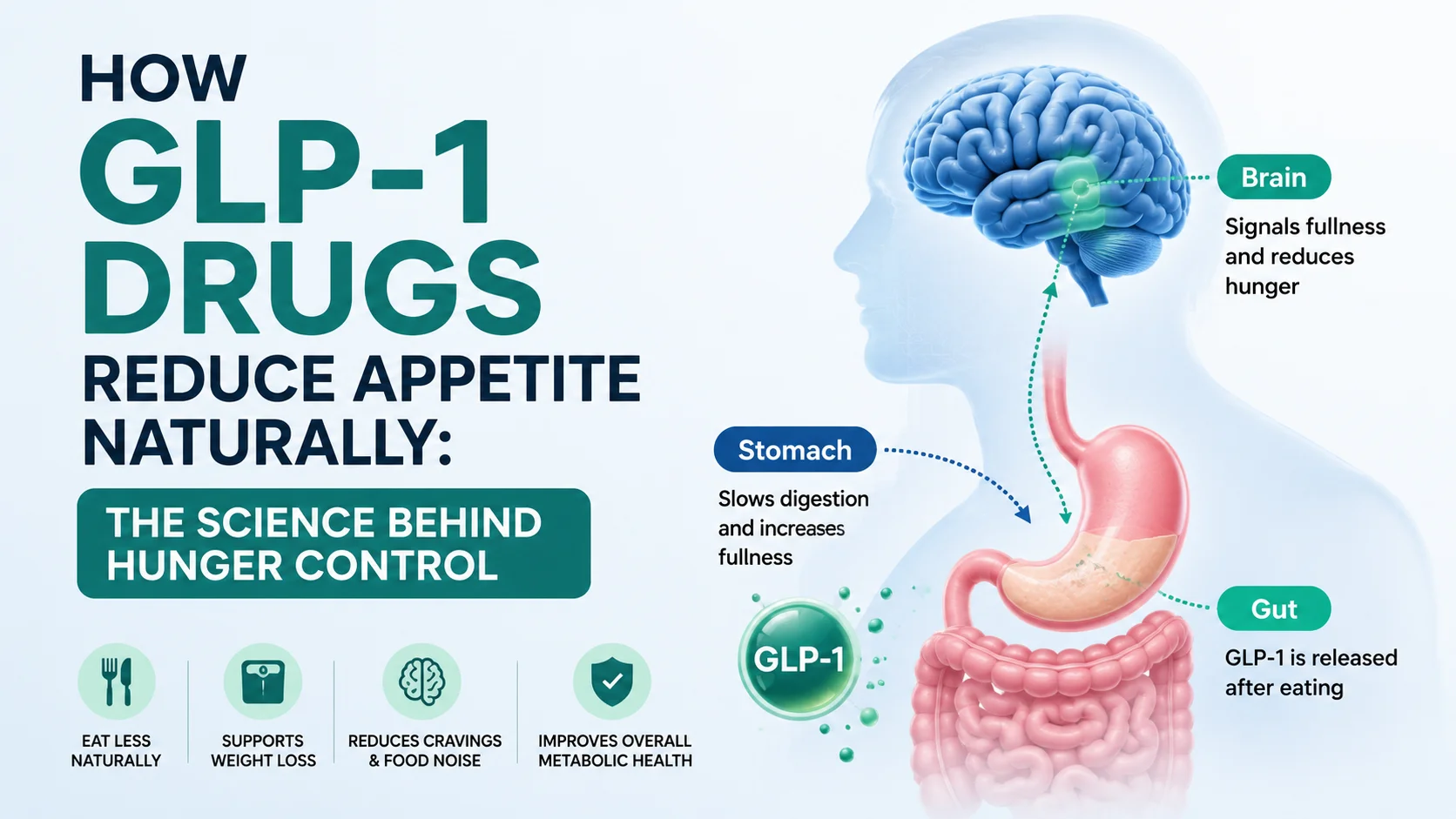
GLP-1 (glucagon-like peptide-1) drugs have garnered significant attention in recent years for their role in appetite regulation and weight management. These medications, originally developed for diabetes treatment, have shown promising effects in reducing hunger and promoting satiety. This section delves into the science behind how GLP-1 drugs work to control appetite naturally, exploring their mechanisms, effects on the brain and gut, and implications for weight loss and metabolic health.
🧩 Synergy of Appetite Suppression and Weight Loss with GLP-1 Drugs
Central Nervous System Effects
GLP-1 receptors are found in various regions of the brain, including the hypothalamus, which is critical for appetite regulation. When GLP-1 binds to these receptors, it signals the brain to reduce hunger and increase feelings of fullness. This central action is a primary mechanism through which GLP-1 drugs exert their appetite-suppressing effects.
Gastric Emptying
GLP-1 slows down gastric emptying, which means food stays in the stomach longer. This delayed emptying contributes to prolonged feelings of fullness after eating, reducing the likelihood of overeating.
Hormonal Interactions
GLP-1 influences the release of other hormones involved in hunger regulation, such as leptin and ghrelin. Leptin, produced by fat cells, signals satiety, while ghrelin, produced in the stomach, stimulates hunger. By enhancing leptin signaling and inhibiting ghrelin release, GLP-1 helps to balance these hormones, further controlling appetite.
📊 3. Clinical Outcomes & Weight Loss
GLP-1 receptor agonists, such as liraglutide and semaglutide, mimic the action of natural GLP-1. These drugs have been shown to effectively reduce appetite and promote weight loss in clinical studies.
Appetite Suppression in Trials
Clinical trials have demonstrated that individuals taking GLP-1 receptor agonists experience significant reductions in appetite. Participants report feeling less hungry and more satisfied after meals, leading to lower caloric intake. This effect is particularly beneficial for those struggling with obesity or weight management.
Weight Loss Outcomes
The appetite-suppressing effects of GLP-1 drugs contribute to substantial weight loss. In studies, participants have lost an average of 5–15% of their body weight over several months. This weight loss is not only beneficial for aesthetics but also for overall health, reducing the risk of obesity-related conditions such as type 2 diabetes, hypertension, and cardiovascular diseases.
❤️ 4. Metabolic Health Benefits
The appetite-regulating properties of GLP-1 drugs extend beyond weight loss. By improving glycemic control and promoting weight reduction, these medications can lead to significant improvements in metabolic health.
Improved Insulin Sensitivity
Weight loss achieved through GLP-1 drugs can enhance insulin sensitivity, reducing the risk of developing type 2 diabetes. Improved glucose metabolism is a critical factor in managing and preventing metabolic syndrome.
Cardiovascular Benefits
Studies have shown that GLP-1 receptor agonists can reduce cardiovascular risk factors, including blood pressure and cholesterol levels. This is particularly important for individuals with obesity, who are at higher risk for heart disease.
Long-term Weight Management
The appetite-suppressing effects of GLP-1 drugs can help individuals maintain weight loss over the long term. By addressing the physiological drivers of hunger, these medications provide a supportive tool for sustainable weight management.
Premium GLP-1 Research Compounds
Trusted by labs worldwide. GLP-1ResearchLab provides high‑quality tirzepatide for research applications. Whether you’re studying metabolic pathways or developing new protocols, their 3‑vial pack offers exceptional value.
🧪 Order Tirzepatide 3‑Vial Pack🥑 5. Foods That Increase GLP-1 Naturally
Certain foods can stimulate the release of GLP-1 or help maintain its activity in the body. The three most powerful nutrient categories are:
🥩 Protein
Protein promotes the release of GLP-1 and helps you feel full. Best options include:
- Lean meats, poultry, fish, and seafood
- Eggs — research shows eggs encourage intestinal cells to release GLP-1
- Yogurt, beans, peas, lentils, nuts, seeds, and soy products
🥑 Healthy Fats
Monounsaturated fats and omega-3s increase GLP-1 release and slow stomach emptying. Best options include:
- Olive oil and avocado oil
- Avocados — high in both fiber and monounsaturated fats
- Nuts (walnuts, pistachios, almonds) and seeds (chia, flax)
- Fatty fish: salmon, herring, mackerel, sardines, tuna
🌾 Fiber
Fiber — especially soluble fiber — is fermented by gut bacteria into short-chain fatty acids (SCFAs) like butyrate, which stimulate GLP-1 secretion. Best options include:
- Whole grains: oats, barley, whole wheat
- Legumes: beans, edamame, lentils, split peas
- Vegetables: artichokes, asparagus, Brussels sprouts, carrots, broccoli
🌿 6. How to Increase GLP-1 Naturally
Beyond specific foods, how you eat matters just as much as what you eat. Here are science-backed strategies to naturally boost your GLP-1:
🍽️ Meal Timing & Order
- Eat protein, fat, and vegetables before carbohydrates — this slows digestion and prolongs the GLP-1 response
- Aim for ~30g of high-quality protein per meal — protein triggers L-cells to release GLP-1
- Include healthy fats with every meal — olive oil and avocado have been shown to significantly increase post-meal GLP-1 levels
🏃 Exercise
Both acute and chronic aerobic and resistance exercise modestly boost GLP-1, particularly in patients with type 2 diabetes.
🧘 Lifestyle Factors
- Stress reduction — chronic stress impairs incretin response
- Improved sleep hygiene — poor sleep disrupts hunger hormones
- Mindful eating — chewing slowly and being present during meals has been linked to better GLP-1 activity
Important note: While these strategies can modestly enhance endogenous GLP-1 secretion, they do not replicate the potency of semaglutide‑level GLP‑1 receptor agonism.
📋 7. GLP-1 Food List
Here’s a quick-reference GLP-1 food list to help you build meals that naturally stimulate this powerful satiety hormone.
🥩 Protein-Rich Foods
🥑 Healthy Fats
🌾 High-Fiber Foods
🚫 Foods to Avoid or Limit
While on a GLP-1-friendly diet or GLP-1 medication, avoid or limit:
- Fried, greasy foods — may exacerbate nausea
- High-sugar foods and beverages — juice, soda, cake, candy
- Overly processed foods — empty calories without micronutrient support
- Large meals — smaller portions are easier to digest
- Other weight-loss supplements — ephedra, green tea extract, garcinia cambogia may further reduce appetite and increase nutrient deficiency risk
📊 8. Comparative Table: Natural GLP-1 vs. GLP-1 Medications
| Feature | Natural GLP-1 Stimulation | GLP-1 Medications (Semaglutide, Tirzepatide) |
|---|---|---|
| Mechanism | Stimulates endogenous GLP-1 release via food and lifestyle | Mimics GLP-1 and activates receptors directly |
| Potency | Modest increase | Powerful, sustained activation |
| Duration of effect | Minutes (natural GLP-1 half-life) | Days to a week (extended half-life) |
| Appetite suppression | Moderate, meal-dependent | Strong, continuous |
| Gastric emptying | Temporary slowing | Significant, prolonged slowing |
| Brain effects | Mild satiety signaling | Strong activation of hypothalamic satiety circuits |
| Weight loss potential | Modest, requires consistency | Significant, clinically proven (5–15% body weight) |
| Side effects | Minimal (digestive adjustment) | Nausea, GI discomfort possible |
| Access | Over-the-counter (food) | Prescription required (or research-grade) |
Stock Up on Tirzepatide for Your Lab
For bulk research purposes. GLP-1ResearchLab offers competitive pricing on tirzepatide 3‑vial packs. Ideal for institutions, labs, and researchers conducting metabolic studies.
📦 Order Bulk Tirzepatide🛒 Featured GLP-1 Support Product on Amazon
❓ 9. FAQ — Your Top Questions
GLP-1 (glucagon-like peptide-1) is a hormone produced in your gut after eating. It helps regulate blood sugar, slows digestion, and signals your brain that you’re full.
Yes. GLP-1 delays gastric emptying by relaxing the stomach fundus and inhibiting antral contractility. This keeps food in your stomach longer, promoting fullness and steady blood sugar.
GLP-1 reduces hunger through two pathways: it slows gastric emptying (physical fullness) and binds to receptors in the hypothalamus to turn down hunger signals.
GLP-1 activates neurons in the arcuate nucleus of the hypothalamus that inhibit hunger-promoting AgRP neurons. This reduces cravings, “food noise,” and overall appetite.
GLP-1 slows stomach emptying so food stays in your stomach longer, physically stretching it and sending fullness signals to your brain via the vagus nerve. It also directly activates brain satiety centers.
Protein-rich foods (eggs, meat, fish, yogurt), healthy fats (olive oil, avocados, nuts, fatty fish), and high-fiber foods (oats, beans, vegetables, whole grains) all stimulate GLP-1 release.
Eat protein, fat, and vegetables before carbohydrates; aim for ~30g of protein per meal; include healthy fats and fiber; exercise regularly; reduce stress; and practice mindful eating.
Some small studies suggest berberine, curcumin, and ginseng may boost GLP-1 levels. However, these effects are modest compared to medications. Always consult a healthcare provider before starting supplements.
Avoid fried, greasy foods, high-sugar foods and beverages, overly processed foods, and large meals. Also avoid other weight-loss supplements like ephedra and garcinia cambogia.
Yes. A GLP-1-supportive diet focuses on protein, healthy fats, and fiber — all of which naturally stimulate GLP-1 release. While not as potent as medication, this approach can support weight management and metabolic health.
Nauck, M. A., & Quast, D. R. (2019). GLP-1 receptor agonists: A new class of drugs for the treatment of type 2 diabetes. Diabetes Care, 42(1), 1-10.
Astrup, A., & Carraro, R. (2018). The role of GLP-1 receptor agonists in the treatment of obesity. Obesity Reviews, 19(1), 1-12.
Marso, S. P., et al. (2016). Semaglutide and cardiovascular outcomes in patients with type 2 diabetes. New England Journal of Medicine, 375(19), 1834-1844.
This article contains affiliate links. If you click on a link and make a purchase, we may earn a commission at no extra cost to you. Our content is for informational purposes only and does not constitute medical advice. Always consult a qualified healthcare provider before starting any new supplement, medication, or therapy. GLP‑1 agonists are prescription medications in many jurisdictions and should only be used under medical supervision.
FDA Disclaimer: These statements have not been evaluated by the Food and Drug Administration. This product is not intended to diagnose, treat, cure, or prevent any disease.
Research Use Only: Products from GLP-1ResearchLab are sold for research purposes only. They are not for human or veterinary use. Researchers must comply with all applicable laws and institutional guidelines.